What Is It With Matcha?
The worldwide craze for matcha has sparked a global shortage, a steep rise in prices, and new local businesses. Is matcha your average internet trend or is it here to stay in Winnipeg?
Listen to this story:
Sasha De Leon takes a tiny step forward in a lineup extending far past the doors of a local bakery. For 45 minutes, she waits for just one thing — a viral iced matcha drink she initially saw on her Instagram feed.
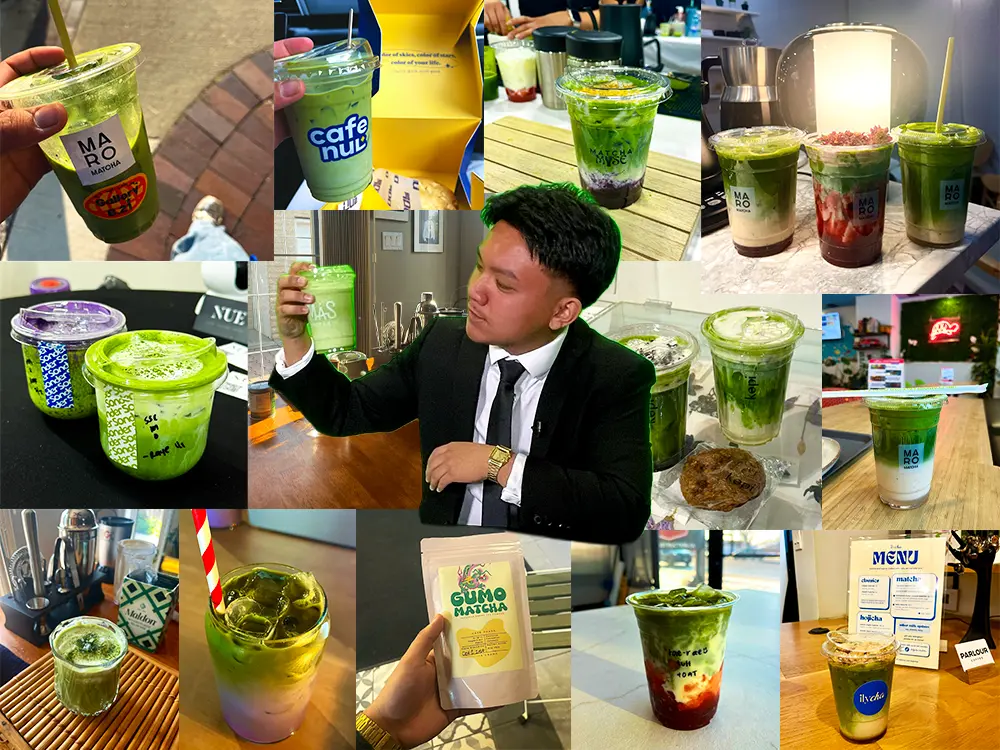
On the other side of the counter, Marro Tumaca stabs another slip of paper on his receipt spike for a large group order at his weekend pop-up. He started running his business MARO MATCHA in spring 2025. One worker places the lids on their branded cups, and another quickly whisks up the next orders while customers look on from the crowded space around them.
A few months later, a similar line forms outside the Unique Bunny store inside Polo Park. Couples, families, and groups of friends line up, chatting with each other or scrolling on their phones to see the full drink menu on MARO MATCHA’s Instagram. After getting their drinks, people pose with their cups for a quick group photo or a selfie in front of MARO MATCHA’s branded mirror.
“I have a group chat with my cousins and one of their girlfriends sent a picture here like 30 minutes ago,” says Emmanuel Agbay, a returning customer who’s visited MARO MATCHA a few times with his girlfriend. “We saw the picture and we were like ‘oh we got to pull up!’”
Hours after the opening, store workers say they have only gotten busier. Extra staff members for MARO MATCHA arrive to help with the rush. Long lines have become a reality at matcha pop-ups in Winnipeg. The drinks, and the culture that comes with them, are especially popular with Gen Z consumers.
The popularity of the drink is well documented online. The hashtag “#matcha” has been used on more than 2 million posts on TikTok and over 10 million posts on Instagram. Matcha’s online presence significantly grew in the mid-2010s. Celebrities like Kylie Jenner, Rihanna, and Brad Pitt were all seen with cups of matcha, but an article from the Business Review at Berkeley, says Gwyneth Paltrow “kickstarted” the digital craze after posting a photo of herself holding up a matcha latte on her Instagram account in 2015.

The rise of pop-ups
It took a while for the trend to hit Winnipeg, but by 2025, a number of pop-up businesses had emerged. Today there are close to a dozen businesses in Winnipeg that focus primarily on making specialty matcha drinks — and they attract a crowd.
“I remember at one of the pop-ups, I called someone and they thought I was at the club,” said De Leon. “I think it’s usually like that because it’s typically a younger crowd.”
Ilyka Umali, founder of ilycha matcha, hosted her first pop-up in November 2025.
“I had a matcha café themed birthday party last year and [starting her matcha business] was just a thought I put out there, but my friends and family would always tell me to just do it because they know it’s something I’m passionate about,” said Umali.
In 2023, Umali started an Instagram account called “cafeswith.ilyka” where she posted reviews of coffee and matcha drinks she’d either make at home or buy out. Her page eventually focused solely on matcha and in October 2025, she officially rebranded as ilycha matcha.
Umali says she also took inspiration from Ashley Alexander, one of her favorite YouTube vloggers and found local inspiration from MARO MATCHA, the first matcha business to pop-up in Winnipeg.
“I’ve actually told him [Tumaca] he was one of the reasons why I push myself, and it was very inspiring to see him grow into his success so fast,” said Umali. “I think he put the standard high for matcha in Winnipeg.”
The caffeine competition
While matcha culture is relatively new to Winnipeg, the city has a well-established coffee culture. The two drinks are often on the same menus.
John Daniel Miranda officially started his coffee business, Chico, in the summer of 2025. He named his coffee cart after the chico tree, a common tree found in the Philippines where he grew up. He got the idea for the business in 2021 when he started working as a barista at Thom Bargen, a local café.
In addition to coffee, Miranda also serves a secondary drink — one he’s sold out of at half of his pop-ups — a silky vibrant green matcha latte. He says his pop-ups have rushes where he’s selling more matcha than coffee. To keep lines moving, Miranda has started batch prepping his whole matcha supply for events, instead of using traditional hand-whisked methods for preparing matcha.
“Even though matcha is such a big trend right now, I still want people to know that Chico is a coffee cart,” said Miranda. “But I almost have to bring the same amount of matcha as coffee.”
What’s similar between coffee and matcha is the caffeine content, but the main difference is matcha has something called l-theanine, an amino acid. A 2021 article about the health benefits of matcha published in the journal Molecules says the combination of l-theanine and caffeine may enhance concentration, vigilance and efficiency.
People tend to forget about matcha’s health benefits often hidden behind the clouds of different cold foams, special flavours, and non-traditional methods. What was once a medicinal drink valued heavily in ceremonies has now turned into a mainstream product, with the world drinking so much of it that farmers in Japan can’t keep up with the high demand.
Early history
Although Japan is known for the evolution of matcha, an article in the newspaper The Malta Independent on Sunday says its origins can be traced back to the Tang Dynasty in China, which ended over 1000 years ago. The preparation during this time differs slightly from what we know today. Then, steamed tea leaves were formed into bricks making it easier for transport and trade. When someone was ready to make matcha, they would break off a piece of a brick and go through a process of roasting, grinding it into a powder with a mortar and pestle, and boiling it in water usually with some salt. The result was not a drink of enjoyment for Chinese Zen (Chan) monks, but the bitter mix helped ward off illnesses and kept them warm.
The Song Dynasty in China evolved with a new method of stone-grinding the leaves into a finer powder, placing it in a bowl with hot water, and using a bamboo whisk to mix it all together until a rich, frothy texture formed. A Buddhist monk named Eisai, eventually brought these methods to Japan in the early 12th century after travelling from China. Eisai would also write the first Japanese treatise on tea, where he labelled tea as “the secret to long life.”
For the following centuries, Japan would build a tradition of drinking matcha through “Chado,” the Japanese Tea Ceremony translating to “the Way of Tea.” Zen Buddhist monks incorporated this process in their daily ritual after noticing the meditational benefits of matcha, helping them stay calm and awake. The Way of Tea is based on four basic principles — wa, kei, sei, and jaku, or harmony, respect, purity, and tranquility.
Keeping up with demand
While the process of obtaining and making matcha has changed a lot since its early history, stocking matcha for local businesses can still be a struggle. Miranda recalls a situation where he ran out of matcha the day before a big event.
“I had a wedding event that specifically bought an add-on for matcha,” said Miranda. “So I ended up scrambling on the day of, and I bought a bunch of matcha at Parlour Coffee, and that was my whole stock for the event.”
Miranda ended up preparing 80 servings of matcha and it wasn’t enough. He quickly ran out trying to accommodate for about 120 guests.
“I’ve learned that I definitely have to double up and sometimes even triple up my stock of matcha,” said Miranda. “That’s something I’ve been keeping track of for future events.”
CBC News posted a similar story about how cafés in B.C. were driving up prices due to the global shortage. They also mention how an owner of a tea-focused café has had to turn to multiple sources of matcha to keep up with the demand of his daily customers.
Wait times
While business owners work to keep matcha in stock, patience is part of the matcha experience for customers too. Whether you’re preparing it yourself at home, or standing in line at one of the local pop-ups, matcha invites you to slow down. De Leon, who’s waited in line for matcha for 45 minutes on more than one occasion, said she doesn’t mind the time.
“I’d be mad if they weren’t taking it seriously and not paying attention, but they’re literally working really hard with the number of people they have, so I understand,” said De Leon, who adds it’s an experience to try with a group of friends.
“People definitely talk about the wait times. It’s for sure maybe an issue for a lot of these pop-ups,” said Umali, who’s in her first few months of her matcha business. “Nobody wants to wait like an hour for their drink, so we’re still learning how we can improve, but I’d rather it taste good and not be rushed.”
Umali prepares matcha the traditional way, whisking it in a bowl before pouring it in her flavoured drinks. This can be time consuming, but to help with the rush, she has at least two people and sometimes even three specifically assigned to whisking at her pop-ups.
“There’s definitely novelty in whisking matcha,” said Miranda, who’s always batched his matcha before his pop-ups. He recalls the time when he had an event in the Exchange District at The Collab Shop during Nuit Blanche. “There was one point where it was just all matcha, but because we batched our matcha before we opened, it was fast. I feel like the way we did it was far more efficient than whisking it.”
A matter of taste
The pure taste of matcha is earthy, nutty, and slightly bitter. If this doesn’t sound appetizing, remember it wasn’t initially supposed to be. People now commonly pair matcha with different kinds of milk while layering on sweet flavoured syrups and cold foams.
“I had matcha at Starbucks, and that was my first introduction to it, unfortunately,” said De Leon, “I used to think ‘how do people drink this?’ With no modifications and no syrups I thought it was disgusting even though the green colour looks pretty.”
De Leon eventually grew to like it and has now made multiple videos about it at both cafés and pop-ups. She now encourages new drinkers to try an iced matcha, but with a good amount of sugar.
Tumaca serves a variety of different flavours with MARO MATCHA, but his preferred drink is still a “matchacano” — a shot of matcha combined with water, identical to an americano but replacing the espresso.
So where can I buy matcha?
Winnipeg has many places you can go to try matcha. Here are a few spots to check out:
For Us Bakery at 1353 McPhillips St. serves a sweet iced strawberry matcha — De Leon’s favourite out of the matcha drinks she’s tried around the city.
ilycha matcha currently hosts pop-ups in different areas of the city. In the past, they’ve collaborated with Jenna Rae Cakes, Coach, and other local businesses. For more updates on where they’re popping up next, you can find them on Instagram at “ilycha.matcha.”


Más Coffee Co. at 70 Arthur St. serves Gumo Matcha sourced from farms in Uji and Kagoshima. It’s about a five minute walk from the RRC Polytech campus in the Exchange District.
MARO MATCHA still holds pop-ups and you can also find them in their new residency inside of Honu Poke restaurant at 190 Smith Street. On top of selling specialty matcha drinks, they also carry bowls and bamboo whisks for anyone looking to make matcha at home.


SOHO kitchen + wine at 100 King St. is a restaurant primarily serving Italian food, but they also serve matcha. If you’re hungry and looking for something a little different, try their matcha custard pancakes, which have gone viral on social media.


Other local matcha vendors to check out are Kopi, Matcha Mami, midori, selah, Sips by Sammy, Sonder, and Suki Matcha. Some other pop-ups to look out for are DOXA matcha, and Matcha Muse — two new names in the community who each held their first pop-ups in March 2026. You can find more detail about all of these matcha businesses on their Instagram accounts.
Making matcha at home
Buying matcha even a few times a week can get expensive, so if you want to save a bit of money, you can make it at home, but first you’ll need some tools. To start, you’ll need a “chawan,” a bowl used for preparing tea, and a “chasen,” a bamboo whisk that’ll make your matcha rich and frothy. You’ll also need a mesh sifter and a “chashaku,” a bamboo scoop.
If you have a scale, start with putting your chawan on top and have your sifter sitting over it. Now, with your chashaku grab about two scoops of your preferred matcha powder and place it in the sifter until you have about two grams. It’s important to sift your matcha using the chashaku to push the powder down to get rid of the graininess.
Pour about 70 mL of hot water (between 60°C to 80°C) over your matcha. If your water is too hot, it could burn your matcha and the results will be overly bitter.
Now grab your chasen and in a “W” motion, vigorously whisk your matcha for about 30-40 seconds until you see the initial big bubbles break down into smaller ones. From there, take another 10-15 seconds whisking it in the same motion, but slower. You should end up with a frothy, vibrant green matcha.
It’s up to you how you want to drink matcha — pouring it in an iced cup with sugar and milk, incorporating it into a cocktail, or drinking it the traditional way: straight up. This is just a start. As we’ve learned from the internet, people have used matcha for an infinite number of drinks and desserts.
Matcha is here to stay
The craze for matcha won’t be disappearing anytime soon, and the key words for Winnipeg’s matcha scene are “collaboration” and “community.”
“It’s sort of cheesy to always say community but my business was really built through community,” said Miranda. “The next step of my journey is moving Chico into a permanent space and that’s what we’re working on right now.”
In October 2025, MARO MATCHA hosted a pop-up inside of Honu Poke restaurant, the first collaboration between the two businesses. After receiving a tour of the space, Tumaca noticed a fairly big storage area the restaurant wasn’t using. MARO MATCHA opened this permanent space to the public in mid December.
“It’s really nice to see the matcha community grow in the city and I’m really glad to be a part of it,” said Umali, who has a bigger vision for ilycha matcha in the future. Umali remembers telling her mom that she is “manifesting a matcha café one day. It’s a big dream but we dream big.”
While Winnipeg doesn’t currently have any permanent matcha-only cafes, the drink has become an important part of the culture, one that people are willing to stand in long lines for. Winnipeg held its first-ever matcha competition on March 14, 2026, which highlighted four of the near-dozen local vendors — and is proof that the local matcha community is just hitting its stride.