Unmuting Grief
After my best friend died and my dad moved to a different city, I lost my connection to music. After years of feeling numb, I discovered Witch House music and finally began to confront my grief.
Listen to this story:
My Early Days
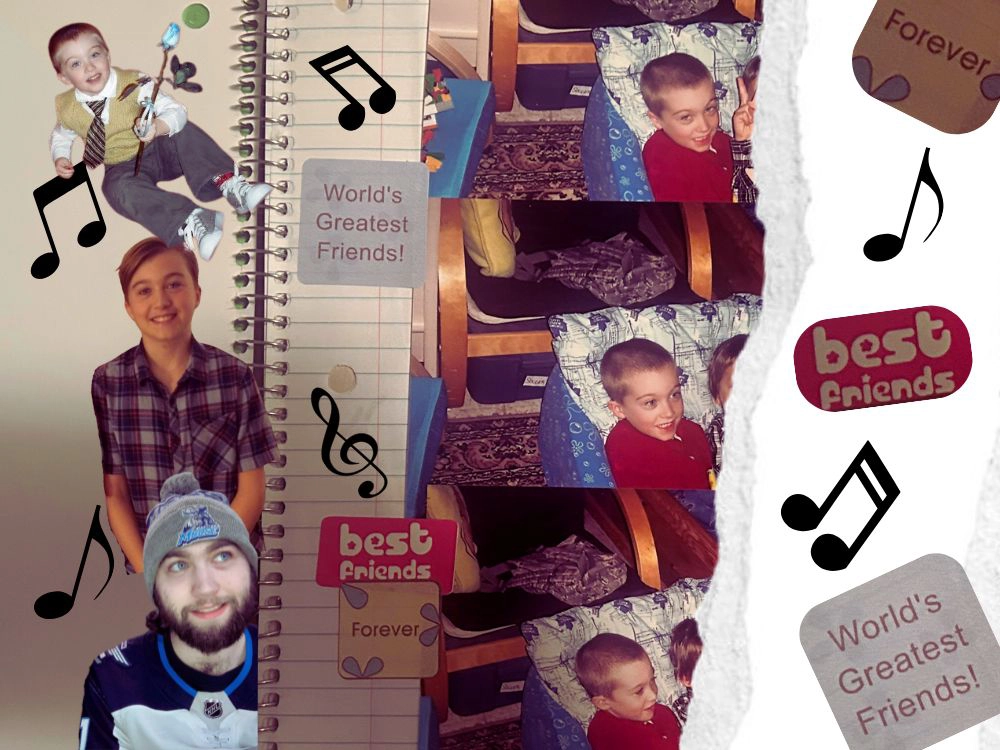
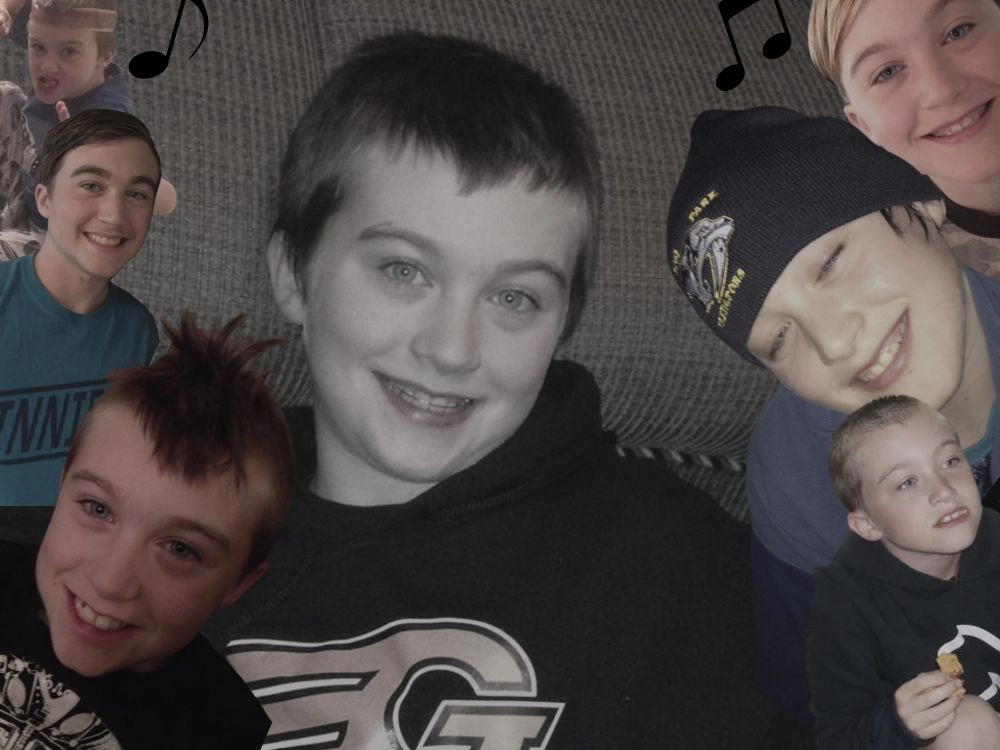
The only thing I remember about my first day of kindergarten is meeting Steven. From then on, we sat next to each other on the colourful puzzle piece mat every day and quickly became inseparable. Sometimes our teacher would even mistake us for each other. We didn’t look similar besides the buzz cuts we both had, but we spent so much time together we may as well have been twins.
We quickly learned that we lived close to each other too. He lived in the house right next to the 7-Eleven and I was in the apartment building across the street. We visited back and forth, and when I moved a few streets away the next year, our visits to each other’s homes only increased.
My mom and I went from living with my grandparents to just us, so I no longer had a grandma to walk me to school. Now my mom would bring me to Steven’s house when she left for work and I would hang out with him before school, then we would spend more time together after school while I waited for her to pick me up.
Most of my favourite memories with Steven come from those times. Climbing the tree in his yard and hanging out in the branches, drawing pictures of our favourite Pokémon (something he was far more talented at than I was), playing video games with his older brother, joking around with his two younger sisters and hanging out with their dogs. By the time second grade started, I had essentially become a member of their family.
My parents got divorced when I was a baby. I’ve only known them as separate people, going back and forth between their houses. The time I spent with my dad was very different than when I was with my mom. He kept the TV on at his place, playing the top music video channels on repeat.
This was my first exposure to music in any meaningful way, and I loved seeing what music video was number one each week. This relationship to music through my dad and my friendship with Steven were foundations of my early life, but I would lose both at almost the same time.
SALEM’s Early Days
SALEM formed back in 2006 when John Holland was attending the School of the Art Institute of Chicago. While working at an American Apparel store, he met Jack Donoghue, and they started making music together.
John was raised in a musical family, and had been producing music for a few years before meeting Jack. He was taking a lot of speed at the time, and the music had a quick tempo and high energy. But once he met Jack, the frequency of his drug use slowed, and the music started reflecting that.
A couple of months after meeting Jack, a friend of John’s from high school back in Michigan, Heather Marlatt, moved in with him and the trio officially formed SALEM. By 2008, they had moved to Traverse City, Michigan, the hometown of John and Heather, and they started releasing their music.
Two EPs came out that year: the provocatively-named Yes I Smoke Crack and Water. These releases gave SALEM their first taste of recognition. Their unique sound they called “Drag,” influenced by genres like Chopped & Screwed, Juke, and others, made them stand out among other new and on-the-rise bands.
After releasing a couple singles in 2009, SALEM released their anticipated debut album King Night in 2010. Included on King Night were new versions of two previously released songs, “Frost” and “Redlights,” that took the original versions and put a darker, more droning atmospheric soundscape onto them.
This change made the songs better in my opinion, but it’s also reflective of the way the band members’ relationships with drugs had gotten worse.
When My Life Changed Forever
At the beginning of third grade, Steven switched out of the French Immersion program at our school. For the first time ever, we weren’t in the same class, but I still went to his house and hung out with him at recess every day.
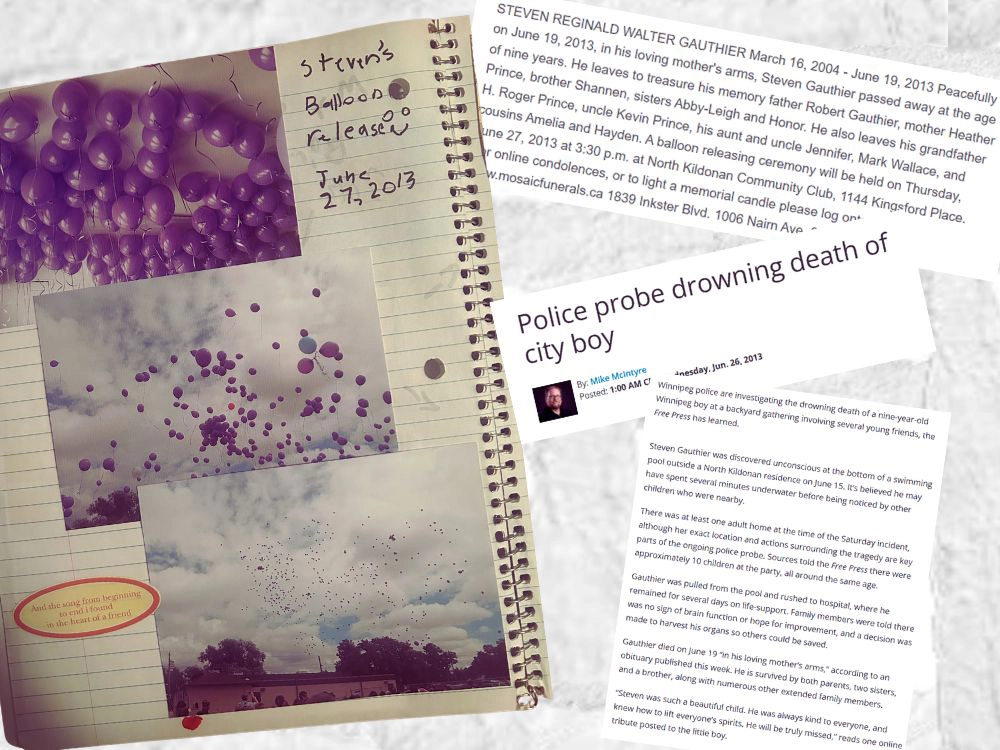
Near the end of the school year, his class had a pool party at someone’s house. I walked home with him on the Friday of the party. It was my birthday the next day, and I remember him wishing me an early happy birthday. After I got home, my dad came to pick me up, and once I was at his house we started watching the movie Hop.
Near the end of the movie my dad’s phone rang and he paused the movie. He handed his phone to me. My mom was on the other end. She told me Steven had been found at the bottom of the pool during the party. He was resuscitated, but he was still unconscious and in the hospital.
I’ve never felt my heart sink so rapidly and so deeply. The rest of that weekend is a blur.
I can’t remember anything besides being worried for Steven and not caring about my birthday anymore. On Monday, my body attended school, but my mind was still at my dad’s house when I got the news. Other kids mentioned Steven to me because some of them were told what happened, but I didn’t speak much that day; an oddity for me at the time.
My mom let me stay home the next day and when I woke up on Wednesday, she told me that late the night before, Steven’s family took him off life support. I wasn’t the same person anymore. I was now aware of a change in the makeup of the universe that I couldn’t ignore.
A week later the school held a ceremony to celebrate Steven’s life, and I remember being flooded with so many condolences they stopped having meaning.
Before I could even try to get my feet back on the ground, my dad accepted a job offer in Calgary, meaning I would be seeing him far less and the music I’d listen to at his house was no longer a part of my life.
In less than a month, I lost so much of what made me who I was, and I was left floating in an abyss of grief and confusion; an abyss I had no idea how to escape. So I began trying to avoid it.
SALEM’s Fade Into The Shadows
A year after the release of King Night, SALEM released another EP, I’m Still in the Night, and promised a second full-length project the following year. Around the time King Night came out, John was smoking crack and Jack was doing OxyContin, among other things. This had been going on since before their first two EPs were released, but got more intense. These drugs influenced the dark sounds their music was known for, but would also prove to be one of the main reasons they would begin to fade away from the spotlight after the release of I’m Still in the Night in 2011. Another factor was Heather giving birth to her first kid that same year.
When 2012 came and went, the promised second album was nowhere to be found, and SALEM had disappeared into the shadows.
Years of Avoidance
I started middle school a couple of years after Steven’s death and my dad’s move. I tried to treat it as a fresh start. My friends from elementary school were still with me, but now there were so many new kids to meet.
But spending time with my old friends and making new ones didn’t do much more than provide a distraction from the grief I had yet to process. Middle school also provided another way I could distract myself: listening to music during class. In sixth grade, my English teacher would allow us to listen to music while we completed our work during most classes.
My friend Tyler and I would take advantage of this and listen to music together. We sat next to each other and would share his earbuds, one in my right ear and the other in his left. Tyler’s dad was a big fan of Eminem, so that’s the music Tyler had on his phone. I already knew who Eminem was, but I had never gone out of my way to listen to his music, or really any music, after my dad moved.
After he moved I stopped caring about what song was number one on any given week. When I was in a car and the radio was playing the top songs, I’d just look out the window and try to mute the radio’s noise in my head.
Listening to Eminem with Tyler was my first proper introduction to Hip-Hop, and it quickly became the only genre I’d listen to. Near the end of that school year, a song called “Ultimate” by Denzel Curry was gaining attention and was being included in a lot of videos of cool sports trick shots and other things 11-year-old boys like me enjoyed watching on YouTube. I was really impressed by Denzel Curry’s rapping, and it would join the small rotation of songs I’d always listen to.
Every time I thought about Steven during these years, I’d grab my phone, open the music app, and press play on “Ultimate” again, or listen to The Eminem Show for the thirtieth time. The more I flooded my brain with something that wasn’t thinking about Steven and how much I missed him (which could happen just about anytime and anywhere), the easier it was to avoid the grief that was gnawing away at me.
I didn’t know how to deal with his death when it happened, and I continued to avoid trying. Eventually I felt like it would be too much to handle even if I did face it.
This cycle would repeat while I went through the motions of each year. Go to school. Go to hockey in the winter. Visit Dad in Calgary for a few weeks in the summer. I tried to enjoy all of these of things, and sometimes I did, but most of the time I could just feel the grief getting closer, and my routine just became a vehicle to avoid it.
This avoidance made me more and more emotionally numb, until I didn’t really feel like a person anymore. I had fallen into a rut that I didn’t know how to escape.
The Shadows
SALEM may have faded into the shadows in 2012, but Jack was still staying busy. In 2013, Kanye West released his album Yeezus, and Jack was credited as one of the producers on the song “Black Skinhead.” In 2014 Jack moved to the small town of Montegut, Louisiana, and John would join him there shortly after.
In 2016, photographer and artist Wolfgang Tillmans announced on Instagram that SALEM would be returning with their highly anticipated second album later that year. He had just stayed with Jack and John for three days in Louisiana. According to Tillmans, Jack and John were living in a simple wood house along a river, surrounded by nothing but endless bugs and a gravel road overrun with grass.
When SALEM did make their return that year, it was just a remix of Tillmans’ song “Make It Up As You Go Along.” After this remix, they went back to being silent, failing to deliver the promised second album yet again.
Jack popped up again a few years later in 2019, being photographed in the studio with Swedish rappers and producers Yung Lean and Whitearmor. Around the time COVID-19 hit in 2020, Heather made a post on Instagram calling out Jack and John for quietly removing her from the band without her knowledge.
SALEM finally made their long-awaited official return on May 2, 2020, with their new mixtape Stay Down, which was presented on NTS Radio. Nothing else was announced, but for the first time in nearly a decade, it seemed that SALEM was back.
The End of Avoidance
When the pandemic hit, many of the distractions I’d been accustomed to using to avoid my grief were no longer available. School was shut down, sports were cancelled, and I couldn’t leave the house to hang out with friends. I started listening to more Hip-Hop and began diving deeper into the genre by watching YouTube videos about present day Hip-Hop music. This led me to some current rappers like JID, Joey Bada$$, and Vince Staples. The music continued to be a distraction from my grief. The fast-paced rapping and the ability to get lost in the rhyme schemes were perfect ways to overload my brain so grief had no room to seep in.
I eventually got into Experimental Hip-Hop. I heard JPEGMAFIA on Denzel Curry’s song “Vengeance,” and I liked his verse, so I started checking out his stuff. To keep finding more artists, I started using the website Rate Your Music (rateyourmusic.com), a site where users can give star ratings to albums and view all the different genres of music.
Looking through recent Experimental Hip-Hop, I found Sematary. He and his best friend, Ghost Mountain, were young rappers from California who were making music nobody else was really making at the time. Ghost Mountain was heavily influenced by Emo music. Sematary had a few different influences, like Cloud Rap, Chicago Drill, and Horrorcore, and his production had a lot of Black Metal samples.
The biggest influence on both, however, was Witch House music. I didn’t know what this genre was when I saw it listed in the description of his albums, and I had to learn more. I went on Rate Your Music and looked at the highest rated albums for Witch House.
The top two were King Night and Fires In Heaven, both by SALEM.
I listened to both albums right away. I pressed play on the title track of King Night, and let the dark, spacey synths and Southern-Hip-Hop-inspired drum patterns take me to another world. This world was one that brought my grief closer, instead of helping me avoid it.
By the time I finished listening to King Night and started Fires In Heaven, I felt that avoiding my grief was no longer an option. When I heard the drop 45 seconds into the fifth track “Starfall,” I got goosebumps, a sign I was okay with letting the music take me to new places.
My obsession with their music was instant. SALEM became my go-to music for the next few months.
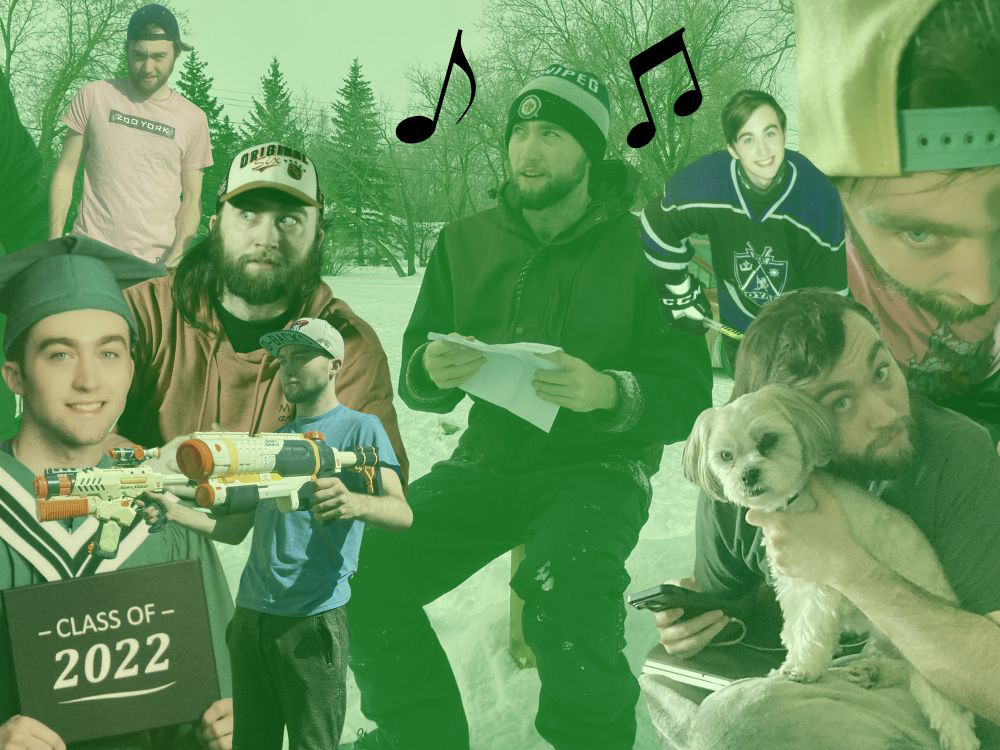
SALEM’s music allowed me to finally stop avoiding my grief. I started feeling more like myself and I could see fun in little moments again. The fleeting moments where I got these feelings over the past seven years were some of my favourite times, and now I was starting to feel that way more often. In a way, I view this time as when my current life began. This is when the person I am today started to take shape, and I could finally grieve Steven and begin to move forward with my life.
Music as Therapy
What SALEM’s music was doing for me, without me realizing it at the time, was a form of unofficial music therapy. According to an article by PositivePsychology.com, music therapy is an evidence-based clinical form of therapy that uses musical interventions to achieve specific emotional, cognitive, social, or physical goals.
Music therapy is generally divided into two approaches: active and receptive. The active type normally involves the patient making music, like writing songs or playing an instrument, while receptive is about listening to music, usually selected by the therapist. I unknowingly followed the receptive type.
Music therapy harnesses the brain’s natural response to melody, rhythm, and harmony, and can be a powerful form of healing when traditional therapy isn’t working. It also promotes neuroplasticity, which is the brain’s ability to rewire itself. This helps a patient manage physical or mental pain, regain speech, and process complex emotions like grief.
According to a 2016 paper by Julian O’Kelly, music can release dopamine (the pleasure hormone), and reduce cortisol (the stress hormone). The Hip-Hop music I was listening to all the time was never able to release meaningful amounts of dopamine.
Sure, I would get a rush of excitement when a rapper would go really fast or when I would catch a double entendre that was really cool, but I wasn’t able to get the necessary mix of more dopamine and less cortisol that receptive music therapy aims for.
When I found SALEM’s music, that mix finally happened for me. I can’t really explain why it worked when other things hadn’t, but I think the experiences with drugs that heavily shaped their sound was something I was able to connect to my experiences with grief, and something finally clicked.
Emergence From The Shadows
After their long-awaited return with Stay Down in May of 2020, SALEM dropped the single “Starfall” on September 18. This new single was reminiscent of what made them stand out originally, but was a clear evolution of that sound. Whereas a lot of their earlier music was clearly influenced by drug usage, this song seemed to be more reflective of their addiction journeys and where those journeys had taken them.
After the song and its accompanying music video were released, they announced there would be more coming soon. A month later, on October 16, they released another single titled “Red River,” and opened pre-orders for their new album, confirming the ten year long wait for a follow-up to King Night was finally here. Two weeks later, they released Fires In Heaven .
Besides “Starfall,” the song on this album that stands out to me the most is the tenth track, “DieWithMe.” To me, this song sounds like the journey of a drug addict. It has some moments of ethereal euphoria, created by an explosion of shimmering synths that sound like the feeling of a user getting high.
Between those euphoric moments, however, is a sluggish, hazy, scraping of synths together that create the sound of a user struggling through life while they’re not using. It ends by slowing down to a sharp stop, followed by a haunting echo as the song fades out, the user having succumbed to their addiction.
The music video reinforces this feeling. It features an animated, anthropomorphic pill, meant to look like a Percocet, walking in a straight line. The first time the euphoric synths come in, the pill floats high into the sky, with glowing lights around it, before abruptly smashing back into the ground when they end. The next time the euphoric synths show up, the pill is cracked and bruised, and it hunches over before falling back while the video pans up to the night sky and ends.
I might interpret this song and video as a representation of the metaphorical journey of an addict, but it also mirrored my journey with grief. The fleeting moments of happiness that would have me crashing back down when my grief got too much to handle, until I was eventually bruised and broken. But when I laid back and stared at the night sky, among the stars was SALEM, helping me get back up so I could heal those bruises.
Grief Unmuted
Before finding SALEM, I wasn’t able to talk or even think about Steven without feeling an overwhelming wave of sadness wash over my body. I would just freeze.
Since finding them, I can talk and even write about him. Of course, I still get sad when I think of him sometimes, but now I can look back and remember him without breaking down inside. I think about the great memories I made with him and how our friendship still means so much to me.
I listen to a lot of other genres of music now too, and I’m able to find all types of songs that I can connect with. SALEM’s music broke down a barrier that I’d built up to avoid my grief. This wall also prevented me from creating emotional connections to basically anything.
I struggle to think where I’d be right now if I hadn’t found SALEM’s music. I’m not sure if I’d have found something else that would’ve done what their music did for me. But I did find them, and it’s given me the freedom to finally live my life like I should be: no longer avoiding the grief, but listening to it.