More than a Tournament
Dana Goertzen’s four-year journey to win the National Aboriginal Hockey Championship brought her closer to her heritage and created lasting memories.
Listen to this story:
A shrill whistle echoes throughout the rink as Dana Goertzen lowers her stick. She takes a glance at the clock then back at the centres lining up just outside the opposing team’s blue line. The score clock gleams: 25.3 seconds left in the game. The score is 2-2.
She lets out a single breath and sets up as the referee drops the puck.
The centres tie up at the faceoff and the puck flicks over to the opposing left winger. The Ontario winger slaps the puck diagonally back to her right defenceman, who shovels it across to her left side partner. Goertzen sees the defence pass back to her partner and skates forward to pressure her. The opposing defender looks up the ice but second-guesses and passes diagonally, right into Goertzen.
The puck bounces off Goertzen’s stick and she quickly recovers it. She’s on a breakaway. It’s her against the goalie. She stick handles, cuts hard to her left and fires. The goalie moves with her, pushing back to her post, but the puck flies into the back of the net and a roar echoes throughout the rink.
Goertzen jumps and charges back into her own end, arms raised victoriously, seeking her sister Jenna who plays goalie. They embrace and the rest of the Team Manitoba players join in.
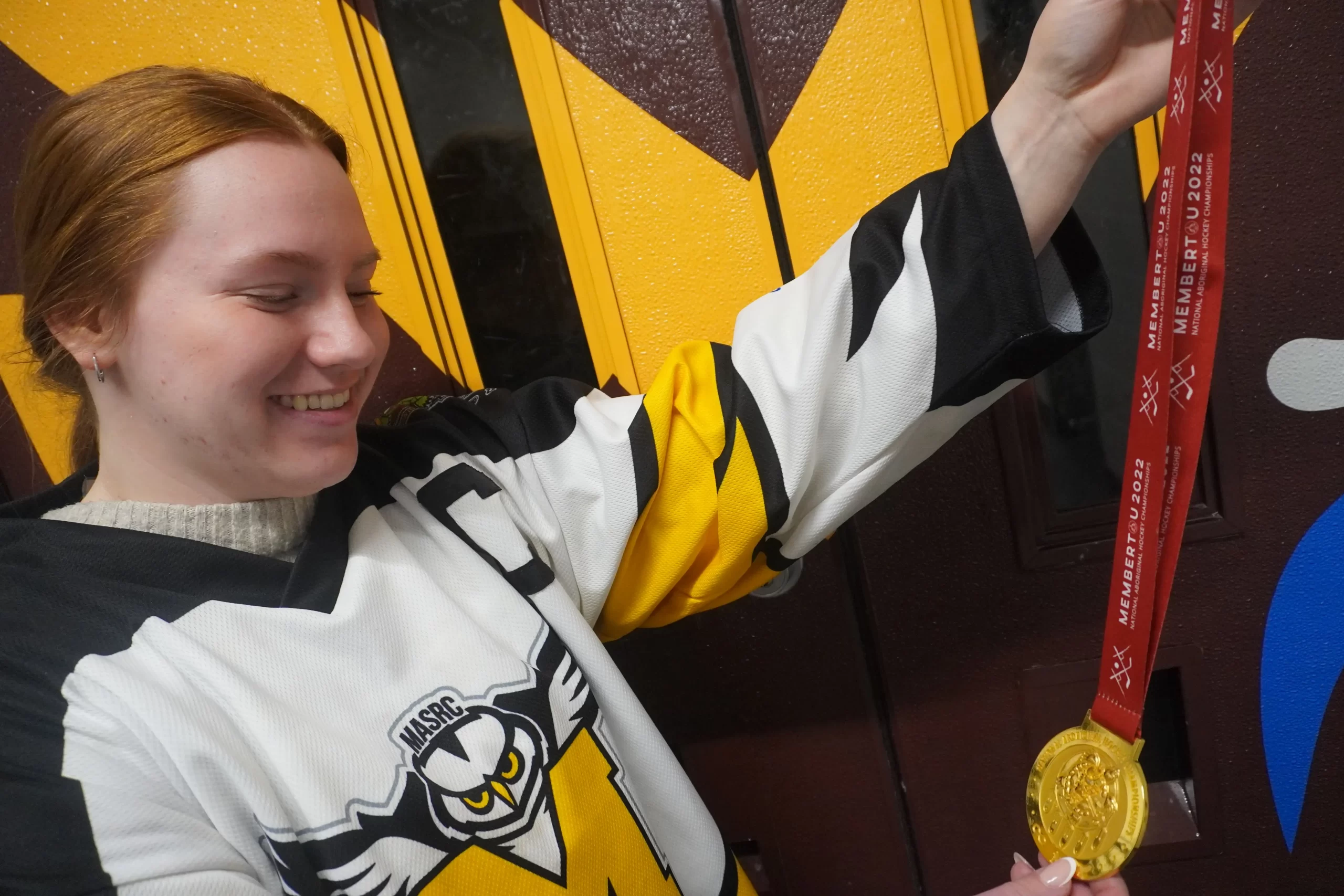
It’s 3-2 for Manitoba with only 16.9 seconds left. It’s not long before Goertzen raises her arms again in victory. She has finally won the National Aboriginal Hockey Championship (NAHC).
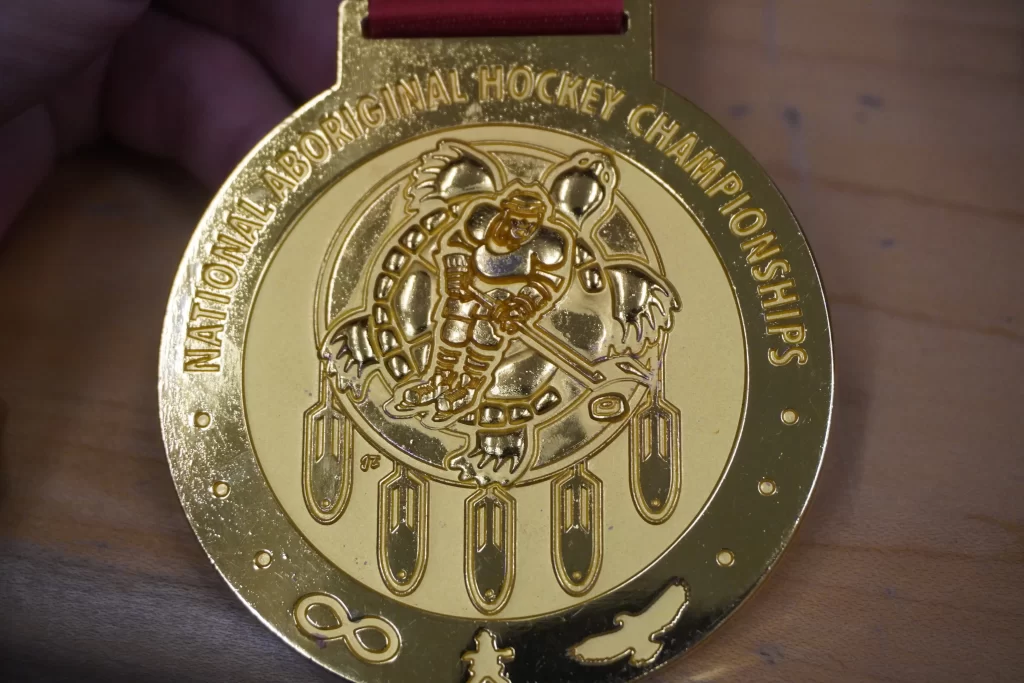
What is NAHC?
Since 2002, the National Aboriginal Hockey Championship (NAHC) has given Indigenous players a chance to represent their heritage and their hockey skills on the national stage. It was established by the Aboriginal Sport Circle and sanctioned by Hockey Canada with the initial goal to provide Indigenous athletes with equitable access to high level hockey competition as pointed out by the Ontario Hockey Association.
Teams from across Canada play each other in a round robin, then have a single elimination tournament that ends with crowning gold, silver, and bronze medalists for both men and women 18 and younger.
Manitoba Aboriginal Sports & Recreation INC. (MASRC) Major Games Coordinator Riya Donnelly said the tournament was built out of necessity.
“Originally the mission of the NAHC was to provide an opportunity for elite Indigenous hockey players to be recruited,” said Donnelly.
“Now we are finding in the last five to six years, most of our [18 and under] athletes, who are mostly 17, are already committed [to a junior hockey team].”
Current University of Manitoba Bisons forward Sophia Anderson told the Winnipeg Free Press back in 2023 that the tournament helped put her on the radar of her local university.
Each province’s sports and recreation council oversees selecting their team. For Team Manitoba, the MASRC is the governing body that oversees the province’s selection, though they do receive some help from Hockey Manitoba, said Donnelly.
Ontario, Saskatchewan, Manitoba, Alberta, British Columbia, and Eastern Door and the North (EDN), which primarily draws from Quebec but also includes some of the surrounding regions, consistently send teams to the tournament. Other teams that have made appearances are Team Atlantic, South Ontario, North Ontario, and Nunavut. Ontario used to send two teams to the tournament but now they generally send one as the competition is fierce and they can’t afford to split up the talent. For 2026, NAHC announced that Nova Scotia would be sending both men’s and women’s teams.
While the teams are named after their respective provinces, the map that decides which teams players try out for is not the federal map of Canada but the original treaty map, as Donnelly pointed out.
“So, we generalize them by saying Team Manitoba, Team British Columbia,” said Donnelly, “But if you want to get very technical and specific, if you have an athlete whose band is on the northern end of Ontario, they are eligible to compete for Team Manitoba because the treaty line allows it.”
As these tournaments are specifically designed for top Indigenous athletes, not everyone can earn a spot. There are guidelines for eligibility including status, age and skill. Players that make the team are already playing high level hockey.
Making the Team
Donnelly reported that around 180 kids who meet eligibility show up to open tryouts in Manitoba, which take place in early August. Of those 180 kids, approximately 120 of them are male and just over 60 of them are female. The age range for most of the kids at first camp is 14-17 years old.
Back in 2018, one of those 14-year-olds was a wide-eyed Dana Goertzen.
“It was my mom who was like ‘Hey I saw this, you should try it.’ I was like ‘absolutely not,’ like that’s [18 and under] I’m only 14,” Goertzen laughed.
Fortunately, Goertzen, a member of the Red River Métis, listened to her mother and went to the open tryouts. She made it to the second round of cuts. After open tryouts, a smaller group will get callbacks and be informed that coaches will be scouting them by sending people to watch their games, take notes, and report back to coaches and evaluators.
Families pay fees for the tryout, to cover the cost of ice, and pay more fees if they make the team. The MASRC reaches out to possible sponsors to help cover individual player costs and writes letters to recommend sponsorship. Some players earn sponsorships while others don’t. The MASRC often reaches out to the Manitoba Métis Federation (MMF), which regularly donates. In 2023, when Winnipeg hosted the NAHC, the MMF donated $50,000 to help with entry costs, gear, and travel expenses.
For the second round of tryouts, the number of men gets cut down to approximately 60 and 48 for the women’s, said Donnelly. The remaining players then receive an invite to a winter tryout near the end of December, and the team is selected in January. The rosters that started with 180 total participants are shrunk down to 20 players for each team, with five spares.
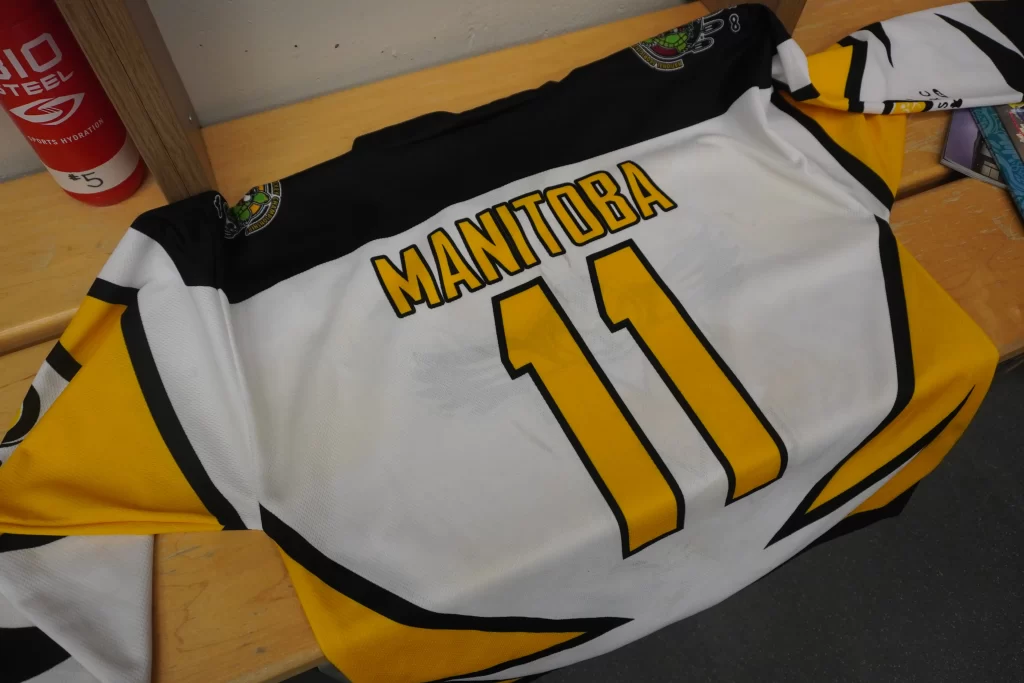
Every province has their own tryouts, run by their own Indigenous councils. Provincial rosters are submitted early in the new year, which allows players to know who they’ll be playing with prior to the tournament.
Goertzen, who has lived in Winnipeg her entire life, said that the opportunity to meet with other Indigenous athletes was something she greatly appreciated throughout the whole process.
“You play against some of these girls, but you don’t know them. Then all of a sudden, you’re trying out for the same team, and it bonds you together.”
A Different Path
For Manitoba Junior Hockey League player Deegan Wapass, playing with fellow Indigenous kids was his norm. He was born in 2005 on Big River First Nation in central Saskatchewan. His mother also grew up on Big River while his father grew up on Thunder Child First Nation. Wapass played for his reserve hockey team when he started out, though finding time to get on the ice wasn’t always easy.
“Growing up on the reserve for 16 years, I didn’t have a lot of the facilities most kids got to skate on. Artificial ice wasn’t a thing; it was only natural ice. I had to wait obviously till November or December when it was cold enough to step on the ice.”
Once it got cold enough to skate, Wapass spent hours out on the ice practicing and honing his skills. As he got older, he began to move from town to town playing for youth teams that sought his talents. Wapass is an offensive player. In his single NAHC appearance he had five points in six games, three goals and two assists. He represented Team Saskatchewan in 2023 when the tournament was in Winnipeg. His team finished fourth, losing to British Columbia in the bronze medal game.
Wapass has stayed connected with Indigenous circles and regularly participates in other “Native Tournaments” in the off-season. There’s a variety of minor and adult hockey tournaments like the Native Hockey Alberta Provincials, Manitoba Indigenous Cultural Education Centre’s Indigenous Minor Hockey Tournament and the Little Native Hockey League. Many Indigenous Tournaments have cash prizes. To be eligible to play, players need a status card and to be registered with a team. Wapass says he starts playing tournaments each year as early as February and tries to play in as many as he can over summer, which is often viewed as the hockey off-season. Wapass says he enjoys the tournaments.
“Obviously, you have a bunch of big First Nation names themselves who played professional and are playing high-level now and it’s always nice to be a part of the culture again,” said Wapass.
For Wapass, he’s happy to see that the next generation of Indigenous athletes from Big River First Nation now have an indoor rink that doesn’t need to rely on cold weather. Now 20 years old and in his final year of junior hockey, he has a decision to make on whether to pursue a career in hockey or change course after the end of the season. He hasn’t made up his mind yet.
“I just love playing hockey, the atmosphere is unmatched.”
Tournament Atmosphere
For Goertzen, she remembers the environment of NAHC like it was yesterday.
“It’s never quiet, sound is always ringing out throughout the week. You can feel the excitement and the sense of community,” said Goertzen.
Goertzen’s first NAHC tournament was in May 2019 in Whitehorse, Yukon. The city had two venues for games. Most teams took flights up to Whitehorse, though in other years, teams have travelled by bus to the host cities.
“The sights up there were breathtaking. It’s such a beautiful place in Canada,” said Goertzen.
“We had some team bonding exercises through a scavenger hunt. I remember being a shy Grade 9 student but doing activities like that I felt really bonded us when we arrived in Whitehorse.”
The tournament creates a professional setting, with player-only areas and no parents allowed near the dressing rooms.
Every NAHC tournament has an opening and closing ceremony, where each team gets to walk in like at the Olympics. It’s a celebration with over 300 athletes and hundreds of fans.
“Last year when I went with Team Manitoba, we were listening to game seven between the [St. Louis] Blues and [Winnipeg] Jets, so it was pretty funny when we were trying to stay silent during a part of the ceremony and one of the craziest games ever is happening on all our phones.”
The schedule for these tournaments is quite relaxed, with each team playing one game per day.
“A lot of tournaments you go to, they’ll cram four games into a weekend. Your equipment feels gross by the end,” said Goertzen.
The venues that host often invited local Indigenous people to share bits of culture throughout the event. In a typical hockey tournament, you’d see toques, hockey cards and memorabilia, but at NAHC, the sights are different.
“There’s jewelry vendors, last year there was a Cree booth, and they sold a cookbook of Cree-only recipes and kind of compared them to ‘hey if you’re making lasagna, instead of these ingredients, use this’ type thing.”
In Whitehorse, throat singers, dancers and Indigenous drummers performed. The food was tailored to the event as well. Goertzen’s favourites were the three sister soup and bannock burgers.
The stands were packed with family, fans, and fellow players. Goertzen said it felt like the crowd was on top of you the entire game.
“Scoring a goal felt so much more special with the crowd,” said Goertzen.
“I don’t know if it was because I was just young, but it felt like a whole national tournament. It just felt like everyone came to watch every game. The men’s team without a doubt was there cheering on the women’s team.”
Goertzen left Whitehorse with a silver medal as Team Manitoba lost to Team Saskatchewan in the finals.
“You develop rivalries in such a short time and the second it was all over I couldn’t wait to come back.”
Post COVID-19
After Whitehorse, it would be two more years before Goertzen got her chance to compete at an NAHC again. In 2020 and 2021 the tournament was unable to operate due to the COVID-19 pandemic.
“To lose those two years sucked. I loved the time I got to spend in NAHC, but I always look back on those two years and wish I had them back. I love the thrill of the competition and just being there.”
In 2022, Goertzen returned to Team Manitoba, but a lot had changed. Three years older and the only returnee on the team, she felt it was her responsibility to motivate her teammates and make sure the hunger for gold was still there. She also got to play with her sister Jenna.
Jenna was the starting goalie for Team Manitoba, and Dana said when she started playing with Jenna, she felt more protective and responsible when she was on the ice. She always looked out for Jenna, whether it was backchecking on plays or pushing other girls that were in her sister’s way.
Membertou, Nova Scotia hosted NAHC 2022. Goertzen remembers feeling confident going into the tournament, but that year the team was also playing for something more. In 2021, former Team Manitoba coach Emily Middaugh tragically died by suicide.
“Me and our two assistant coaches, we also made sure we’re not just playing for us right now, we’re not just playing for that lost gold medal. We’re also playing for Em.”
Middaugh was someone who had a profoundly positive effect on the players she coached and the ones she played with. Her impact beyond this tournament was cemented by the Lethbridge Hurricanes of the Alberta Junior Female Hockey League who now have an annual Mental Memorial Game, dedicated to Middaugh.
While the tournament in Membertou was another momentous week, a core memory for Goertzen was an excursion outside the rink. Half an hour Southwest of Membertou, Team Manitoba travelled to Goat Island.
Goat Island is located on Eskasoni First Nation which is the largest Mi’kmaq community in the world. The island offers events where community members share their stories with visitors.
Goertzen compared it to a museum experience. Everything was a lesson and she got to see the sports their ancestors played, the medicines they made, the toys they played with and the natural resources they used.
“It was just a surreal moment to kind of quite literally get in touch with nature and our heritage and just learn firsthand how they lived,” said Goertzen.
As the tournament went on, Team Manitoba dominated opponents, winning all four round robin games while out scoring their opposition 30-7. They played Team Saskatchewan in the semi-finals and won 3-0. Goertzen had a goal in the semis, but her biggest moment was still ahead.
With only one period left in the final, Team Manitoba found themselves down 2-0 to Team Ontario. Goertzen put up three points in the final period, two assists and a goal and led her team ultimately winning the game with a goal late in the third period.
“I will say nothing compares to that week-long tournament at all, and I got to go to a lot of awesome places in the States when I played,” said Goertzen.
Since aging out of the tournament, Goertzen has stayed near the NAHC any way she can. She travelled the next couple years with her younger sister’s team before slowly working her way onto the coaching staff in 2025.
As Donnelly of the MASRC says, “It’s very common for alumni to want to continue working around the tournament.”
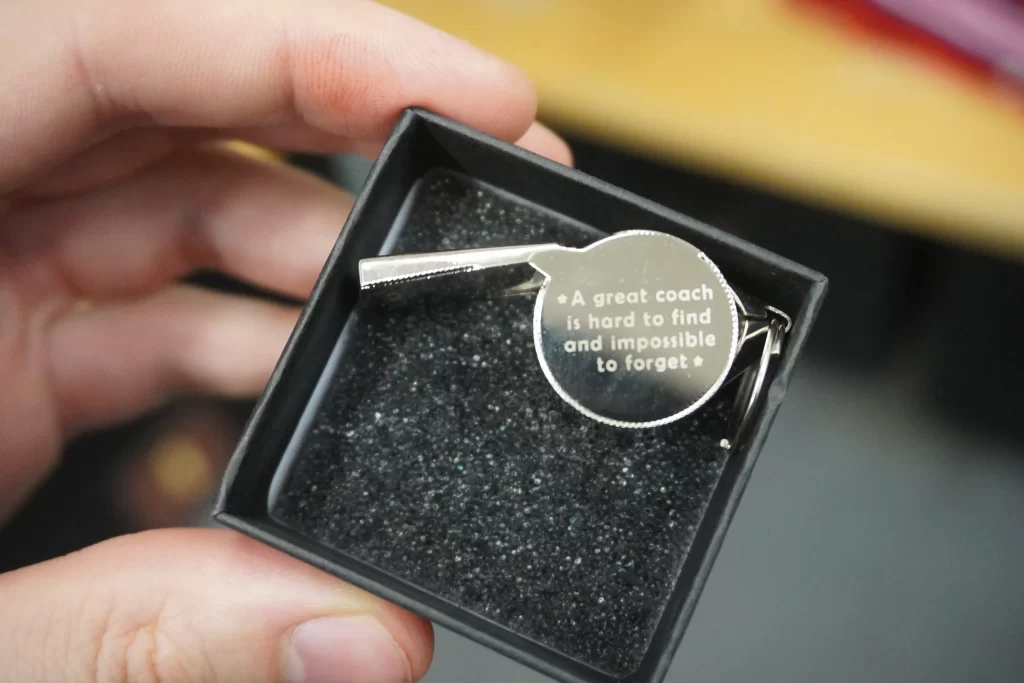
Donnelly said that often there aren’t enough spots open for returning players to help coach, but she appreciates how interconnected the community is. Goertzen and her coaching staff have selected the Team Manitoba for NAHC 2026, held this year in Regina, Saskatchewan in early May. She hopes the next generation of Indigenous athletes have the same amazing experiences that made it so special for her.
“I’m really looking forward to going back. It’s something I circle every year and something I hope to continue being involved with. For some it may seem like just a tournament but it’s so much more.”