The Hands I was Dealt
For as long as I can remember, my sweaty hands have told a story before I could.
Listen to this story:
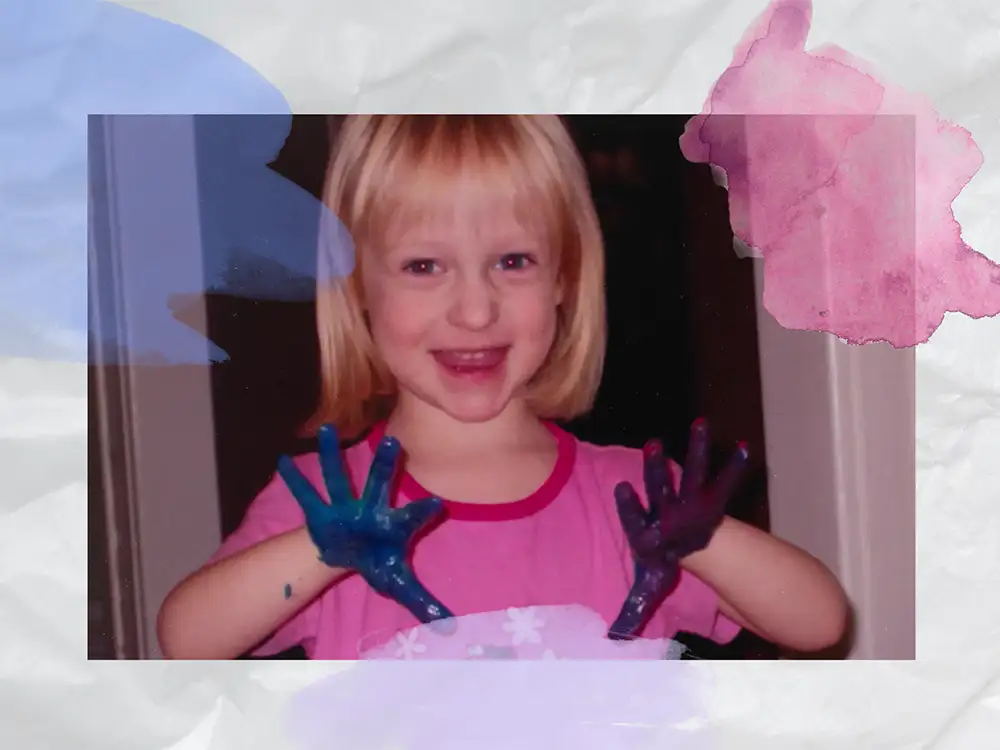
The music room was loud. My kindergarten class was banging on and putting away instruments. We had just finished the cleanup song, you know the one — clean up, clean up, everybody everywhere, clean up, clean up, everybody do your share — then we lined up for homeroom.
Our teacher called for partners. I remember scanning the line, palms already damp, heart pounding.
“Let’s all hold hands so no one trips,” she said.
Suddenly my partner, a boy I barely knew, grabbed my hand before I could wipe it on my jeans. The second our skin met, I felt it happen. A slick, instant spread. I could feel his reaction before he even said anything. The twitch, the small pull away, the exaggerated wipe on his shorts. Laughter slowly rippled through the line of students around me.
“Gross,” someone said.
I wanted to disappear. I wiped my hands on my jeans quickly, then flipped them palms up to prove they were dry, but the cold clamminess quickly crept back in.
I was a pretty quiet kid; I’m an only child and was often scared of new people. Grade school was a hard adjustment. I remember crying in my mum’s arms and making her late for work because I didn’t want her to leave me.
In my early memories of school, I see a little girl sitting in a reading circle, criss-cross applesauce, with her palms face down on her thighs, occasionally sliding them back and forth. The teacher finishes reading and the children line up for recess. Eager kids run to the front — like the outdoors is going anywhere — and the little girl is busy scanning the kids in line, looking for someone who might not mind — or, God forbid, comment about — holding hands with the sweaty girl.
Years later I’d learn the name for my condition: hyperhidrosis. It wasn’t just nerves or poor hygiene or punishment. But in that classroom, I didn’t know any of this. All I knew was my body was telling a story before I could.
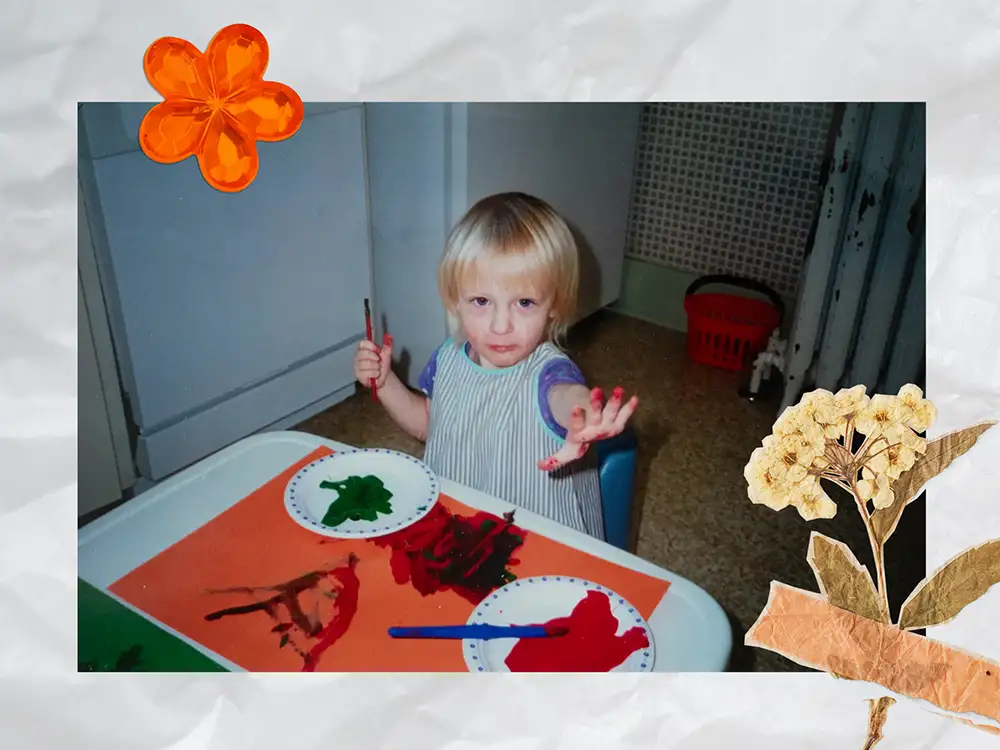
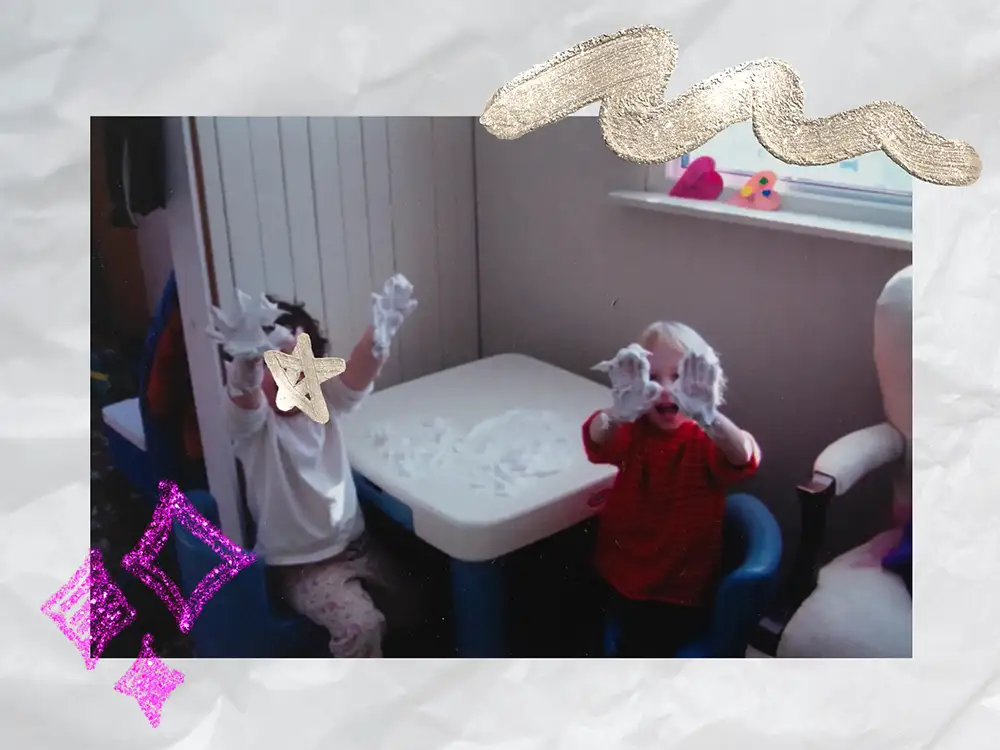
Hyperhidrosis or HH is a medical condition which causes excessive sweating beyond what is typical for body temperature regulation. Sweating is an automatic process to keep the body cool. It can be triggered by physical activity, exertion, hormones, or mental stimuli like nervousness. For people with HH, this mechanism for cooling is erratic and overactive. According to the International Hyperhidrosis Society, people with this condition have overactive sweat glands and may sweat up to four or five times more than is normal. Humans typically have up to 4 million sweat glands; 3 million of those are eccrine sweat glands. These glands are all over the body but most heavily concentrated on the soles of the feet and forehead. Palms and cheeks are the next most concentrated. The rest are apocrine sweat glands, which are responsible for scent and cover smaller regions.
Generalized HH affects the entire body and is usually a part of an underlying condition that’s hormonal or neurological. Focal HH, however, occurs in otherwise healthy people, affecting the palms, armpits, feet and/or face. Generalized HH affects roughly three percent of the Canadian population, according to the Canadian Dermatology Association. There are a few different types of focal HH:
- Axillary hyperhidrosis is excessive sweating in the armpits.
- Palmar hyperhidrosis is excessive sweating in the hands and soles of the feet, sometimes called palmoplantar hyperhidrosis.
- Plantar hyperhidrosis is excessive sweating in the feet.
- Craniofacial hyperhidrosis is excessive sweating of the face, head, and scalp.
There is very little information on cases that start before the age of 10, but I have had palmoplantar HH since I was five.

Having sweaty palms didn’t get easier with age. I continued to be self-conscious throughout elementary and middle school. When I hit puberty things got worse.
Academic research shows HH usually starts at puberty and naturally progress reaching a peak in early adulthood around 22, then symptoms stabilize. I haven’t come across anyone else who dealt with the condition at such a young age.
The International Hyperhidrosis Society conducted a research survey of 2,000 HH patients in 2016 and found that a third of axillary HH patients say their condition started before the age of 12 and 88 per cent of respondents reported sweating had either gotten worse over time or steadied at a high level. In a letter from the Journal of Cosmetic Dermatology, researchers claim HH negatively impacts emotional well-being, interpersonal relationships, daily functioning, and overall quality of life.
Growing up, sports were always a point of contention for me. It brought on anxiety because my body was on display. Even when I wanted to be active, my body would give way almost immediately, and the sweat would trickle down my arms and hands. Forget the monkey bars, climbing walls, and swinging baseball bats, they were simply out of the question.

While my hands were always a battle, playing soccer in elementary school was the first time I really struggled with my feet. My soccer games were often in the neighbourhood, and we only had one car. So, my dad and I would bike over, swap my shoes out for cleats, and then I’d go run around with my friends for an hour. By the time we biked home, my feet were so hot they’d be throbbing.
I would feel my heart pulsing through my feet and legs — wrapped in cheap acrylic socks, plastic shin pads, and non-breathable synthetic leather cleats. I remember ripping my gear off at home and having to scratch everything thoroughly. I always had athlete’s foot during soccer season. When my hands got particularly bad, I would get athlete’s hand as well. I remember my mum buying me all kinds of lotions and potions to try and subdue the itch. The best practice was to fully wash my hands and feet after every game and then dry them with baby powder. Folks with HH know the condition often forces you to be creative.
Like most taboo health conditions, people turn to the internet to find solutions. One Reddit user I interviewed, who goes by Q, described the burden of HH perfectly: “Even if you are going to push through and be active, the slightest thing will have you looking like you just ran a marathon.” Q has auxiliary HH, and she avoided working out because of the bullying she faced in elementary school.
I dreaded gym class growing up. Not because I didn’t like moving, but because exertion came with uncomfortable consequences that were hard to hide.
Another Redditor, Jamie, told me he shared a similar embarrassment which followed him from gym class into adulthood. “I always hated sports growing up, and it led to a pretty inactive lifestyle as an adult,” he said. Sometimes what starts as self-protection and preservation hardens into routine.
According to the Canadian Medical Association Journal, the majority of patients with palmar HH experience childhood onset and often don’t seek medical help until adulthood. Other researchers Sharifi and Jafferany describe a similar pattern in their research, noting HH in children and adolescents negatively affects their social lives, upbringing, and self-esteem. Reading all of this years later feels less like a revelation and more like a confirmation. I already knew what it meant to be hyper-aware of my body in spaces where bodies are supposed to move freely.
The people with HH who I spoke to had come up with various ways to manage. For many, Botox helps control and sometimes cure excessive sweating. One woman had developed axillary HH during pregnancy that persisted after the birth of her son. She opted for Botox injections and hasn’t had another issue since the first round.
Several people I spoke to described cycling through treatments like Drysol; an over-the-counter high strength topical antiperspirant. Others have used iontophoresis, a therapeutic procedure where an electronic iontophoretic device is connected to two plastic trays filled with water. The patient then puts their hands in the water trays, and the machine sends out a low electrical current which temporarily blocks sweat glands. This procedure is time consuming, has to be repeated, and has limited results.
Megan, who suffers from auxiliary and plantar HH told me, “To be able to live life dry — the way everyone else does — was insane for me.” Across interviews, people described Botox as effective but sometimes fleeting, great when accessible, and then intolerable to live without. Insurance changes, procedural fees, and out-of-pocket costs often determined whether someone could stay dry or not.
In addition to the physical symptoms, HH also affects a person’s emotional well-being, thought processes, and ability to interact socially. People with HH report difficulty concentrating, socially interacting, managing stress, and trouble self-soothing. In a survey conducted by the Journal of the American Academy of Dermatology, one-third of patients with axillary HH reported sweating as being barely tolerable or intolerable and frequently interfering with daily living, but only 38 per cent of people surveyed had discussed their sweating with a health care professional. While shame and embarrassment are associated with excessive sweating, a lack of awareness can play a part too.
I didn’t discuss my excessive sweating with a doctor until I was a teen. As a kid, sweating was all I knew. I was struggling, but I didn’t tell anyone. I had normalized some things that I now see as signs of HH. I thought the cuffs of clothing were just supposed to be wet, I used rubber gloves to open jars, my hands steamed when I took off my mitts, even when my hands were cold my palms were warm and clammy, I dreaded taking off my shoes at people’s houses.
I still sometimes forget I have HH. I’m so used to it. I think this is why it took me so long to realize I had a condition. I was stuck between ignoring and obsessing over my hands. Outwardly I tried to leave them be, not draw attention to them, as if my fidgeting would somehow announce to the world that my palms were slick and I couldn’t control them. Inwardly, I thought about them a lot whenever I was in social situations, with family, or doing anything where I had to touch others. The sweating itself doesn’t particularly bother me, its managing the social side of HH that makes me feel isolated and othered.


My diagnosis happened by accident. I had gotten booked in to see a dermatologist for the first time when I was 14. I was struggling with hormonal acne. At the end of my appointment, I made an offhanded comment about how much I was sweating. She looked at my hands and did a test with this special absorbent paper. She assessed the paper and then told me, very casually, that I had a condition called hyperhidrosis.
When I was a kid, I didn’t want any negative attention — I barely wanted any kind of attention period unless it was from my parents. So, the idea of my hands sweating being a symptom of something bigger, something to ask about, was never a thought. I kind of just accepted it as my baggage, as something weird about me I had to deal with. In middle school, I found solace in art class. It was guaranteed alone time, just me and my hands to make whatever I wanted.
I’ll never forget my first art class in grade nine. I sat near the back of the room and was soon accompanied by four twelfth-grade girls. They were beautiful, confident, and had their own distinct art and clothing styles. As a chronic eavesdropper, it was nice to overhear the popular girls chatting nearby. It didn’t take long to start slowly joining in on conversations and jokes, and I was welcome. Twice a week for one hour at a time, I got adopted — and they didn’t care about my sweaty hands. Back then I needed that confirmation, some kind of sign I wasn’t too weird to fit in. Even though they graduated in June, their presence stuck with me, and I think it gave me the confidence to finally put my hands aside and myself first.
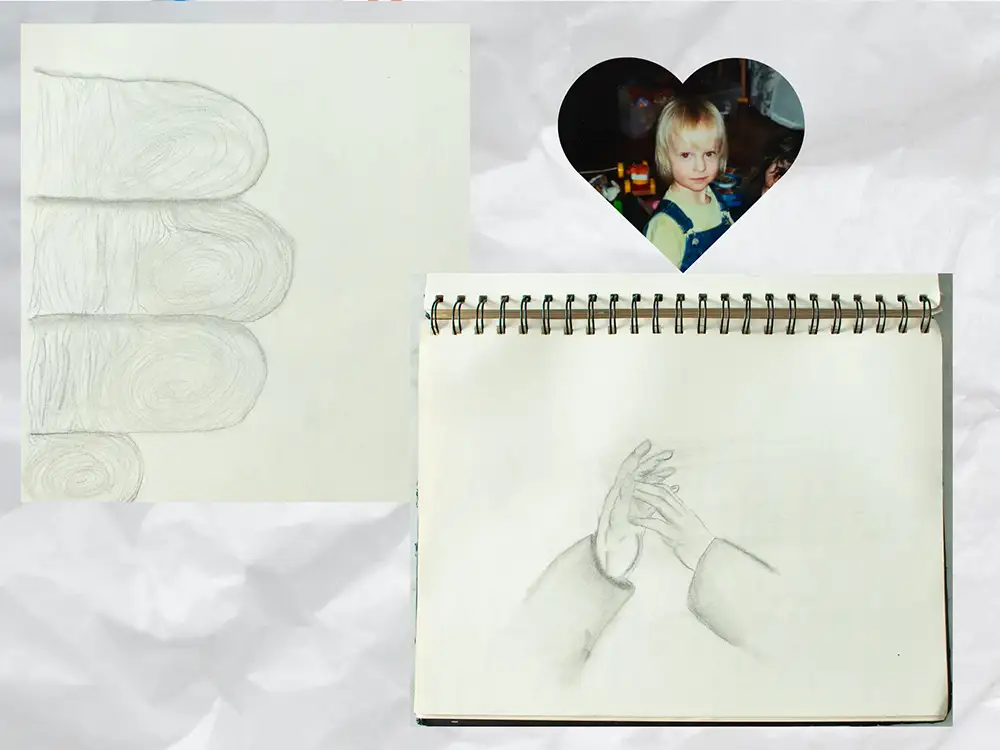
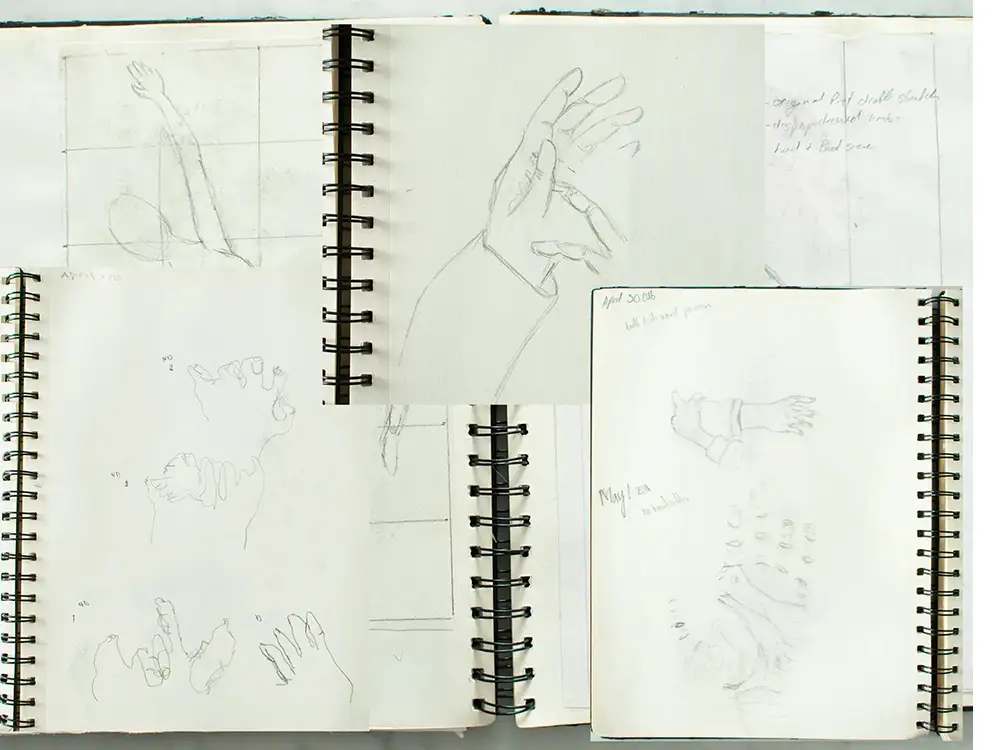
The next year, a week after my sixteenth birthday, I went for my first job interview. I was applying at a steakhouse downtown. Open interviews were at lunch time on Wednesdays, and I marched my way downtown, resume in hand.
It was a warm early March, and I had been debating about what to wear the night before. I needed something professional that made me look mature, but still fun. I didn’t have any dress pants, so I wore an orange overall-style corduroy dress. I threw on a light grey t-shirt underneath, but in my rush to get out the door, I didn’t realize the position I had put myself in.
Now you don’t have to have HH to know grey is the most unforgiving colour when it comes to sweat. I thought I would be safe with the dress, that the cool spring air on my legs would balance out any overheating in my armpits or hands, but I was wrong. On the 15-minute bus ride, I felt the sweat beading under my arms and gathering in my palms. I flipped my hands over to face my palms to the sky, trying to mitigate the temperature. While sitting there trying not to think about it, I felt a thick bead of sweat rush down my underarm to my bent elbow. I walked to the interview with my arms hovering awkwardly high and did my best to air myself out before going inside. Thankfully it was a pretty dark space compared to the bright spring sun, and if my new boss cared about my clammy state, he didn’t show it. I was hired on the spot. Along with my first job, I came away with the growing sense that living with hyperhidrosis wasn’t about fixing my body but learning how to move through the world with it.
My first memory is playing in the sand at a beach. I’m near the edge of the water, squatting down and grabbing fistfuls of wet sand, crushing and squeezing it. The water gently laps back and forth over my bare feet and the globs of falling sand.
There are pictures from what I believe is that day. I’m around two years old. I was at the beach with my Mum and Gma. I don’t remember the waves or the birds or the sun, though I’m sure they were there. What stays with me is the feeling in my hands.
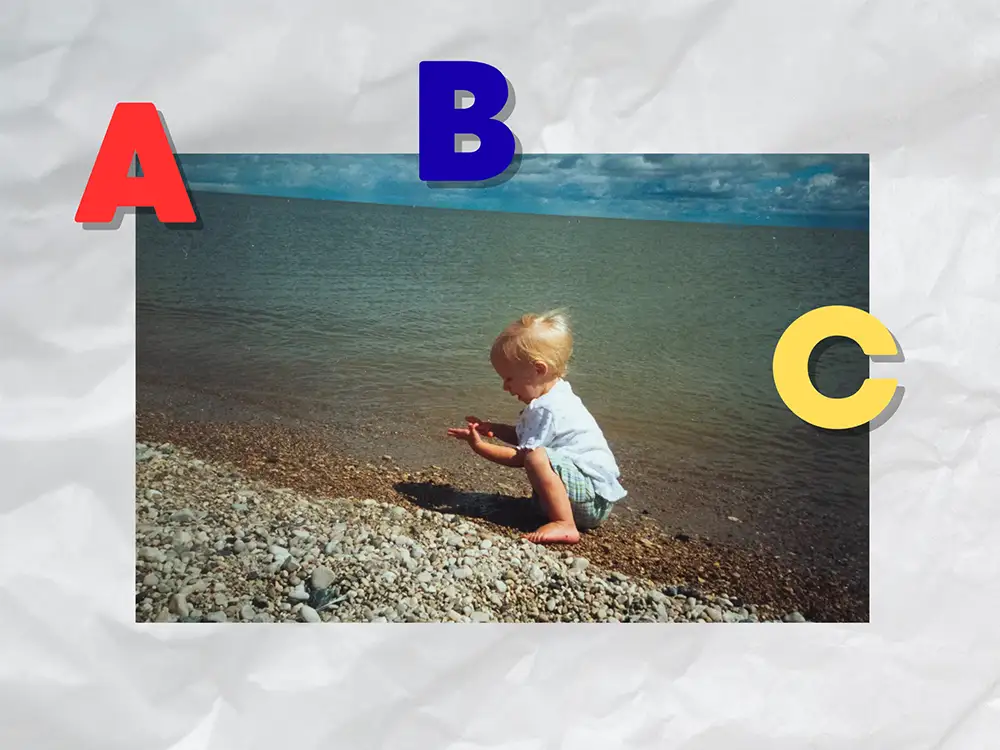
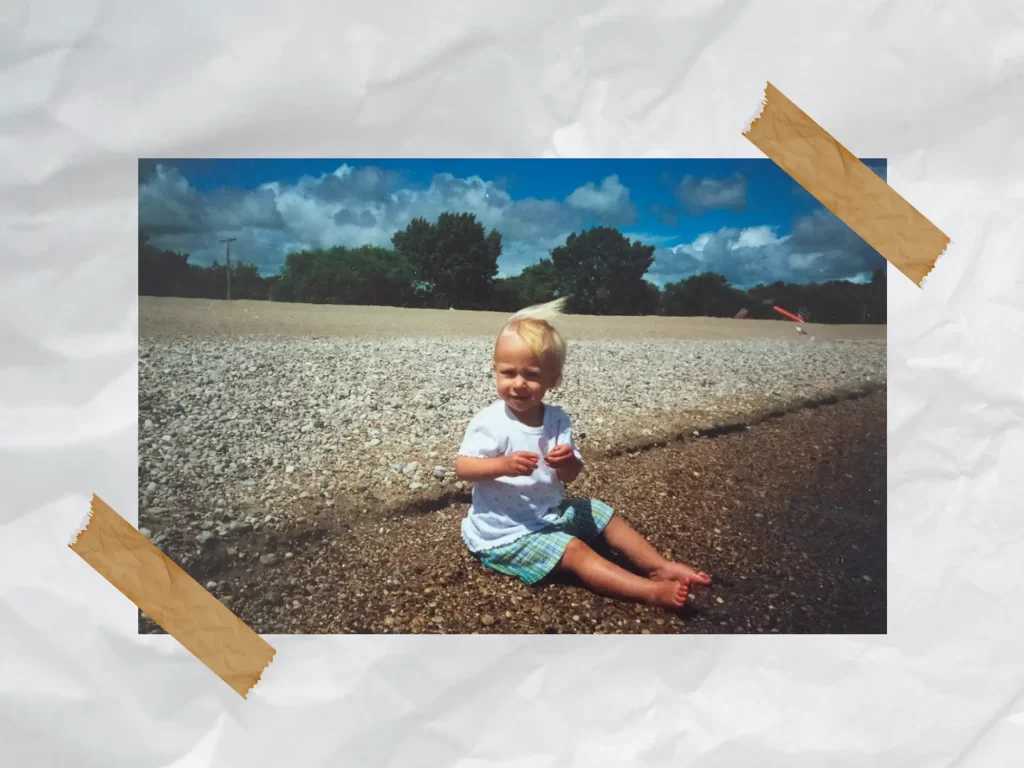
My first memory aligns with touch and feeling. My hands were doing exactly what they were meant to do, reaching, holding, and feeling. Living with hyperhidrosis has complicated touch in ways that are hard to explain and easy to feel consumed by. At an early age, I learned to treat my hands like a liability, something to manage, hide, or apologize for. Touch became a negotiation, a calculation, a moment to brace for. But that earliest memory reminds me touch existed before shame, before explanation, before awareness.
I used to live in fear of my hands and how they would show up before I could. In the last few years, I’ve noticed a shift. I’m more at ease in my body. I don’t brace with touch in the same way I used to. Even if it doesn’t come as second nature, I make myself reach out and touch the world around me. Now, when I leave a family gathering, I do my best to hug everyone goodbye. I always make sure I hug my Gma. I let the moment linger and take in the smell of coffee on her clothes and her sweet hairspray.
When my friends reach out for a high-five, I meet them there, no explanation or disclosure. I walk with my girlfriends and let our fingers intertwine as we lead each other through a crowded bar. I reach for my boyfriend’s hand because I know a little sweat won’t bother him. I let our fingers stay tangled, and I let myself be held.
I try to treat touch like something sacred. Each squeeze of a hand, each arm around my shoulders, each goodbye hug is a chance to practice letting my body to do what it does while I choose what comes next.