Following Stories, Finding Home
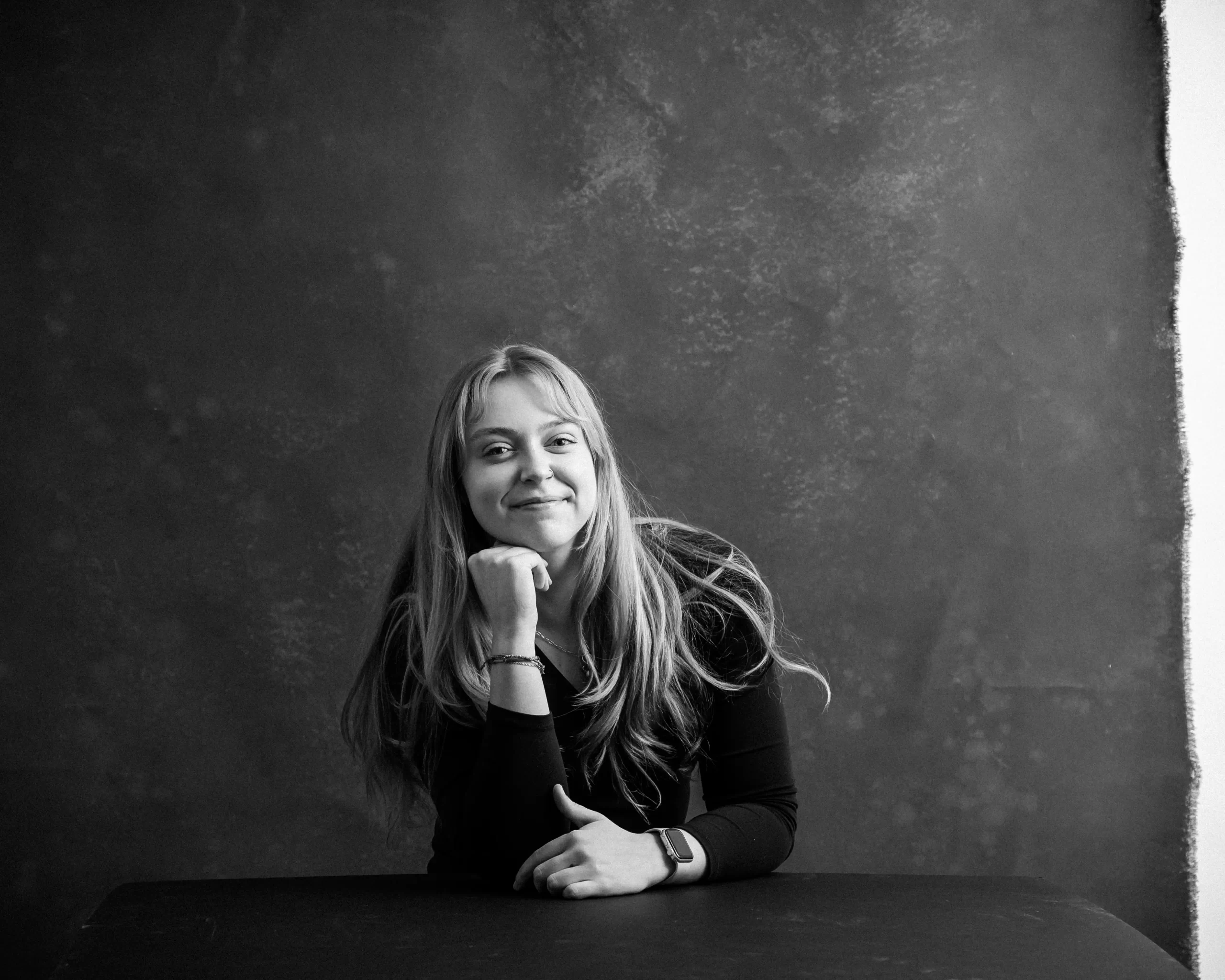
What happens when the stories we’re told about where we come from are full of holes and half truths? In her memoir, “Children Like Us: A Métis Woman’s Memoir of Family, Identity and Walking Herself Home,” Brittany Penner joins forces with her past selves to search for the truth about where she really comes from and who she is.

Children Like Us: A Métis Woman’s Memoir of Family, Identity and Walking Herself Home
Brittany Penner
Doubleday Canada
July 2025
$26.00
Brittany Penner is told she should be grateful. People say she’s lucky — and isn’t she? She’s the one who gets to stay, while 21 foster siblings, all Indigenous like she is, join and leave her family throughout her childhood.
In her memoir Children Like Us, Penner tells a story familiar to many growing up in southern Manitoba. Penner is adopted as a newborn into a white Mennonite family living in a small Christian town. Her childhood is filled with lunchtime faspa, prayers in Low German, and her father’s Sunday meddachschlop, or afternoon naps.
When Penner is seven, her mother dresses her up as Pocahontas for Halloween. Penner describes “feeling like a Native kid dressing up like a white kid who’s dressing up like a Native kid for a night.” This feeling lingers for years as Penner struggles to reconcile her Indigenous roots with the origin story she was taught as a child. Penner’s identity develops amid a stark lack of family history or cultural understanding. She holds tightly to her foster siblings and any information about her birth mother, searching for a why to heal the disconnect she feels from her community, her parents, and her body.
Children Like Us tells Penner’s story chronologically, recounting her earliest memories and adult life in her own distinctive voice. As she carries the reader through to present day, Penner props open the door to her past with a scrapbook of photographs and videos from throughout her life. Many chapters begin with these descriptions of footage taken by her Baba or photos from major life events, reading like proof of Penner’s lived experiences. If this media is evidence, then Penner enlists the reader as a witness — see what happened, understand the meaning of it, and don’t look away.
This is Penner’s first book, though she’s written personal essays for publications including The Globe and Mail, Canadian Family Physician, and Huffington Post Canada.
Penner now works as a family physician, and she describes finding this career path at age 11 after breaking her leg in a car crash. She spends weeks in the hospital, a time filled with traumatic moments and a frightening loss of control over her body. One positive encounter with a doctor, however, steers Penner to medical school as a young adult.
Penner is used to comforting people, after a childhood spent standing between her mother’s emotional fragility and her father’s anger. She also knows through personal experience that symptoms are systemic. Penner has a natural empathy, often instinctively feeling the histories behind her patient’s pain. This ability to address root issues that might otherwise go unnoticed sets Penner apart in her field.
Throughout the book, Penner unravels the systems that have shaped her life, as complex and interconnected as those in a human body. She discovers through research in her adult life that she was born at the tail end of the Sixties Scoop, part of the ongoing legacy of residential schools in Canada. According to a Statistics Canada study from 2024, roughly 7.7 per cent of Canadian children are Indigenous, but Indigenous kids make up 53.8 per cent of those in foster care. Penner had always been told that her mother chose to give her to a different family, but she now realizes how many outside forces influenced this choice.
The systemic mistreatment of Indigenous people in Canadian healthcare also weighs on Penner throughout her time as a medical resident. Her precarious sense of self prompts her to question how much of her Indigenous patients’ burdens are rightfully hers to bear, and this internal struggle amplifies the impact their trauma has on her life and relationships.
Children Like Us will resonate with those of us trying to understand the systems we’ve been born into, and Manitoban readers will see a mirror held up to both the comforts and cruelty of our everyday culture.
The book has a single author, but it’s a group project. Grown-up Penner leads the way, encouraging her younger selves to come forward and take their turn being heard. Children Like Us is the culmination of Penner’s inner work healing these past versions of herself, but “walking herself home,” as the title reads, is a work in progress.