
Believe in the Heart of the Cards
My first Yu-Gi-Oh! meetup seemed doomed to disaster after I unwittingly used an illegal deck against a perfect stranger. Little did I know, friendship and community were in the cards.
Listen to this story:
Standby
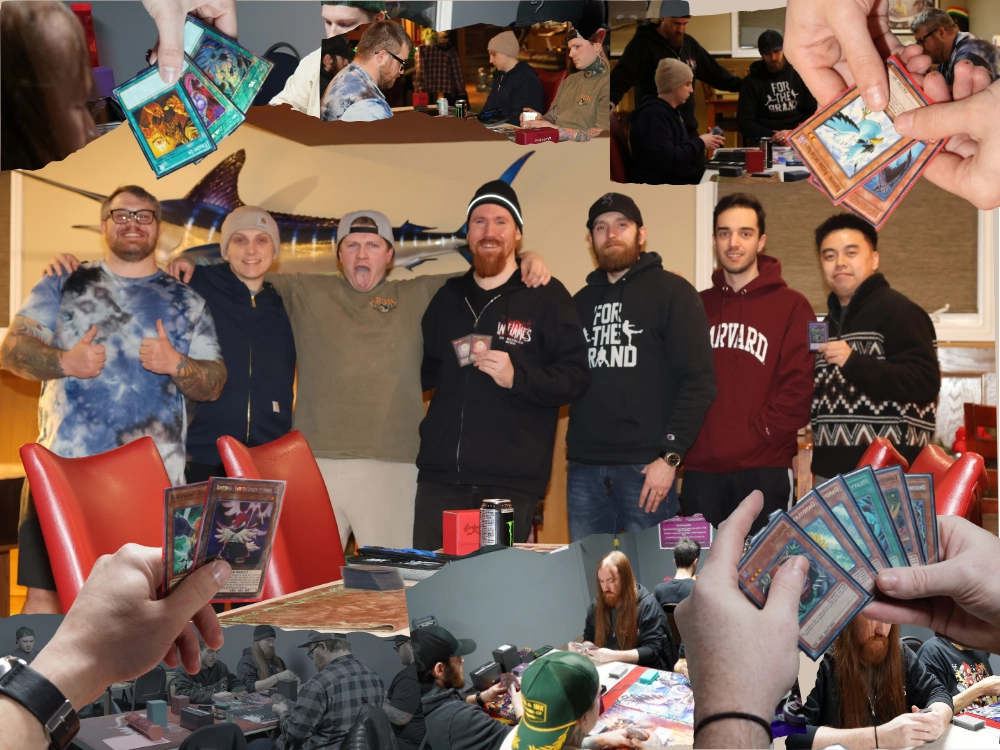
Coming through the door of Galaxy Comics and Collectibles, I’m greeted by rows full of tables with playmats covering them, banners of booster box releases, and a group of guys in their 20s and 30s waiting for the tournament to start.
I’m nervous, really nervous. I feel that pit in my stomach telling me to just go home and forget about going to play Yu-Gi-Oh! Maybe I’ll try again next week.
I look around. Everyone is on one side of the room talking — they’re all well acquainted. I introduce myself. I find a seat in the corner of the room, and I wait for the games to start.
The organizer of the tourney, a worker from Galaxy Comics, comes in to announce the matchups for the first round. He calls out, “Allen against Ryan.” I set my playmat and deck box in front of Ryan and introduce myself to him properly.
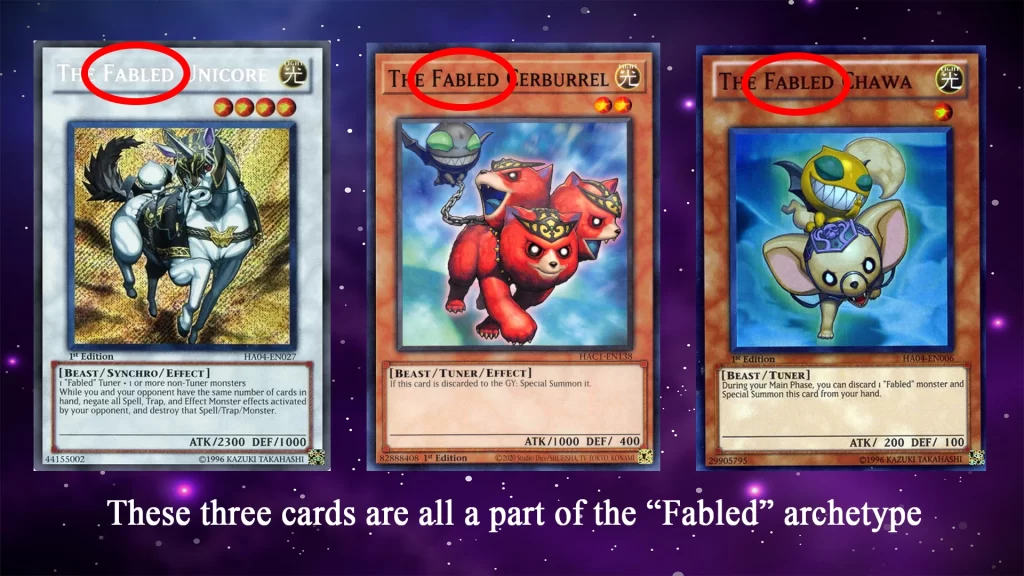
Ryan, a buff dude covered in tattoos, is rocking a plant archetype deck. Then there’s me, a five-foot-six scrawny guy with my fabled archetype deck.
Archetypes are a group of cards that share the same theme and artwork style, which usually have similar names.
My right leg won’t stop shaking up and down. It happens whenever I get anxious — it’s one of my clear tells. I don’t know the proper etiquette, and I’m scared. Ryan, thankfully, is nice enough to show me the ropes and guide me through my first actual match. But he keeps making weird glances at my cards.
I lose the first game 2-0, and then the next game starts. The announcer calls “Chris against Allen.” I sit in front of Chris, introduce myself, and put my playmat down beside my deck. Chris, who is wearing a Mega Man t-shirt, stares at my deck.
“You know some of the cards in your deck are banned in this format?” Chris says.
Damn.
I discover most of the cards in my fabled deck were made after 2010. This means they are illegal and unusable in the format we’re playing.
We call the organizer to help us decide what to do. I’m disqualified from this second match. But still, Chris is nice enough to play the whole game with me.
A simple mistake cost me a match, but it did give everyone a good laugh.
Fortunately, Ryan carries extra decks and for my final match, he lends one to me. I begin shuffling, scanning through each card and squinting at the small text. A few turns later, I find myself shaking hands with my opponent. Somehow, I win with Ryan’s borrowed deck.
As the tournament ends, we say our goodbyes, and I make sure to let everyone know I’ll be coming back the following week.
I made new friends that day. It was also the start of my Yu-Gi-Oh! nights with this tight-knit community. No one made me feel bad about building the wrong deck, nor did they discourage me from coming back the next week. They were all supportive and suggested websites like EdisonFormat.net which they use when building decks.
Growing up, I was called a nerd for watching and collecting Yu-Gi-Oh!. It’s comforting to see there are others just like me who enjoy it. Spaces like Galaxy Comics have become a weekly reprieve from the stress of everyday life, and the gatherings that happen there are an important bonding ritual for other nerds.
What is Yu-Gi-Oh!?
Yu-Gi-Oh! is a card series about magical monsters, mostly aimed at kids and teens. Created by Konami, it originated in Japan but has been translated into English for a Western audience.
When people think of Yu-Gi-Oh! they may think of the original TV series,Yu-Gi-Oh! Duel Monsters. Besides the original, spin-offs like Yu-Gi-Oh! GX and Yu-Gi-Oh! 5D’s continued even after the original series ended.
The Yu-Gi-Oh! trading card game was released in 1999 and gained popularity in the early 2000s, making it a direct rival to other famous trading card games like Pokémon and Magic: The Gathering.
Trading card games centre on acquiring cards through randomized packs or direct purchases, building decks around strategies, and competing in structured matches.
The objective of Yu-Gi-Oh! is straightforward. You start the game off with 8,000 or 4,000 life points and you try to get your opponent down to zero. Each deck is usually made up of 40 cards filled with monsters, spells, and trap cards. You also have an extra deck of 15 cards with fusion or synchro monsters. These monsters must be summoned separately using cards in your main deck.
The game is turn-based, and there are six distinct phases: draw, standby, main phase one, battle, main phase two, and end.
There are over 10,000 cards created for Yu-Gi-Oh! with roughly 87 formats which have forbidden and limited card lists. I don’t even want to start with how many cards I have currently scattered across my room.
Edison format — the format I play — is a popular way Yu-Gi-Oh! players duel to experience the old style of Yu-Gi-Oh!. There are fewer cards, and you don’t have to invest a lot of money into building decks.
Edison format gets its name from Edison, New Jersey, where a championship took place in April 2010. This format falls under what the community calls “old-school,” and any card created after May 10, 2010 is unusable.
Local trading card stores like Galaxy Comics in Winnipeg buy, sell, and trade Yu-Gi-Oh! cards and host local tournaments. Edison tournaments happen every week on Wednesday nights at Galaxy Comics. I try to make it every week, no matter what else is on my busy schedule.
But learning how the game works wasn’t the most interesting part of the experience. What stood out was the environment and the people who make up the community.
Main Phase
Galaxy Comics is a place where people can gather over a shared interest outside of home and work. Spaces like these are referred to as “third spaces,” and they help make up a community.
The Yu-Gi-Oh! community is male-dominated. In 2023 a survey with over 1600 responses shows that 85.6 per cent of players are male. This could stem from various reasons; one might be that the protagonists of Yu-Gi-Oh! are dudes and would resonate better with a male audience than a female one. The original Yu-Gi-Oh! is a Shonen manga — Japanese comics aimed at a young male audience.
But male-dominated spaces can have positive aspects: they help foster male bonding and develop new relationships. In the article “The Epidemic of Isolation Among Young Men,” The Walrus notes that as boys grow up and their interests change over time, their “desire to bond and identify with others remained.”
For me, male bonding came in the form of staying up till 2 a.m. with a couple of the guys from Edison Locals playing Duelingbook, a website where we would play Yu-Gi-Oh! online.
There are more similarities than differences in how men and women form friendships. The only major difference is that male friendships are more casual compared to intimate and personal female friendships. An article by HealthCentral titled “Bromance: The Truth About Male Friendships Right Now” said “Men were discouraged from a young age from sharing their feelings with one another. Instead, they were told that male friendships were solely built on shared activities.” Although shared activities contribute to most male friendships, males may crave more intimate bonds than what these activities allow.
I don’t see the people from Edison often besides Yu-Gi-Oh! locals, but I still reach out to them. We message each other anything Yu-Gi-Oh! related in our Discord group chat.
Battle
Jesse Forbes, a sewer and drain cleaner, is a card collector and weekly locals attender. He loves seeing a community accepting anyone.
“In our Edison Locals group, we’re all good friends who try to make each other feel good regardless of who’s winning or losing,” said Forbes. “You’re going to run into people who take the game more seriously than others, and that’s okay. Even though they might get mad at the game, they aren’t mad at you personally. Everyone is nice enough here to know that.”
Forbes also mentions how Yu-Gi-Oh! requires focus to be able to play properly. “Typically when it comes to any sort of card game or even chess, there’s like a multimillion-dollar prize for tournaments,” said Forbes. “When it comes to these games that require strategy, thought, and analysis, you don’t want to be drunk or high as shit; you need to be able to think of your next move.”
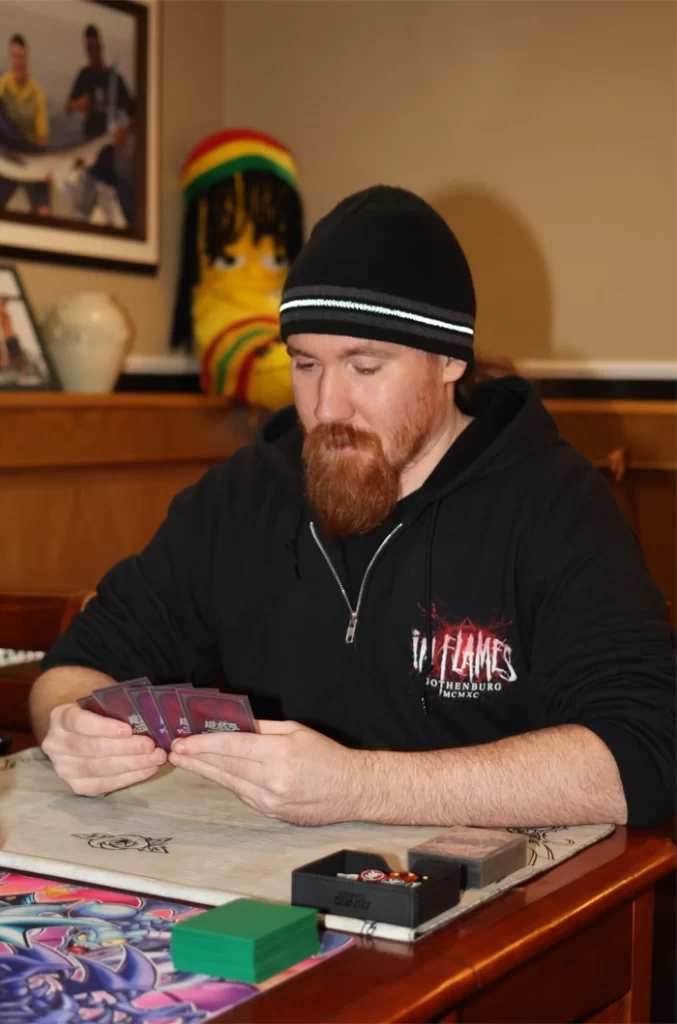
When asked about the male demographic and the male friendships Forbes has gained, he said, “There aren’t a lot of women that play Yu-Gi-Oh!. That’s just a fact. [It’s] not to say there aren’t women, but especially at our Edison Locals at Galaxy Comics, there aren’t a lot,” said Forbes. “Without a lot of women here I am surrounded by guys, so that’s who I’ve hung out with the most. It would be nice if more women showed up but I am happy with the people I have met and the good laughs we’ve had.”
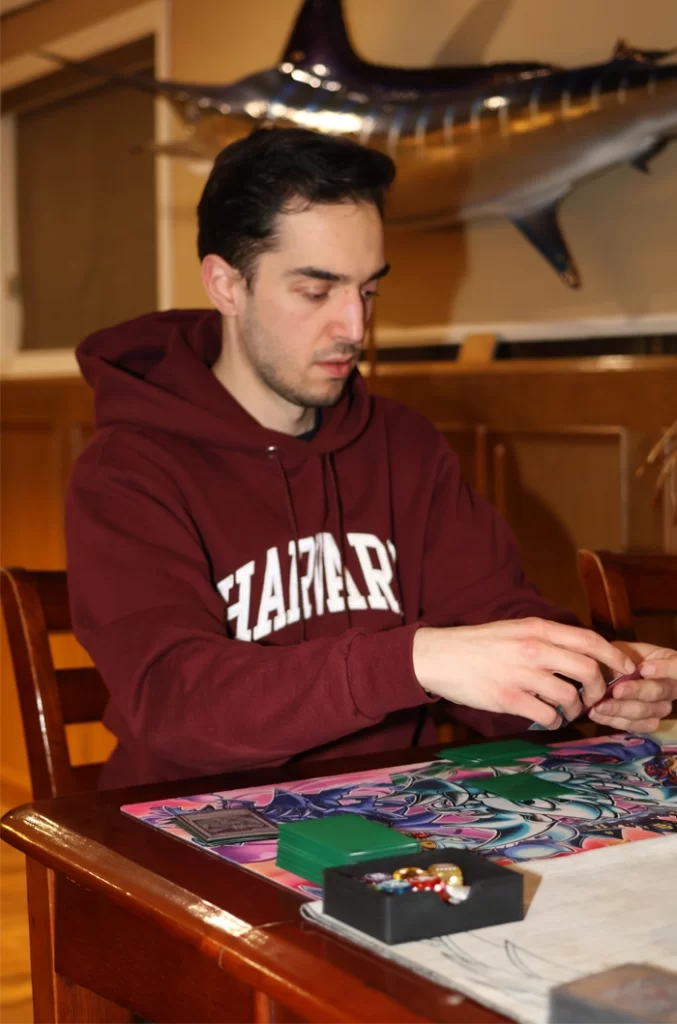
Troy Dodson, a hot tub salesman, is another collector and has been to Yu-Gi-Oh! regionals in the past. He enjoys in-person duelling compared to online game versions.
“The in-person games seem more personal. You can get that connection out of the person you’re in front of, and you can get a better read of the other person in terms of how it’s going to go compared to a blank screen against an opponent in another country,” said Dodson. “Weirdly enough, the game is kind of like an icebreaker in terms of getting to know people. You have a card game in front of you, and you’re duelling the person for roughly 30 to 45 minutes. Of course, you’re going to start to get to know them.”
Dodson also mentions that the local scene has seen a decline in players over the years.
“I think that’s just due to the economy and the demographic of the game. It’s harder for new players to pick up Yu-Gi-Oh! compared to when you play Pokémon,” said Dodson.
A paper presented at the SBGames Symposium in 2018, titled “Analyzing Player Profiles in Collectible Card Games,” mentions a possible reason for the drop in players: those in the competitive Yu-Gi-Oh! scene tend to deprive themselves from having fun playing the game, focusing on winning rather than sitting back and enjoying the game.
Whether or not the scene is truly getting smaller, there is still a dedicated fanbase. The most recent Yu-Gi-Oh! Championship Series (YCS) had more than 1,200 people in attendance.
Ryan Wiebe, a concrete finisher, reached out to Forbes on Facebook to talk about Yu-Gi-Oh!. They had previously known each other through the music scene. What followed was a gateway to meeting new people and becoming even closer with Forbes.
“Everybody I’ve been in contact with has been like, really solid. It feels like we became pretty close pretty quickly, just through playing cards. So, that’s cool,” said Wiebe. “I do feel like they’re all friends, they’re not like colleagues or random acquaintances.”
Brotherhood in community is important to Wiebe, whether it’s hosting more tournaments at his home for the Edison group to attend or having them over to watch UFC. He would like everyone to feel included.
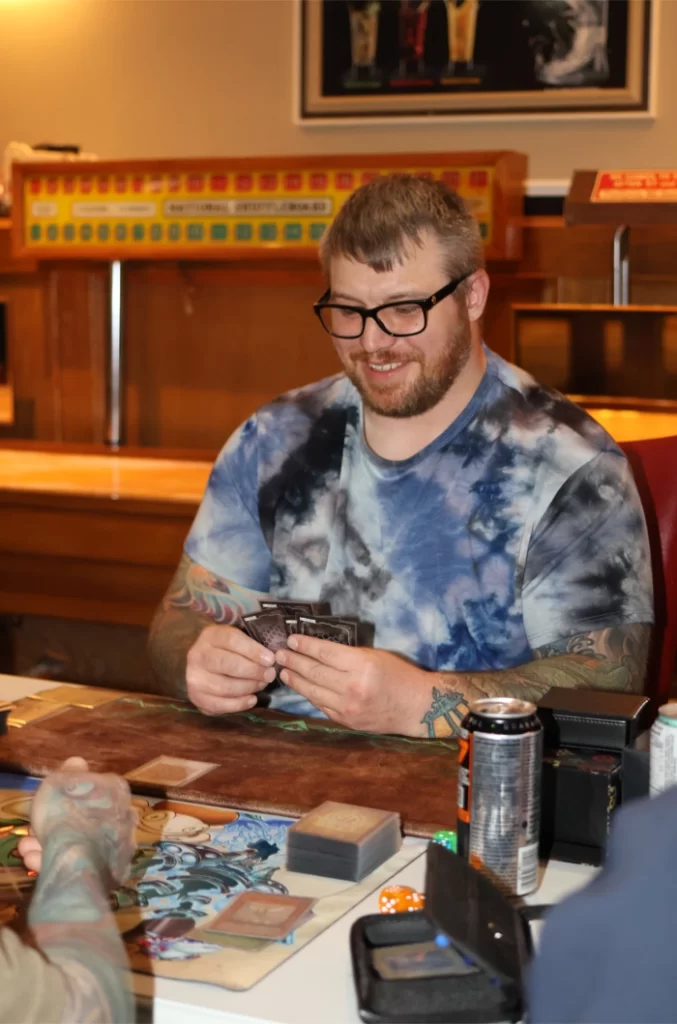

Christopher Rindahl, a respiratory therapy administrative assistant at the University of Manitoba, got back into Yu-Gi-Oh! in 2022 by watching Yu-Gi-Oh! YouTubers. Rindahl has been a fan of Yu-Gi-Oh! since its release back in the early 2000s and attended locals during that time.
When Rindahl came back to Yu-Gi-Oh! for the first time in six years, he noticed a change in the environment and people. The game to him had gotten crazier, but in a way that drew him back into it. His love for Yu-Gi-Oh! had stayed the same throughout his time away.
“Back in like 2010, a lot of people were very defensive and hostile,” said Rindahl. “A lot of people if you weren’t playing a certain thing or if you looked a certain way or did a certain thing, they could be real bullies, and it was kind of scummy. You look at the Edison crew we have now, and we all crack jokes at each other, but it’s all lighthearted fun.”
It’s crazy to think that a decade ago, Yu-Gi-Oh! players were more toxic compared to now. All the interactions I have had at Galaxy Comics are positive. Everyone treats each other as friends. A memory that stuck with me was when I walked into Galaxy Comics during a cool fall day. The regulars for Edison Locals had already arrived and settled in ready to play. The warm sunset accompanied by various voices chatting away made me feel like I was a kid again playing with friends at a park.
A common denominator I found when speaking to everyone was how the Yu-Gi-Oh! TV show pushed them to start collecting the cards and playing the game. Growing up watching Yu-Gi-Oh! 5D’s on Cartoon Network is a core memory. Every Saturday morning, I would be lying down on the couch in my childhood living room with a blanket wrapped around me, the sun glaring off the TV. My love for Yu-Gi-Oh! began during those times. But no one truly knew how much of a fan I was.
It’s nice to hear that a single series has helped people connect with each other. For me this series helped me find a sense of belonging. It guided me to these people who share a love of Yu-Gi-Oh! and through our shared experiences we managed to create a bond.
How much money these guys spend on Yu-Gi-Oh! cards is another thing that bonds them. During one of our locals, Forbes pulled out an $800 card for which he traded booster boxes, which are packs of cards you buy from any trading card game shop.
I could see the shine in his eyes as he brought out his holy grail card. The time and money people spend on their decks really shows their committment to the game. More than half of the attendees have max rarity decks, the shiniest and most expensive set of cards.
When I brought up the term “third spaces” to everyone, no one knew what I was talking about. But they all agreed that their weekly Yu-Gi-Oh! nights are a space for them to not think to about their jobs.
Talking to them helped me understand why they keep coming back every week. These cards are their ticket into a welcoming community.
These games have become a fixture of my week, and I can’t wait to beat my new friends with my gadget deck.
End Phase
Most people I knew growing up played video games like Call of Duty or other violent games young kids shouldn’t be playing. I never joined events or contests held by stores. I felt as though I never could, because they didn’t feel accessible to me. Plus, as a kid with no job, I was broke and couldn’t afford cards. I realize now I was just introverted. I feared talking to people back then and was afraid of what the people would say if they saw a kid walk in.
Now that I’m older and more or less financially responsible, I find it easier to connect with people who play the same card games I do.
People who play trading card games often deal with being called nerds. An article by The Odyssey titled “What It Means To Be A Nerd” said “Being a nerd really means that a person is shamelessly interested in something and gets really excited about the thing they are invested in.”
I joined this group to take my mind off school and work, thinking it would be relaxing. I was wrong. The amount of thinking and strategy I do every match makes my brain hurt. But still, my weekly games contribute to my overall happiness and to getting to know people better through the game I love.
No one should ever be shamed or put down for finding something in their life that makes them happy. I’ve learnt to embrace the nerd in me, and that has made me happier.
One thing I took away from my time with the Yu-Gi-Oh! group is being open to trying something new. It can be difficult to start new things, but stepping out of my comfort zone and breaking away from familiar routines helped me continue building skills and connections with others.
My first interaction with everyone — although my deck was illegal — really helped me decide to continue going. If everyone had just kept to themselves, I would never had stepped foot at Galaxy Comics again.
I’m glad things turned out the way they did. Cards are more than just cardboard. They’re a gateway towards friendships and new beginnings.
When 7 p.m. hits every Wednesday, I am there — away from school, away from stress. When I was younger, I didn’t have anyone I could share my hobby with. Now my Wednesdays are filled with fluorescent lights shining down on cards and yells from battling players.
I feel like I belong.


