Another Day, Another Choice
Throwing punches and lifting six days a week. Praying through vivid nightmares. Sobriety isn’t the finish line — it’s the fight you wake up to every morning. This is recovery.
Listen to this story:
Every day thousands of recovering addicts in Winnipeg wake up and make a choice. For many, a good routine is grounding. For these two men, a mix of exercise, faith, professional support, and wanting to be healthy for their families is helping them fight through tough moments.
Jordan Gregorchuck
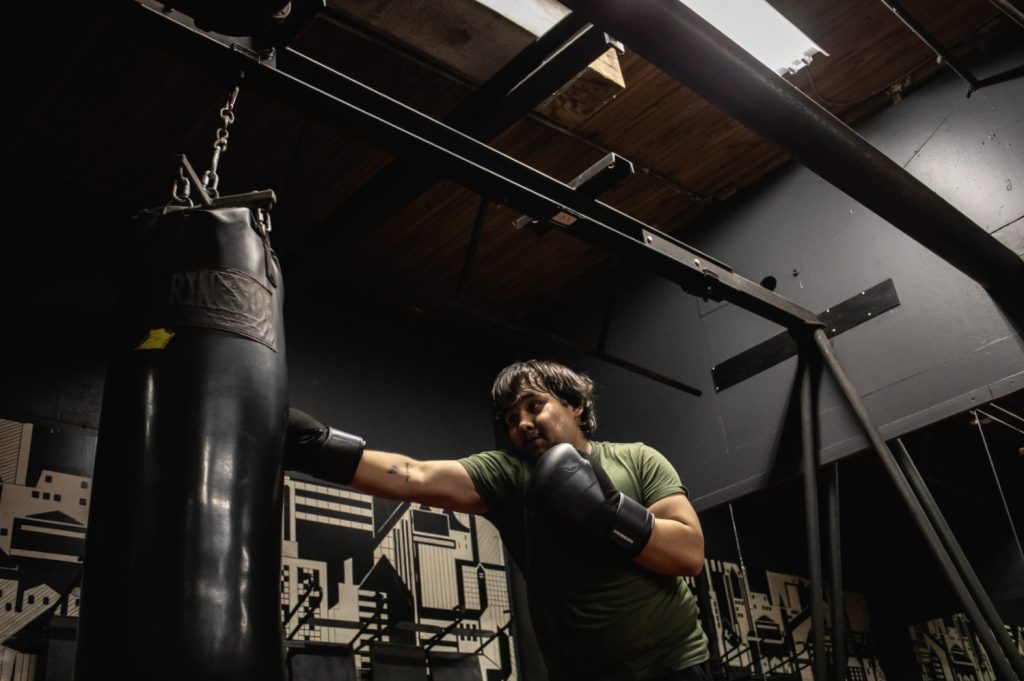
The thick metal chain above the punching bag rattles with every strike. Jordan Gregorchuck lands a straight. The bag swings back before his glove meets it again. He does this for an hour or two, six days a week, at Pan Am Boxing Club.
The 19-year-old, who’s been sober for over a year and a half now, lives at Pan Am Place, a transitional housing facility for at-risk young men in Winnipeg’s Exchange District.
“It’s not as long as I want it to be, but it’s been a minute,” said Gregorchuck. “You just got to take it day by day.”
For Gregorchuck, and others in recovery, sobriety is not the end game. It’s a daily confrontation with the past: the temptations, the shame, and the voices that don’t quit. Recovery is not immediate, but it starts with acknowledging the problem, and figuring out what comes after.
Drinking to Belong
Gregorchuck started drinking at 16 when he was a student at St. John’s High School. He says he drank to fit in with his peers and to avoid the pain of his past, including his mother walking out of his life. He drank regularly, often showing up to class with a hangover.
Part way through high school, Gregorchuck stopped drinking so he could train seriously in freestyle wresting. Sports were not new to him. After all, he grew up playing soccer, hockey and rugby and wrestling as a kid. He eventually qualified to compete in the junior nationals for freestyle wrestling in Québec at 17. Unfortunately he lost and found comfort in drinking again.
“It’s the sensation you get. It’s euphoric,” said Gregorchuck.
Despite this, he graduated with honours, but the drinking continued. On June 13, 2024 he smoked a “large joint,” and not long after, he started hearing things that weren’t real and slipped into psychosis. He was later diagnosed with schizophrenia in early 2025.
This was a turning point. Gregorchuck realized how bad his addiction had gotten and told himself he should stop immediately — and he did, cold turkey.
Going Cold Turkey
Cold turkey — stopping substance use entirely and abruptly — can be dangerous because of withdrawal symptoms, according to the Journal of Law and Medicine Ethics, but gradually tapering off alcohol reduces withdrawals, according to The Recovery Village Columbus, an addiction treatment facility in Ohio.
Joel Bodner, Pan Am Place’s manager and an older-brother figure to Gregorchuck, said addiction withdrawals, when severe enough, can cause death due to the body seizing up, causing the respiratory system to fail.
Knowing the risks, Gregorchuck decided he would face them head on, like an opponent in the ring. He was ready to be sober. But it was not an easy feat.
“It takes strength and courage to be ready. The desire to get sober takes a lot out of a person,” said Gregorchuck.
Gregorchuck explained that many people don’t see how hard the battle is — that quitting is not just a decision, it’s something your body fights through. Gregorchuck is not alone in his struggle. Substance-use related hospitalizations in Manitoba have been increasing since 2016, according to a 2019 report by Manitoba Health, Seniors, and Active Living.
Gregorchuck experienced mental slumps, stomach pains, and numbness early in recovery. He felt like he wanted to die. However, he said numbness was a positive thing for him. He saw it as an indicator that he was on the right track. There were times his friends asked him why he seemed so different.
“It’s because I’m healing both my body and mind,” he said.
For Gregorchuck, recovery wasn’t just about quitting substances. It also meant looking at what was underneath. So, Gregorchuck got professional help and eventually found the roots of his pain — the anger and abandonment issue he’d spent years drowning with alcohol. Later on, he apologized to the people he’d hurt during his addiction. He also had to accept the truth: all the things he had done don’t define him.
Don Hatcher, a counsellor at Safe Harbour Therapy Centre, said recovery is not linear, it’s a rollercoaster. He said progress shows up through shifts in his patients’ demeanour. They began opening up about parts of themselves they avoided or things they weren’t able to do before as a result of the addiction, he added.
“Then they realize they can do more of it, and get hungry for it,” said Hatcher. “That’s part of willpower. They get hungry for recovery, because it starts to work for them.”
Therapy was part of Gregorchuck’s recovery.
“They’ll help you to some point, but at the end of the day, you’re your own person,” he said.
As Gregorchuck progresses through sobriety, he said there is no point that you can let your guard down. No finish line. It’s constant maintenance — a fight he fights every day.
One of the requirements for residents at Pan Am Place is to train three days a week, but Gregorchuck sweats it out — boxes, lifts weights, and trains — six days a week. Sundays are for rest.
Sweating It Out
Exercise can help ease the brain and body through early recovery. It lowers inflammation of the brain receptors asking for satisfaction from alcohol and other substances, according to Integrative Addiction and Recovery. Working out stabilizes mood and regulates the reward system addiction negatively affected.
Regular physical activity helps the brain to build and produce functional neuro pathways for daily tasks, says in a 2012 study called “Exercise as a Potential Treatment for Drug Abuse: Evidence from Preclinical Studies.” It helps bring oxygen to the brain and activates brain functions the substance hijacked before. Thus, exercise lowers cravings.
But training isn’t the only discipline Gregorchuck relies on. He’s also re-connecting with his faith in recovery.
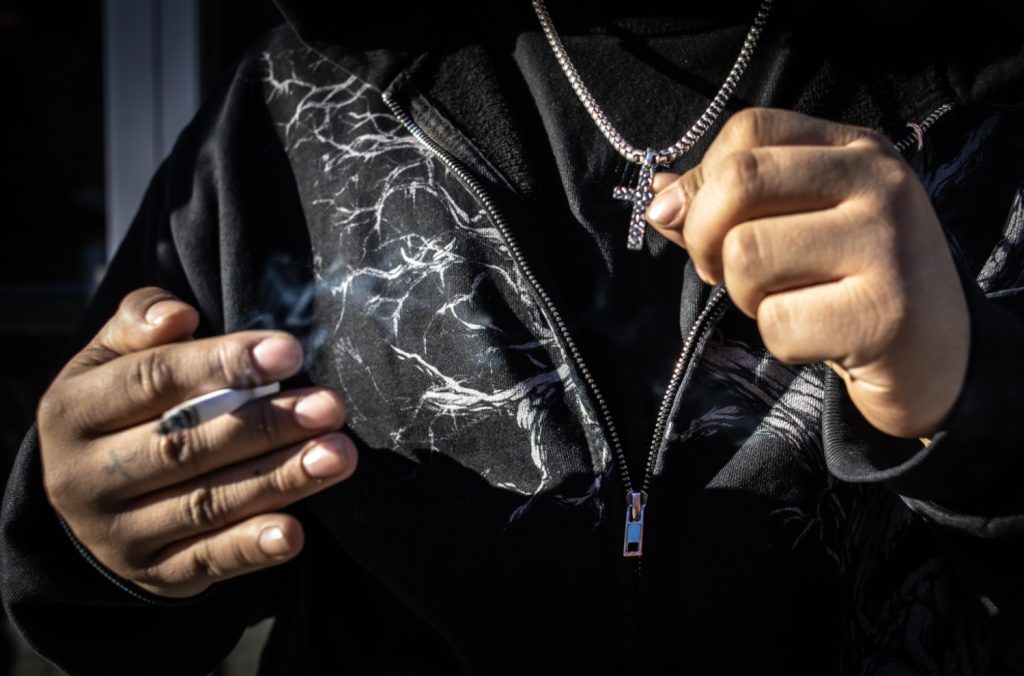
“Typical day for me, I wake up grateful for another day. I eat and read my Bible,” said Gregorchuck. “With Christianity, that’s another thing that helped me get out of addiction.”
His favourite book in the Bible is Psalms.
Gregorchuck knows he’s in for a tough day when he gets stuck in his head. The voices start strumming the strings of suicidal and self-loathing thoughts — how he’s not enough and his mother doesn’t care for him. He can’t go to the gym on those days.
“It’s simple but that’s all I could take,” said Gregorchuck. He gets paralyzed and just making it through tough days becomes his priority.
Gregorchuck’s Resolve
Being around people or places where alcohol is present doesn’t rattle Gregorchuck’s resolve as much as before. When temptation creeps in, he affirms himself with how far he’s come and all he’s been through during the early stages of recovery.
“It’s a hard battle,” said Gregorchuck. “All it takes is one bad slip, and sure enough, you can end up killing yourself by overdosing, right?”
One drink can trigger intense feelings of shame and guilt for recovering alcoholics — and can escalate to a full-on spiral and relapse, according to the book Principles of Addiction by Peter M. Miller. But willpower strengthens with practice and application, says a 2022 study called “Training Willpower: Reducing Costs and Valuing Effort.” Small daily habits of restraint add up, making larger decisions easier over time.
Hatcher explained that recovery is about building blocks, small steps people put in place over time. During therapy, he often asks his clients to look back and see how far they’ve come since their first session. Each choice — showing up for therapy, choosing healthier habits, and choosing to stay sober for another day — becomes a block they’ve built for themselves.
Hatcher said these small steps serve as an inspiration to motivate recovering addicts to keep on going.
Fighting For His Brother
Gregorchuck carries a specific motivation into every step of recovery — his 16-year-old brother who’s been in and out of correctional institutions. He wants to show his brother a better way to live. When an older sibling uses substances, younger siblings tend to start using too, according to a 2023 study called “Associations between older siblings’ substance use and younger siblings’ substance use intentions: Indirect effects via substance use expectations.”
Siblings tend to shape each other’s risk for substance abuse, and Gregorchuck wants to be better for himself and his brother.
Lee Rushford
Rock Bottom
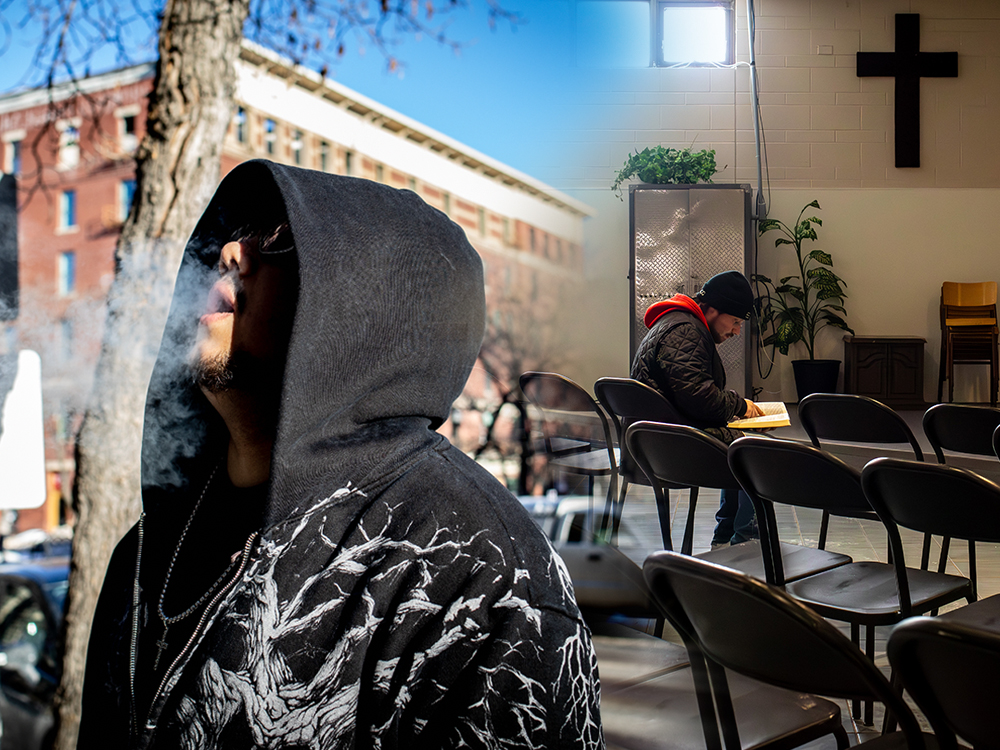
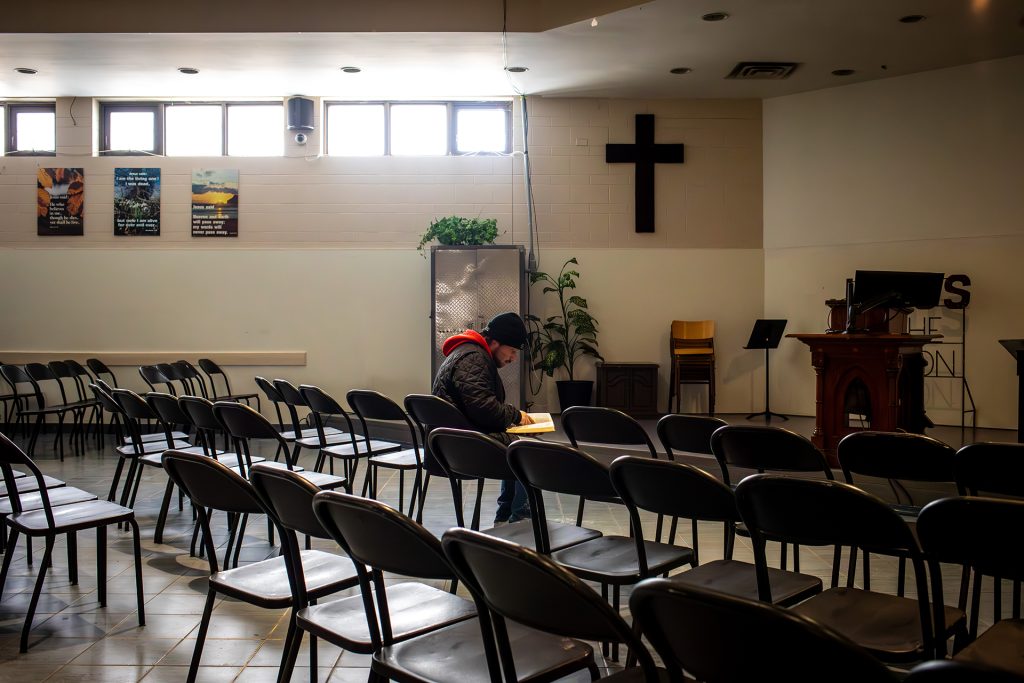
Lee Rushford, 42, sits in a steel chair at Union Gospel Mission’s (UGM) chapel. He clasps his hands together in his lap before letting out a big breath as he prepares to tell his story.
Rushford started using meth in 2017. It was his wife, Charlotte, who first made him curious about the drug. He noticed how energized she seemed after using. Once he started using, he said it helped him be productive and focus on completing his Mature Student High School Diploma.
“It was the euphoria and confidence I got from it,” said Rushford.
As a kid, Rushford got picked on by his older brothers and his friends. They always made him cry, feel small, and humiliated. He became guarded. Whenever he heard his brothers, he would run and try to find a room to hide in.
Meth shielded him from that old feeling. It made him feel great about himself, he said.
“It’s a crazy drug,” said Rushford, his eyebrows lifting and eyes widening. “What was supposed to be temporary ended up lasting eight years.”
Rushford hid his addiction from Charlotte during those eight years. Their relationship suffered throughout this time — they got into fights and confrontations and he gaslit her, turning her suspicions on her instead.
“I told her she was crazy. That she was the one using drugs, not me,” said Rushford.
Deep inside, Rushford knew the time would come when Charlotte would find out about his drug use. Over time their confrontations and his denials grew more intense. One day, he woke up and told her.
After Rushford told Charlotte the truth about his drug use, she went into a psychosis, according to Rushford. He saw how his wife became heart-broken and hurt with his confession.
“I felt terrible,” said Rushford, shaking his head as he let out a sigh. “I was supposed to be the healthy one.”
“She said I was supposed to be the straight one out of us and leading the family,” he added.
Child and Family Services then intervened. Their seven-year-old daughter was removed from the home; his mother-in-law is now her caregiver.
After their daughter left, Rushford and his wife continued using for eight months. When Charlotte filed for divorce in July 2025, he knew then he had to get sober.
Eight Years of Hiding
During his eight years of addiction, Rushford made efforts to hide his addiction from his family. He ate, slept, and drank lots of water to put on a healthy façade.
“I was a functioning, ‘healthy’ meth head,” said Rushford.
That behaviour isn’t uncommon for people struggling with addiction, according to Hatcher.
“So, it’s kind of hidden, right?” said Hatcher. “They lose touch with the people around them. Who they’re married to.”
Hatcher explained that people struggling with substance abuse can become focused on maintaining their routine. On the outside, they still show up to work, family dinners, or community events. But internally, they’re not connected to reality. Addiction causes them to lose sight of their inner resources and identity, Hatcher added.
Rushford’s life was exactly that — he was trying to appear present while his identity quietly disappeared.
At first, Rushford would take a few grams from Charlotte’s small bag of meth, use her pipe, and blow on it to cool it down before putting it back. He hid in their basement under the pretense of doing laundry or using his vape, hoping she wouldn’t notice.
As Rushford’s addiction deepened, it started to catch up to him. He struggled to keep a job. He would show up late to work, because he would be buying Charlotte her supply — and a little extra for himself.
Eventually, he started using in the bathroom during his shifts at work.
“There was not a time where I’d go the whole day without it unless I wasn’t able to find the drug,” said Rushford.
His priorities changed. Everything mattered less — utilities, bills, and paying rent on time. They started getting eviction notices.
“What meth does to you is it makes you careless,” he explained.
On days when dealers have nothing, his withdrawal hit hard. Extreme fatigue left him sleeping a lot. Tension started to simmer with Charlotte, but they stayed together.
“Because I love her, and we had a daughter together. I didn’t want to break up the family,” said Rushford. “I was a child of a single mother. I didn’t want my child to go through that as well, so I stayed with her.” He remembers the pain of his father leaving him when he was still a kid.
Rushford eventually detoxed at Main Street Project’s Withdrawal Management Services. After completing the program, he looked for a Christian-based recovery program. Faith had always been central to his life, but he’d just drifted from it during those eight years.
He remembers it feeling good to fill out UGM’s application form.
Faith and Recovery
Many addiction treatment programs across North America are faith-based, according to a 2019 study called “Belief, Behavior, and Belonging: How Faith is Indispensable in Preventing and Recovering from Substance Abuse.” Many programs emphasize having a higher being or power as a grounding element to sobriety. Including a higher spiritual being in recovery is from the 12-step p rogram (made popular by Alcoholics Anonymous).
A 2000 study from the American Psychological Association says that recovering addicts tend to have high levels of spiritual faith and religious belief system.
Rushford has been with the centre for eight months and counting. Charlotte is in UGM’s women’s program, also recovering from her addiction. Rushford got baptized in September, and his wife did the same in February.
Recovery, Hatcher explained, often begins with realization — an epiphany. It’s at that moment when a person understands that change is possible for them.
“It clicks for them,” said Hatcher.
Looking back on his dark times, Rushford thought he was stuck, and change was not possible. He doubted his belief in God, wondering why He let those things happen to him.
“Without friction, there’s no growth,” said Rushford. “He uses your pain and your sufferings to draw you closer to Him.”
Warfare and Temptations
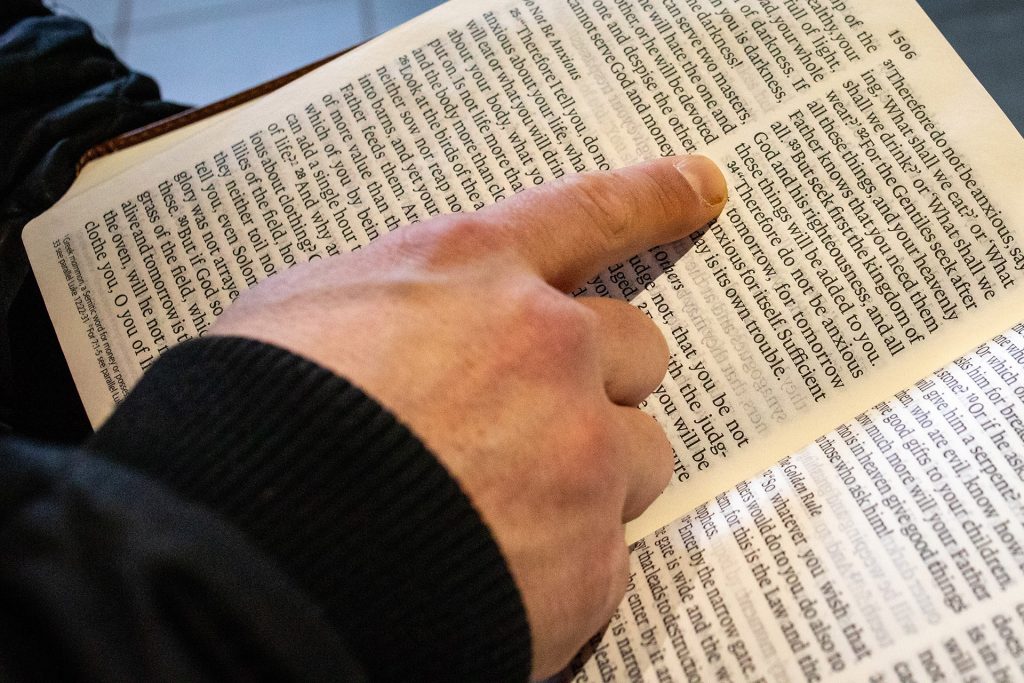
Every morning, Rushford wakes up and thanks God for another day. By mid-afternoon, he visits Charlotte and his daughter. He reads his Bible. He attends group therapy at UGM. The structure is deliberate.
The nights are the hardest part, according to Rushford. He gets vivid dreams about using drugs, stealing from stores to fund his habit, cycling through scenes from years he’d rather leave behind. They feel real enough to shake him when he wakes up.
“Those dreams, they try to take you down,” said Rushford.
Instead of fighting the dreams, Rushford surrenders them through prayer.
There are quieter battles too. There are times when Rushford fixates on something small, like searching for something to be angry about — even when nothing is wrong.
“It’s warfare,” said Rushford. “Like there is a voice telling you to get mad about something that’s not even a big deal.”
For Rushford, temptations are literally around the corner. From the upper level of the centre’s smoking area, Rushford can see a balcony where users are smoking and injecting drugs. It’s a sight that can trigger people, he said.
Since it is hard for people in recovery to be around drugs, Rushford is skeptical of harm-reduction programs. He’s seen the outreach vans distributing pipes through the neighbourhood and remembers picking up supplies himself at a downtown drop-in on Hargrave, back when he was still using.
“They call it harm reduction,” said Rushford, as he creates air quotations with his fingers. “But I call it enabling. The only thing they don’t give you is the drug to smoke.”
Rushford had to remove himself from that system and environment. He doesn’t fault people who aren’t ready to stop. He just knows that, for him, there was no middle ground.
“I fought the temptations in the early stages of my recovery,” said Rushford. “There’s no room for relapse — I have to be there for my family.”
Another Day
Hatcher, whose walked alongside people in recovery, knows the process is never linear. It goes up and down, coming in patches, and in the quiet decisions that nobody else sees.
Gregorchuck won’t say recovery gets easier; he knows it takes constant maintenance to stay sober — but he also knows he’s got strong discipline now. On good days he hits the gym, gets a haircut, or hangs out with friends and family. On hard days, he focuses on making it through.
For Rushford, some mornings the fight feels distant; other mornings it’s right there when he opens his eyes — but he gets up, pray and reads his Bible. He’s started making art, playing his guitar, and reading medical thrillers too. All of this, he says, is for his wife and daughter.
For Gregorchuck, Rushford, and others in recovery, the focus is on another day, another choice.