A Virtual Reality
When reality as I knew it began to crumble, I turned to a virtual landscape to take back control. What transpired was a journey through a virtual reality – one that led me through dark times and loneliness, but ultimately, to my calling in life.
Listen to this story:
I don’t remember what year my dad left.
What I do remember is cowering under my kitchen counter, sobbing until my eyes burned, and slamming my bedroom door, followed by the whir of my PlayStation’s fans. I became familiar with that whir over the next few years of my life. It’s crazy that something so subtle can drown out the deafening anxieties, depressions, and doubts that consumed my inner thoughts. Those fans worked overtime for me during my early twenties, and I repaid them with years of my life.
After my dad left, so much came into question. What was it to be a good man? How was I supposed to trust a foundation that was laid by someone antithetical to everything I had been taught? All these things that I cared so deeply for — basketball, education, friends, family, reading — they just didn’t seem important anymore. Everything was tainted by the memory of a man that spit in the face of our family and ran away to chase another woman across the country. Every time I picked up a basketball or went to read my textbook, a sinking feeling enveloped me. This gnawing question of “what’s the point?” The values that had pushed me to pursue these things no longer inspired me; they did the opposite. I had nothing but spite and resentment for what my dad had done, and for some reason, in my broken-down state, I thought punishing myself was the best way to punish him.
And so, I did.
In the following months, I quickly spiralled into an unrecognizable version of my old self. My grades plummeted as I skipped more and more classes; my friends reached out only to get dial tones and read receipts; my mom worried as she saw her son slowly devolving before her eyes. I had completely withdrawn.
I was no longer living in the same world as everyone around me. As people got up for their daily routines, I stayed planted in the computer chair I had spent the last 10-12 hours in. Being nocturnal fit my lifestyle better. The quiet helped me forget there was a world going on outside.
One night, I stumbled to my bathroom around three in the morning and stared into the mirror as I splashed water on my face. What looked back at me was a ragged, bloodshot mess. Someone that had completely vacated from the living, breathing world that surrounded him. That mirror wasn’t just a reflection of my physical self, it bared every crevice and crack of my crumbling soul, my lack of identity. Tears streamed from my reddened eyes as I momentarily embraced reality. I hated the feeling of it, the revolting sliver of consciousness that I hadn’t shut off or shut in. I splashed some more water on my face and beelined for my bedroom, my sanctuary. I slipped on my headphones and hit play as the sounds of katanas clashed and the guttural screams of my virtual enemies echoed in my head. At last, peace.
As the only child in a tight-knit family, my parents shaped so much of who I was. Who I had become, what I strived for, and what I was passionate about was influenced by them. The sports I played were in hopes of being even a modicum of the athlete my dad once was. My pursuit of education was inspired by my mom’s intelligence and success. The food I ate, the clothes I wore, the hobbies I kept — all reflections of the people that so caringly raised me. But when one of those role models suddenly shatters your reality, those reflections fall apart.
There was truly only one thing of my own that my parents didn’t directly inspire. In fact, for as long as I can remember, they actively despised my interest in it. And that was video games.
Since I can remember, gaming has been an integral part of my life: late nights with friends on Call of Duty or Christmas afternoons spent testing out the newest game until the dinner bell rang. I have so many happy memories that are either within, or directly linked to, a video game. From questing alone in Dragon Age: Inquisition to roleplaying as cops and robbers in Garry’s Mod, those virtual worlds are fibres of my being.
When I was in grade three, I moved schools. I was absolutely petrified on my first day. I knew a few kids from my neighbourhood, but I was still out of my comfort zone. At lunch hour, I was sitting at the table with a few of my friends, and they had introduced me to another boy, Stew. We started talking about this new gaming system we had both been lucky enough to get: the Nintendo GameCube. We spent our lunch debating who was the coolest character in Super Smash Bros. Melee (Captain Falcon is the only right answer). That was all it took to form a friendship. Stew and I still spend a lot of time debating our favourite game characters, but now it’s usually about mature, manly things, like Gears of War (and Animal Crossing).
Video games have been a core part of who I am and a bridge I’ve used to connect with people since childhood. But I also lost years of my life running around worlds I can’t even remember.
Imagine travelling to a new country. You immerse yourself in the sights and sounds, you get to know the locals, you go on adventures, you find love, or lust. You’d probably look back on that chapter of your life with fond memories. I did all of that in video games, but I don’t remember more than a haze. Those cherished memories I had of exploring these games in my youth seemed like a completely different experience than the gaming I did after my dad left. They went from something that connected me with friends and things I loved, to places I could go to shut everything and everyone out. Memories faded to silhouettes of long, silent nights staring at a screen with nothing to show for it. Countless hours filled with blue light and emptiness.
A virtual reality.
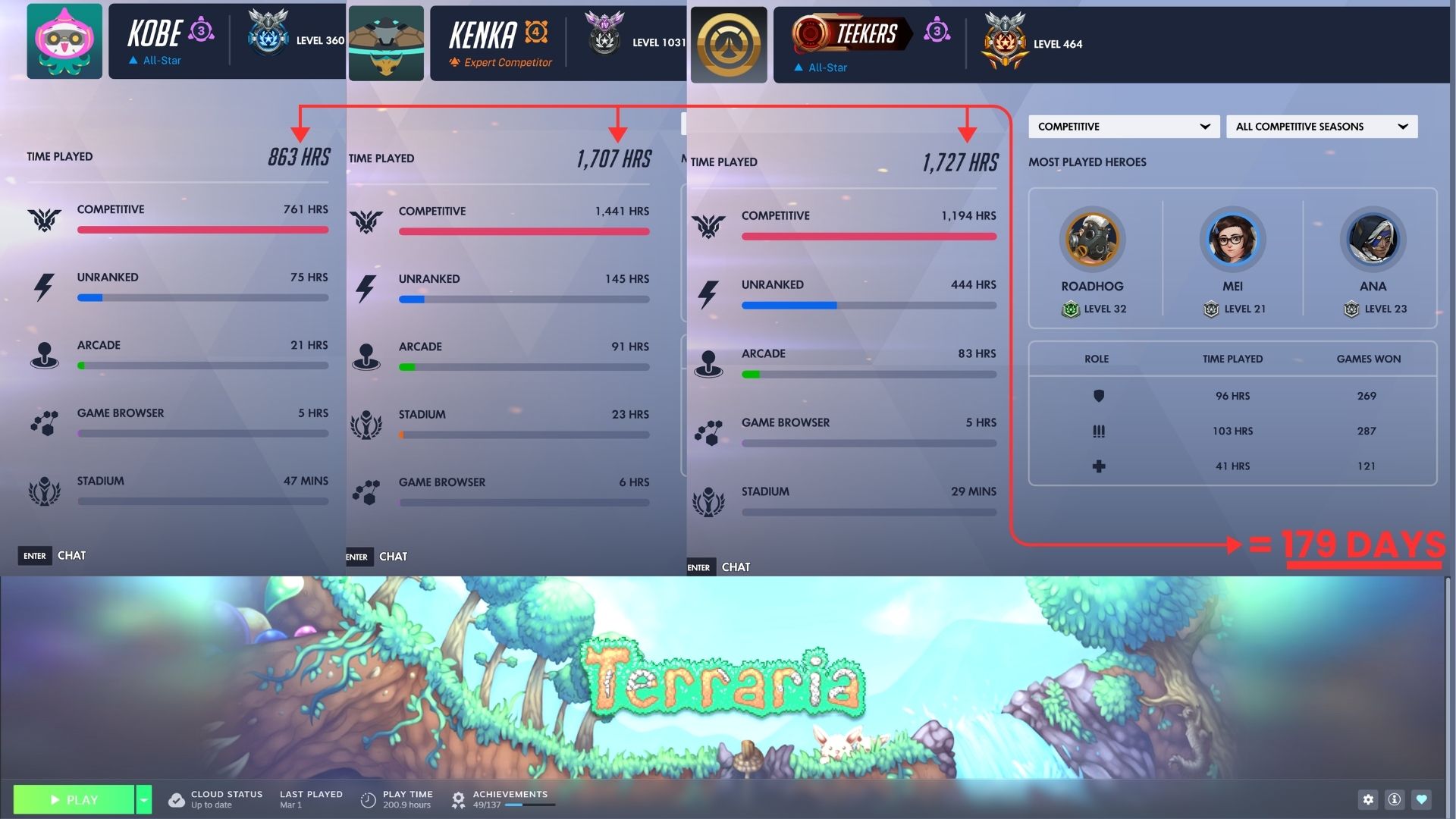
The more I played, the less I remembered. I lost myself in games like Dark Souls III, The Elder Scrolls V: Skyrim, Fallout 4, Terraria, Stardew Valley, Grand Theft Auto V, Red Dead Redemption 2, and so, so many more that, frankly, I couldn’t even name. All these games have one thing in common—they are absolute time sinks. I could put thousands of hours into a game like Terraria or Grand Theft Auto V and still have more content to plow through. They were the perfect worlds for me to immerse myself in, and better yet, they could all be played alone.
Terraria is this wonderful little survival game that plays a lot like a two-dimensional Minecraft. You create your character and are plopped into a world that you can shape to your liking, with massive caverns to explore, mountains to climb, bosses to fight, and settlements to build. It is quite literally a virtual reality that you can cultivate for yourself, a useful tool for someone looking to escape their surroundings. Across multiple platforms — PlayStation, PC, and mobile — I’ve put well over 500 hours into different playthroughs of Terraria, and a majority of that was in the months following my dad’s departure. The world offered me a place to hide, a sanctuary of my own making where I could be alone and completely in control. The lands would bend to my will, bosses would fall as I grew in strength and crafted stronger weapons and armour, my settlement would expand and prosper. As the real world felt like it was crumbling around me, it gave me immense pleasure to build one up from the safety and confinement of my gaming chair.
But as the allure of a virtual reality grew and the world I built up thrived, the one outside my computer screen wilted.
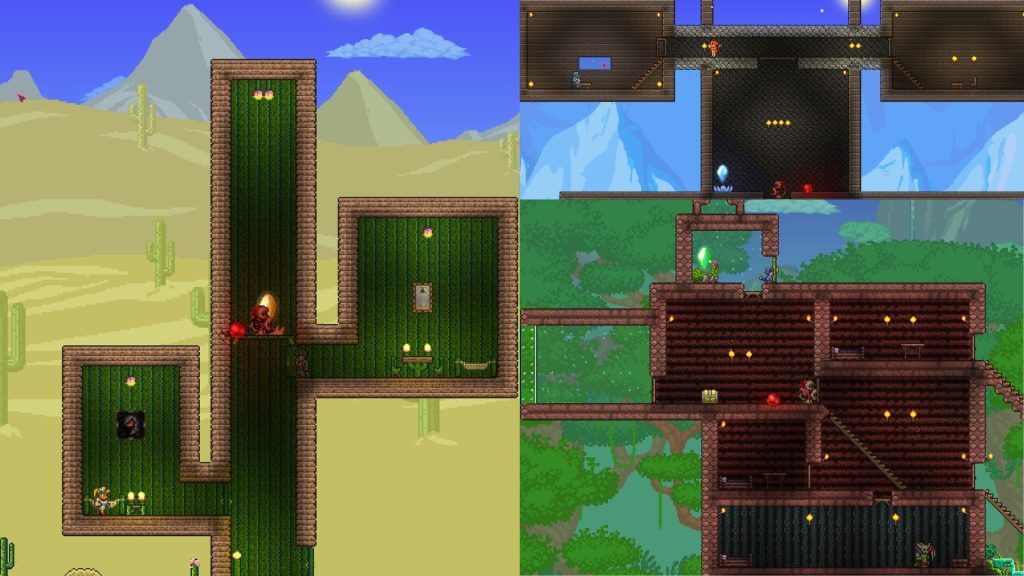
The year I started university, I didn’t even bother setting an alarm. I didn’t usually go to sleep until an hour before class was supposed to begin, so making it on time wasn’t really feasible. And besides, why the hell would I go to class when The Eye of Cthulhu was still at large? Unfortunately for me, my mom had just begun her transition from full-time work to semi-retirement. What had been an empty home from nine to five, Monday to Friday, every week, had suddenly become inconsistent. Some days she’d have the entire day off, others she’d only be gone for the afternoon. “My class was cancelled, the prof is sick,” could only be used once every few weeks to avoid suspicion, so I had to think of another way to avoid real-world responsibility. Luckily, today was an afternoon kind of day. So, I did what I always did— I got in my car, usually with an hour or so of sleep under my belt, and drove around the city guzzling coffee until I knew she’d be gone. I don’t know why I didn’t just go to class. Perhaps it was because I was still rebelling against my father, or perhaps it was because my sleep-deprived brain couldn’t handle spending three hours in an introductory astronomy course. And there would be people there. I didn’t even see my friends and family anymore; I wasn’t going to sit with 100 people in a lecture hall. By 11 a.m., the house would be mine again. Thank God we didn’t have a ring camera.
The lying and avoidance probably should have been the first hint that I had a problem.
Gaming addiction is classified as a lack of control over your gaming habits, resulting in negative effects on many aspects of your life, such as school, relationships, and self-care. Looking back on that time, I fail to find any word other than addiction to explain what I was going through. Ditching class to play games, sleeping a couple hours a night, retracting from friends, and secluding myself in my room, there’s no other way to put it: I was an addict. I had run so far away from the real world that I had been sucked into a virtual one with no escape in sight. Year after year went by with no growth and no movement. Just sedentary complacency and escape from the crushing weight of reality.
And it didn’t just get better over night.
It was a beautiful spring day in 2016, and I was headed back into the city from Falcon Lake to spend the weekend at home. A few months before, I had unofficially dropped out of university for the third time in the past three years, and my mom had pushed me to get a job. Despite my best efforts — mostly lying, crocodile tears, and appeals that my anxiety couldn’t handle working — I caved and agreed. Other than video games, there had been another thing I had loved my entire life, and that was being at the cabin. My parents used to rent a place in Falcon Lake every summer when I was growing up. It’s where I learned to golf, spent ungodly amounts of time at the beach and on boats, and hung out with childhood friends, playing video games like Mortal Kombat and Fable with their older brothers way past our bedtime. It was truly my happy place, and it was the only place I could fathom leaving my virtual world for. So, when my best friend Tim called me and said the Falcon Lake golf course was hiring and offered up his cabin for the summer, I begrudgingly accepted.
I lasted about a month.
So, on that warm night in May, driving home “for the weekend” (when in reality I had quit and packed my bags), I was right back to square one. I collapsed to my knees when I walked through the door and saw the tears well in my mom’s eyes when I told her I couldn’t take it anymore. She consoled me and told me it would all be okay, as she always did, and I promised her I’d go back to school and finally figure things out.
I had no intention of doing anything of the sort.
After a very long talk, I walked into my room, placed my bag on the floor, and hit the power button on my PC. As I launched my go-to gaming apps like Steam and Battle.net, I saw an advertisement pop up for this new game called Overwatch. I had played the early access beta for the game before I had left for Falcon Lake and had absolutely loved it. I spent $60 of my hard-earned golf course money and waited for the game to download.
I didn’t sleep for the next 24 hours. Ironically, that all-nighter is when everything changed.
Overwatch was a competitive 6v6 team-based shooter (which has now become 5v5). Team-based shooters are much like first-person shooters , like Call of Duty, but they add layers of complexity by incorporating unique heroes and roles that they fulfill — tank, support, and damage — that make up each team’s composition. Two teams then battle over objectives — think king of the hill or territory control in something like Risk — during the game, all while balancing the interactions and synergies between the different characters and their abilities. In plain terms, it’s a game with a ton of nuance and a wealth of opportunity to study the ins and outs to gain the upper hand. Overwatch captured my attention like no game had done before. I didn’t just want to escape into the game world; I wanted to conquer it. I spent countless hours practicing my mechanics, consuming educational content and theory crafting, and of course, playing the game.
And I was damn good, too.
In Overwatch, there’s a competitive mode where players queue into this specific pool to play each other and rank up as they win more games. When I was playing heavily, the ranks ranged from bronze to Grandmaster, and shortly, I was playing in Grandmaster games with big streamers and aspiring professionals alike. That’s when a game turned into a passion and my spark was rekindled. I was no longer just playing a game; I was competing, I was growing and learning, I was working towards something. As trivial as some rank on a video game may sound, it gave me something to strive for, and even more importantly, it gave me confidence for the first time in years. Research from the Handbook of Clinical Neurology shows that reward systems in video games, much like the ranking system in Overwatch, can lead to improved brain plasticity, resulting in an increase in your ability to learn and adapt. Within the first year of the game’s release, I had climbed near the top of the ladder, and as my rank rose, so did my drive and motivation. I was no longer playing video games to escape; I was playing them to sharpen my skills and compete against the best. I was working for something again, and that was a catalyst for me as I rounded back into a more complete version of myself.
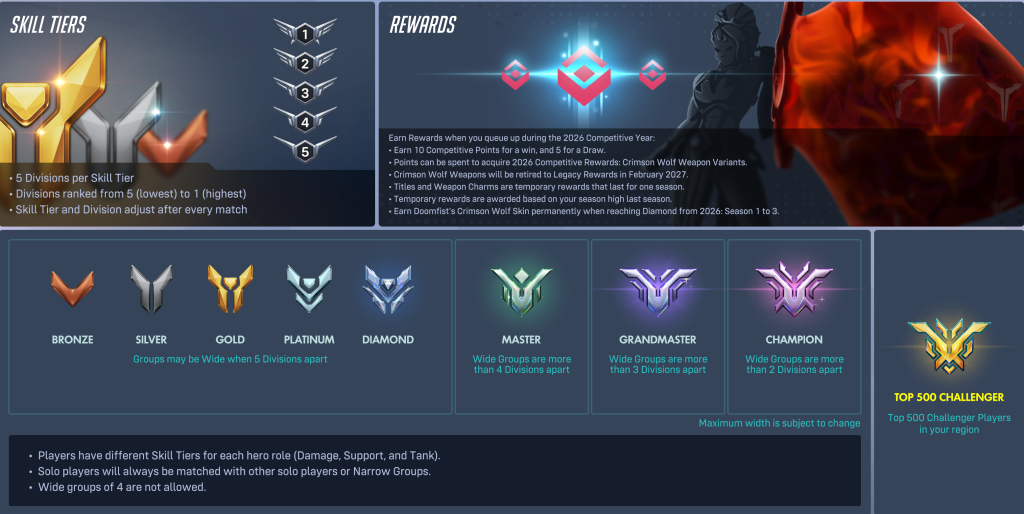
That’s when another major shift happened. I realized I wasn’t hiding in virtual worlds to avoid everyone and everything anymore; I was now playing a game specifically to connect.
A large part of the beauty of Overwatch is that it fundamentally relies on communication. Players need to work as a unit to accomplish a shared goal, and you need to communicate with each other to make it happen. For someone that had spent the better part of the last few years avoiding all social interaction, this was a huge step in the right direction. I didn’t just communicate in-game either. I created bonds with people from all over the world, some that I still talk to regularly. During the COVID-19 pandemic, we saw how video games were a lifeline for many people, a chance to connect when everything else had been shut down. Researchers from Oxford University found a strong correlation between the social aspect of video games and mental well-being. I experienced this firsthand when I began to reach out in Overwatch. My hobby had gone from a solitary escape hatch to a vibrant social sphere. A place that I looked forward to interacting with my friends every single day. I had found a community — my community. The shut-in loser who couldn’t even bring himself to show up to an introductory astronomy class was adding people from across the world to his friends list. I spent many nights with my friends and teammates laughing and creating bonds that stand strong to this day. Feeling that push to strive for something and seeing it come to fruition was exactly what I needed to regain some confidence and re-integrate myself into the real world.
It’s a little paradoxical that video games fueled my spiral into darkness and my emergence from it. Countless nights spent staring at a screen were the only way I could deal with the meteoric shift my dad’s departure caused. But those same nights also led me to self-discovery, a community that I cherish deeply, and even a university degree. Within a couple years of the game’s release, now in my mid-twenties, I was no longer a husk. University classes that I used to skip became something I looked forward to. The lore and stories that I had come to fall in love with throughout the many video games I had played inspired me to pursue an English degree, hoping one day I could create a world like Overwatch’s. On my worst days, I remember playing The Sims 4 for hours upon hours. My Sim would end up following the path I dreamed of: I’d create a bestselling author and fantasize about one day doing something similar in the real world. Now I write all the time, and who knows — maybe one day it’ll even be a career.
Video games have brought me along a journey both good and bad, but they can’t be blamed for the choices that I decided to make, and neither can my dad. They were once my vice, and cost me years of my life, but they also played an integral role in setting me on the path I’ve always dreamed of. Without a game like Overwatch, I don’t know if I ever would have bounced back from the funk I was in. I spent so many years of my life hiding from my friends, family, and responsibilities that the virtual reality I had built for myself felt like home. It was the connection and pursuit of being the best that helped me step back into the real world. It gave me a purpose, and I’ve been building on that purpose ever since.
I may not have taken the shortest route to where I am now, and there were certainly some setbacks as I came into my own — but who doesn’t love a few side quests along the way? Now when I launch my PC or PlayStation, the whir of those fans isn’t just white noise blocking out the dread I’m trying to escape; it’s a signal of a job well done or a moment of reprieve from a hectic day — and while those fans worked so hard for me all those years, I’m happy to say I’m working just as hard to make it all worth it.