The Gaze of Medusa
In the summer of 2023, my high school friend Ash asked me to guide him through a ritual he believed would cure him of his OCD. What he didn’t know is I was struggling with a compulsion of my own.

Listen to this story:
A hot Saturday night in July brought throngs of people to The Forks, where I was working a busy bar shift. As I poured beer after beer for the unending line of customers, my attention shifted, as if drawn by a magnet, toward a mouse running along the concrete, circling the lines of customers. Right behind the scurrying mouse was a man I hadn’t seen in months: Ash. He moved through the crowd cupping his hands like a hollow nest as he tried to catch the mouse. The crowd parted in confusion. I knew the mouse was just a side quest for Ash. He was here to ask me for a favour.
At the end of my shift, Ash’s pale face emerged like a phantom from the shadows. He could have just said, “it’s time,” because I knew exactly what brought him here: the ritual. We hugged and I patted his back. I took a moment to observe my surroundings: the lack of light created the perfect meeting place for us to be rejoined. Ash broke into the details — his pilgrimage had progressed since we last spoke. Now he needed a conductor, someone he trusted, to bring his ritual, the product of his fanatical mind, to fruition.
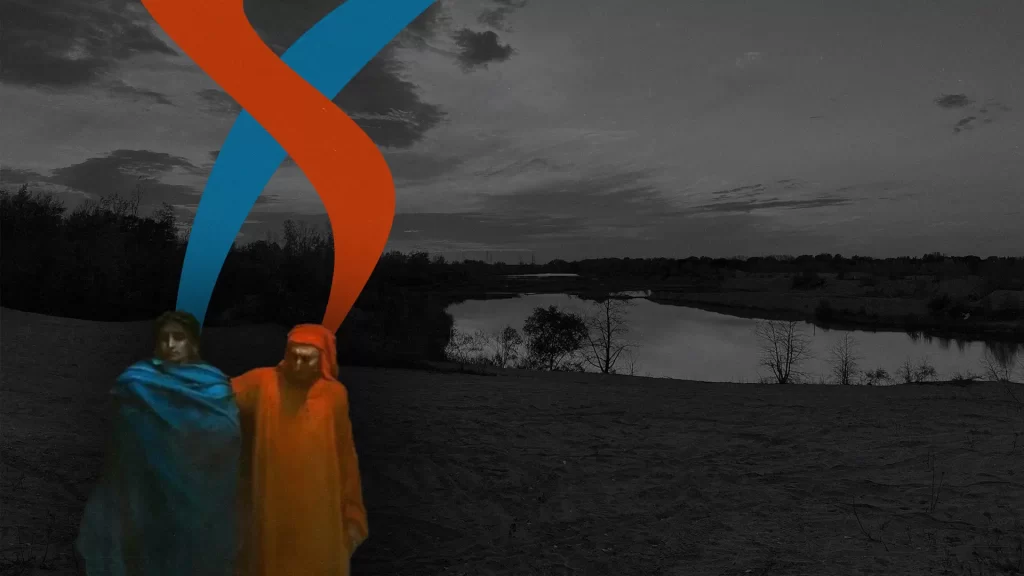
My friendship with Ash had been riddled with hardship. Over the years I began referring to us as Virgil and Dante from The Divine Comedy — an old poem about a descent through hell to observe sin and seek redemption in God. I saw myself as Virgil, and him as Dante. I was the guide; he was the seeker. Now more than ever, my role as Virgil was paramount. Near the start of The Divine Comedy, Virgil has to ensure Dante’s journey can continue by shielding his eyes to protect him from the paralyzing gaze of Medusa. For Ash, Medusa was the uncompromising demand of his OCD; for me, the insatiable lure of alcohol. If we looked too long at our compulsions, we risked remaining trapped and losing hope of redemption.
Ash suffers from a rare sub-type of obsessive-compulsive disorder called metaphysical contamination. A history of trauma precedes this form of OCD. Those with the disorder, perceive any item or action attached to the memories of that trauma as infected. Ash’s mother is the source of his anguish, the driver of malady. For Ash anything related to his mother has tainted energy. Ash sees the world as being made of energy: pure energy and tainted energy. For years, he has been the victim to what he calls a spiritual blackmail — like a dark figure inside his mind contaminating everything that connects him to his mother.
According to Ash, everyone has energy. It can’t be destroyed; it can only be transferred. If he thinks of his mother, he must transfer that energy by thinking of his father. While at other times, if Ash sees a “female parent,” (The word “mother” cannot be said), he must find a male who looks like a father to transfer the energy. If Ash does not transfer the tainted energy, he has to wash his eyes or hear the word “father” by calling a friend. This compulsion is his Medusa, who waits, glaring from red-lit waters to keep him from moving forward.
To escape the unending cycle he was trapped in, Ash believed he needed a total purge of tainted energy — a cleansing so thorough that nothing from the past could cling to him. That belief is what brought him to the bar that night. He asked me to help him perform a baptism that would sever him from his mother completely, so he could be born again. In his words, “it is like starting a video game with the wrong object. I have to start all over again with the right object.” These “right” objects were things that had no connection to his mother. While Ash’s OCD was illogical, its symbolic logic was entirely cogent — and exhausting. For example, if Ash were to enter a room and see the darkest part first, he would exit and re-enter looking for the brightest part of the room. If he saw the bright spot first, his time in the room would be light and good, not dark and miserable.
To shield his eyes from the Medusa, Ash needed a Virgil who moderated his obsessions, alleviated his pain, and helped him reach redemption in God.
But he didn’t know, much like everyone in my life at the time, the extent to which I, Virgil, was also facing my own compulsions.
I drank daily; as soon as the sun fell, I’d drink until I passed out. Often times, I drank to enter a momentary vacuum, into which an intense nostalgia would immediately pour. Other times, I had an acute desire to be removed from the present. I drank alone and at times, wandered the night, becoming anyone I wanted to be. No one in my life knew about it. I justified this behaviour by thinking about writers who, despite their vices, rose to literary heights. Alcohol and isolation: this was my Medusa.
During this time Ash and I spoke on the phone almost every night. He wanted guidance and understanding, and when he’d ask how I was, I’d ignore him and continue to play the role of counsellor. These conversations would sometimes last all night, and I would forget most of the details when I woke up.
One night after a phone call with Ash, I kept replaying his words in my head: “I believe I am too weak to fight my OCD. What I am trying to do right now is to build a foundation.” This foundation for Ash was a brand-new self, untainted, unattached to the evil that reminded him of the incommunicable harm he endured from his mother. I tried to help him by referring to Sigmund Freud’s The Uncanny. In it Freud writes that everyone has neuroses, and if fixated, they can become serious — eventually turning into a psychosis. I thought that if Ash were to succumb to each and every compulsion, he would only strengthen its control over his mind and actions. A perpetual loop of thought equals a complete subservience to them. Out of frustration, I hung up on Ash because he had spoke of suicide if he wasn’t able to make the ritual happen.
Looking back, I should have brought Freud’s lesson to my own compulsions.
That night I wandered off alone. With my bag full of beers, I walked my bike through lamplit streets. No one around. Just me. At a quiet boulevard I stopped, pulled a new beer from the bag and stayed in a crouch, scanning the empty blocks to make sure no one else was there. The night is good at distorting things, like making movement seem as if strangers are either getting farther or closer. Something told me to look up. Above me, a shimmering light slid across the sky the same way sand slides through cracks in the earth. My phone pulsed: messages from friends and family, breathless about the northern lights over the city. I closed my phone; their excitement was theirs. I snapped my beer tab, stood up, and kept moving.
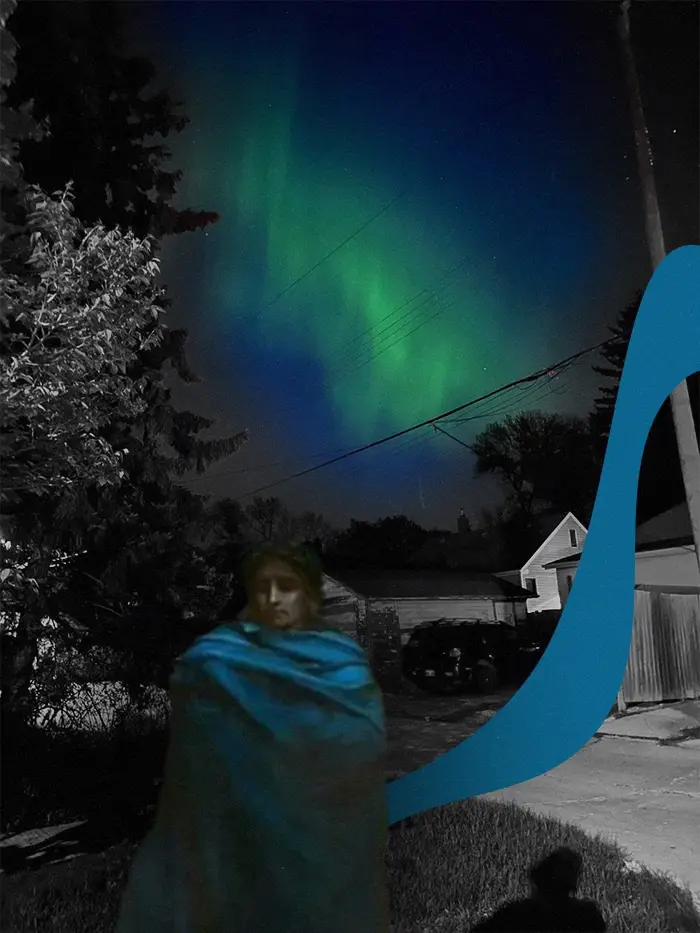
I finished the beer and crushed the can between my hands, throwing it to the ground. I stopped along an isolated pathway in the park and looked down at a mournful wooden bench — it and I were both alone. I sat drinking, bothered by the sudden suffering caused by a yearning to return to what once was. Not long ago I went to school in this area, met with friends on the play structure nearby or sat on the fallen trees at the shore of the river. As a kid I wondered where the beer cans at the park came from. Now I knew they came from lonely young men trying to figure it out.
With that thought, I lost consciousness and melted into a state of sleepy indifference. I woke up to flashing red and orange lights burning against my eyelids. A fire fighter with dark features and a mustache stared down at me. I had no idea how much time had passed, but it was still dark. I leaned forward in surprise, then moved with a dexterity prompted by an intense motivation to escape and survive. Someone had ratted me out. Maybe it was the bench.
“Can you tell me what day it is?” said the mustache.
I grabbed my backpack and gripped my saddle.
“Tuesday!” I half-shouted.
“Try again.”
“Saturday?”
He looked at me with lamentable eyes. Out of defiance I proved to the fire crew I was alive and well. I launched my bike over my shoulder and started running toward the darkness, disappearing into the bush line where not even the flashing lights from the fire truck could follow. I was back in the bleak and dreary loneliness again.
Alcohol was convincing me these moments were good — that they provided me with experiences to write about, but I was becoming a Virgil who had grown too fond of the lower circles of the abyss. I was stepping outside my role as guide. I was just as lost as Dante.
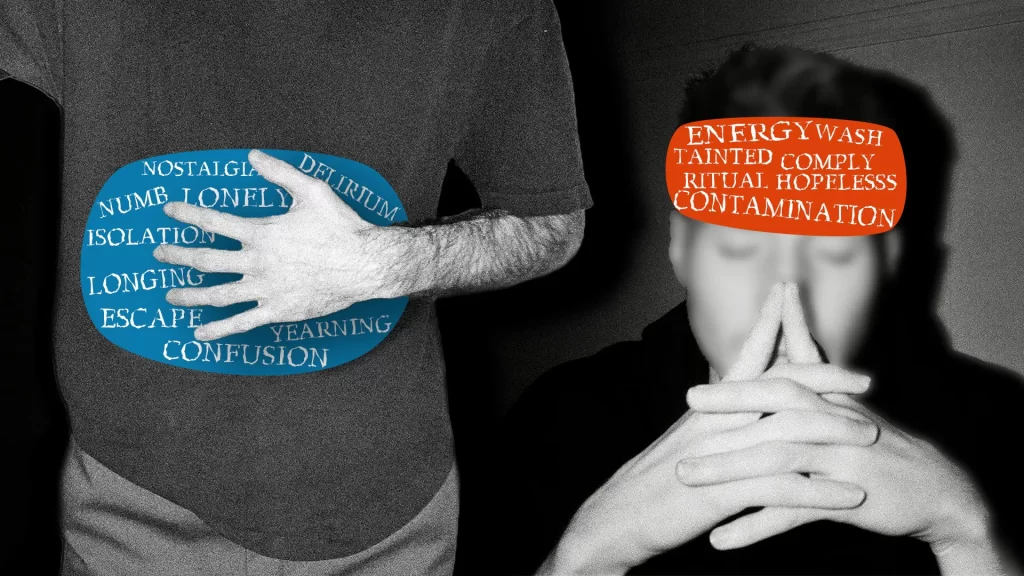
Ash and I continued to talk that summer. Through our late-night conversations, I slowly began to realize that Ash’s obsessive compulsions were similar to my incessant desires to drink, though I didn’t say this to him. If his spiritual blackmail came in the form of a dark figure in his head, mine was a hollowed-out stomach — like a deep hunger — more aching than a body seeking nourishment.
So, I indulged — I looked directly into Medusa’s eyes.
I left my apartment on my bike. The night air was hot, and the sky hung low like clusters of damp cotton. The West End of the city was blemished by cold lamplight pouring down through elm trees bent over side streets.
Club music pushed against the low clouds and reverberated along the art-deco buildings of the Exchange. Lights inside a distant awning hung at the zenith above two hard-looking men — their shadows dense beneath them. They stood at the entrance to an adult night club called Solid Gold. Once I got close, I paused in front of them — for a moment I wondered if I had abandoned all hope.
“May I enter?” I asked.
The men apologized then pivoted in sync as if my question pushed open a door. I thought their gentleness was strange. I descended into this lower circle of the city, where people go to be forgotten. I took the first booth, and before I had a moment to exhale, a woman layered in cut-up leather sat down in the seat next to me.
“My name’s Jinx.” she said. Her voice was young and her eyes were smokily glazed.
“Adam,” I lied.
“What brings you here?”
“Curiosity, I suppose.”
“Yup, yup. There’s plenty of that around here. What do you do?”
“I’m a sales rep for a local brewery,” I lied again.
“I can tell. You give off that vibe.”
A half-dressed server interrupted us, and based on Jinx’s body language, I assumed this was my cue to buy us drinks.
“Would you like anything?” I asked Jinx.
She hummed before answering. “Maybe a spirit. Double vodka cran.”
I ordered myself a bottled beer.
“So why do you do this?”
“It’s fun, I get to drink on the job, and I like talking to people.”
“What kind of people usually come through here?”
“All sorts, but here specifically, lots of HA.”
“H-A?”
“Hells Angels. They’re really nice to me, but I wouldn’t piss them off.”
“Are you a student? What else do you do with your time?”
“Cosplay. I make my own suits. I live at home, so I don’t need to worry about much.”
“Do you parents know you work here?”
“No.”
I pulled out a small notepad and gave her a choice: write something down that she hadn’t shared with anyone or ask for my number. To my disappointment, she chose my number. I wanted to reach deeper into her story, to understand what kind of person offers themselves to this kind of world.
I left the club and noticed a gentle mist had fallen, coating the streets in a faint watery film. I began to pedal back home down Ellice Avenue. Jinx’s voice kept in rhythm with my breath; I had exchanged my number with a young woman whose name meant “bad luck,” and the betrayal sunk deep into my bones. I raced past the shuttered windows of Korean restaurants and tattered places of worship, the city lights reflected off the pavement, tangled and blurry. It wasn’t long before the damp concrete reached out to claim me like arms reaching up from Hell. My bike slid out beneath me, and I slammed my head against the road, skidding down the centre of the street. It wasn’t until I got home when I realized I lost my glasses during the fall — I really was jinxed.
I kept showing up to places like this — dim rooms where the dark harboured the lost. I hoped that someone there could offer me an insight I couldn’t find in well-lit worlds. When Medusa appeared at night and the alcohol disillusioned my hope and purpose, I felt like the only places I had left to exist in were the ones no one talked about.
Around mid-September, Ash called me. He was alone at the East Kildonan Centennial Park walking in circles. He needed to give me the final details of the ritual through a poem because he couldn’t risk tainting it by speaking directly:
Beyond the city lights, it’s iridescent glow
Meet me where minerals run deep
outside the walls, and it’s empty woes
When the fall fully dies and earth goes to sleep
death will run beneath and above us
Here, at this hour, my soul begs its keep
Take with you warmth, because I will have none
promise to shield my flesh, after the rite is done
Then there in silence, a shroud will cover my darkened world
where I have a secret plea to share
I knew where I needed to be, what I needed to bring, and when I needed to be there.
The poem reminded me of the song Ash and I had written a few weeks earlier on an old guitar. I’d been drinking and writing about the sadness of yielding to these compulsions — of succumbing to her gaze.
By this time, I was fully entangled in Ash’s process and the ritual was around the corner.
The night before the ritual, Ash and his girlfriend Amelia came over to my apartment to go over the last of the items that connected him to his past. Ash wanted Amelia to delete every Facebook and Instagram account that he had created over the years, and the messages, poems, and pictures they contained — these were important memories for Amelia, but for Ash, they were tainted by their connection to his mother.
I had to delete all my search history and bookmarks on my computer because if he was present during the time I watched a movie, or bookmarked an article, it was tainted. After we removed these online traces, we went over the list of physical items I had to destroy one more time: clothing I had shared with him in the past, kitchen supplies, gifts.
The next night, when Ash arrived at the ritual location, he would be removing his clothing, the last of his items connecting him to his past. He would begin and end the ritual naked, like an infant being born.
Before they left, we hugged — as Ash and I embraced each other, my pocket buzzed. It was Jinx. She was getting off work early and asked if I wanted to meet up.
In an attempt to ignore the pull of the Medusa, I chose to be Virgil, the guide, and lead Dante to quiet waters to refresh his soul. I put my phone in my pocket and never responded.
“Can I pray for us?” I asked.
They stood at the exit of my apartment and bowed their heads.
The night of the ritual happened to be the night my friend Brett was celebrating his birthday. He asked each guest to dress up in costumes starting with the letter “B.” I went dressed as Baphomet — a character commonly connected to satanists, but the original intention of the symbol was to represent the balance of nature and knowledge. The figure is a goat-headed human with one hand raised upwards and the other held downwards, meaning what happens in the physical world is mirrored in the spiritual world — as above, so below. I held this stance several times throughout the party.
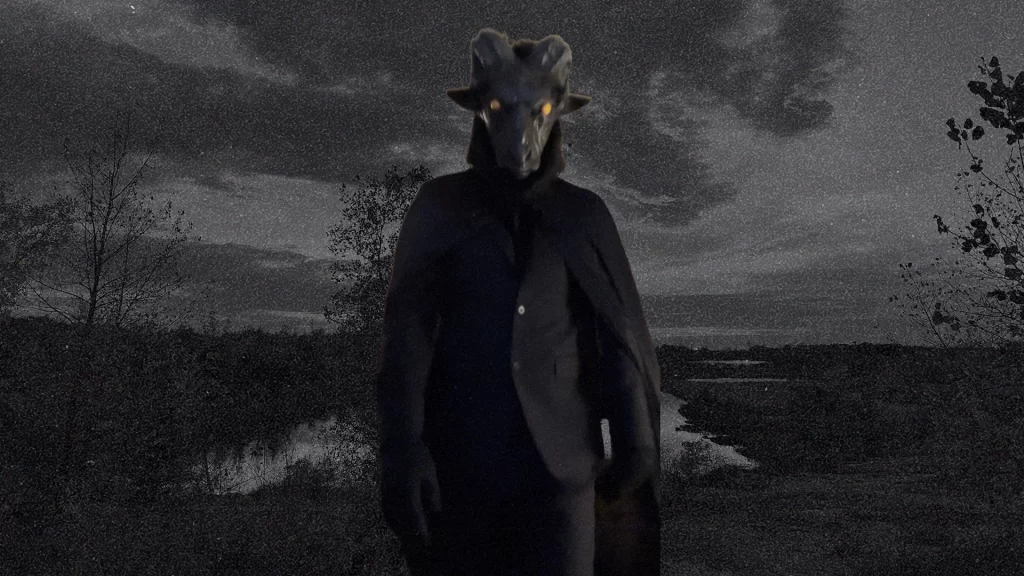
Around 11:30, I left the party. It was time for the ritual. I arrived at the location I was confident Ash’s poem described. I made a sidelong glance at the shrouded sand pits as Classic 107.1 played quietly on the radio — then I turned the car off. I sat in silence and blankly stared through the windshield at the dark world, knowing full well that my friend was naked and alone in cold waters, just beyond the ridgeline. I tilted the rear-view mirror and looked down at the Baphomet mask — I was still in my all-black suit and cape.
I started to feel irritated. “I am here because there was a series of events that have compounded into the realization of the ritual,” I said aloud. I sat there longing to witness the culmination of everything Ash and I had been through, trusting in the revitalization of hope — that we can, when we seek it, be redeemed by something beyond us.
Everything was black, except for the moon, which is all I had as guidance. I walked toward the quarry, and I still couldn’t see Ash. What if I misunderstood the poem? Am I where I should be?
Then I saw a motionless body, pale, half-swallowed by moonlit waters. I stood at the top of a sand hill soundlessly looking down at it. To my surprise, I was afraid. It all became real, the invention of Ash’s mind and the weight of each task that came before had brought me here. I stared down at the man who I had shared so much misery with. He was still for a moment. Unreasonable thoughts flowed through me: We are all alone out here. What if he attacks me? What if he tries to kill me?
In the deepest recesses of my soul, I understood the severity of the moment. And I, a looming figure in dark clothing at the peak of a sand hill, watched over Ash from above. I reassessed my fear, then noticed the anxiety, the urgency, and the panic in Ash. There was a tension so great it was like twisting a rope, that, if tightened any further would snap and destroy everything.
Ash turned around, looked straight at me, and released a sharp exhale, breaking the tension. I moved down towards the water, stopping just before the shoreline. Ash dropped straight down, disappearing. His tainted body sank to the floor of the lake, and I expected his OCD to burst upward to the surface as a deep purple ink, squirming under the moon light. But it didn’t.
Ash slowly emerged, pulling his body out of the water with a weighty apprehension, then approached me with both of his arms held out. We held each other in silence. The moon must have been watching, because the clouds moved, darkening everything around us. I patted Ash’s back as we hugged, and his skin felt thin and tight, his muscles were contracting as if there was a whole nest of bees trying to push their way out. He broke the silence with a low voice: “One last thing. Remember in the poem I said I had favour?”
Looking at his eyes, I told him I remembered, and he smiled, pausing, almost hesitant.
“Can you give me a new name?”
He stared through me, waiting.
“What about Wilhelm?”
He nodded in agreement and we walked quietly to my car. The ritual was done.
In the days after the ritual, Ash returned to the water again, then again at a different body of water, and one last time somewhere else. The ritual didn’t work. He wasn’t born again. The name Wilhelm Schneefall, meaning “protective snowfall,” didn’t stick. While the ritual did help him talk openly about personal things, Medusa didn’t stray far, and his OCD wasn’t cured. Intrusive thoughts and compulsions continue to plague Ash to this day.
For me, my Medusa held on and wouldn’t let go either — it was a quiet pursuing darkness. Though I was trying to stop drinking, I would yield again and find myself wandering at night. Yet the hope I had experienced through the ritual stayed with me. It was a flame in the dark, and the dark could not overcome it. Ash’s belief in pursuing freedom and redemption through this ritual introduced me to what spiritual surrender looks like. I see now, that Ash was guiding me too.
Our stories aren’t over. Amelia helped Ash rebuild his life, getting him set up in an apartment, buying clothing, getting an ID, and a phone. But they aren’t together anymore. As for me, I’m still drawn to wandering the night — only now, I no longer drink. Nevertheless, moments of weakness remind me of the sweet numbness that came with choosing to blow out the candle. My experience with Ash showed me that there is another unseen world worth exploring, one that might offer something steady, forgiving, and worthy of surrender.