Who Cheers for Us?
As a cheerleader, I already knew that my sport was so much more than pompoms, chants, and big smiles, but when my sister got a serious concussion after being kicked in the head during practice, I began grappling with how cheerleading is perceived — and the real-life consequences of those stereotypes.
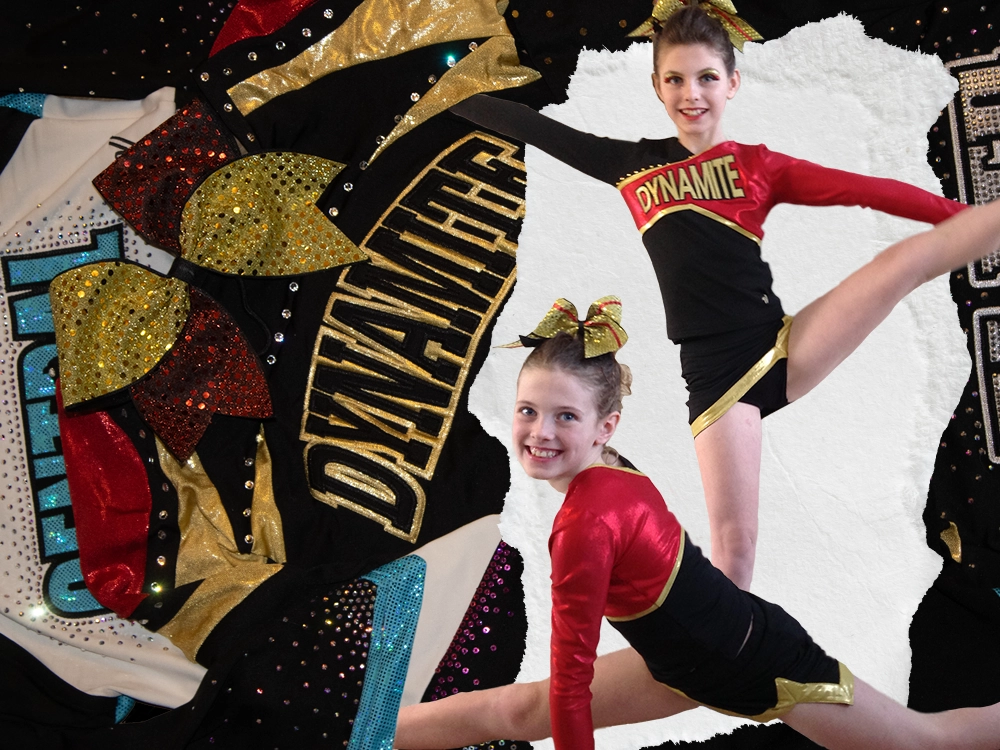
My teammates and I jog out from behind the curtain onto the black mats of the competition floor, waving to a crowd we cannot see. The white lights are blinding, and all I can hear is the audience’s applause and the sound of my heart beating.
I find my place, bouncing on the spring floor to test its give, and look to my sister. We smile at each other, she nods, and we look at our shoes. I hear my base’s voice, shouting our team’s name. We slap our hands to our sides, fall into position, and wait.
Then comes the opening boom of the music.
Our heads snap up in unison. With wide smiles, half our team flips backwards down the mat in sync while my stunt group sets for our opening basket. The bases grab each other’s wrists as my flyer steps in with one, then both feet. I grab her ankles and the three of use all our strength to thrust her up as high as we can. We watch with our arms outstretched as she spins, once, twice, before falling back down into our grasp.
Thirty seconds down, two minutes to go.
For eleven years, my sister and I were devoted to cheerleading and the pressure, pain, and euphoria that comes with the sport.
Like hockey or football, cheerleading is a contact sport — one where athletes hold their teammates’ lives in their hands. Yet cheerleaders often aren’t taken as seriously as other athletes, and neither are their injuries. Many American school associations and the National Collegiate Athletic Association (NCAA), don’t recognize cheerleading as a sport. An article from The American Academy of Pediatrics explains that this lack of recognition leaves a gap in injury data for student cheerleaders. U Sports, the Canadian equivalent of the NCAA, also doesn’t recognize collegiate cheerleading as a sport, though according to an article in The University of Victoria’s paper, the Martlet, many cheerleaders are eager to see this change.
Even though cheerleading is not officially recognized by U Sports, the athletics involved are extremely physically demanding, and like other sports, participants get hurt from time to time. Concussions, in particular are a risk for cheerleaders. The American Academy of Pediatrics article found cheerleading’s concussion rate ranks third highest behind boys’ football and wrestling. And many of these concussions are serious. Concussions were the leading cause of cheer-related hospital admissions from 2010 to 2019, according to research published in the Orthopaedic Journal of Sports Medicine.
At sixteen, my younger sister Haley came home from cheerleading practice in tears. She and her team had been working on the pyramid when a flyer accidentally kicked her in the head. Haley was hurt, but she didn’t sit out.
In cheerleading, each person on the team holds an integral role, especially when it comes to stunting. Most stunts require two bases, a backspot, and a flyer. When one person is missing, it means the rest of their group can’t participate either. On the competition floor, there is no pausing a routine unless someone is clearly injured.
But sometimes it’s hard to tell the difference between hurt and injured. Four days after she got kicked in practice, Haley realized she was injured. She had a concussion.

When most people think of cheerleaders, they picture sideline cheerleading — women energizing the crowd at male sporting events, chanting, holding up pompoms, and stacking teammates into exciting stunts.
But Haley and I were competitive cheerleaders. Instead of cheering others on, competitive cheerleading operates out of private clubs and focuses on executing a synced, fast-paced, two-and-a-half-minute routine made up of dance, tumbling, jumps, and stunts. Each skill is assessed by judges and measured against the other teams in the competition.
Our routine had to be perfect to win, so practices were intense. Hours a week of strength conditioning, learning new stunts and then harder stunts, practicing our tumbling skills, and then running through our routine over and over until our motions were sharp and synchronized, our toes were pointed in our jumps, our basket tosses were high enough, and our pyramid was executed without any of the flyers falling.
By the end of practice, we didn’t want to smile anymore because we had just spent the last few hours holding our hundred-pound teammates over our heads and were utterly exhausted — but smiling and performance are major parts of a routine, so we’d have to run the routine again, this time making sure we were smiling while still doing all the other things right too.
“One more time” never actually meant one more time.
While my experience with cheerleading was characterized by hard work and athleticism, the movies and television shows I’d seen growing up, like Bring It On and Glee, portrayed cheerleaders as a mix of ditzy, mean, sexually promiscuous, and/or popular. These stereotypes trickle down into the way people perceive cheerleaders in real life.
A 2004 Winnipeg Free Press article encouraging women to join the Winnipeg Blue Bombers Cheer and Dance team exemplifies this pejorative view of cheerleading, conflating the athlete’s skills with “dancing for crazy football fans.”
Although Blue Bombers’ cheerleaders are paid today, as recently as 2015, they weren’t paid for their skills. A Global News article from that time shares that the CFL considered cheerleading a volunteer role. Cheerleaders still have to attend every practice, make public appearances, and pay their own way to the Grey Cup game.
I started cheerleading at six years old after my family drove by a marquee board offering beginner cheerleading classes at a community centre near our house. At the time, I looked up to Kim, the main character of my favourite television show, Kim Possible. Kim was a kind, crime-fighting, straight-A high school student who was captain of her cheerleading team. While I looked up to Kim, Haley looked up to me. A year later, at age four, she started cheerleading, too.
Being cheerleaders made our mom and dad cheer parents — they drove us to practice four days a week, signed us up for teams, and brought us to stunt classes, tumbling classes, and uniform fittings. They spent many eight-hour days watching from the stands at local competitions, came with us to travel competitions, and volunteered. My mom’s friends were other cheer moms. My dad bought a professional camera to take photos of us at competitions. Our family life revolved around cheerleading.
In those years, my sister and I spent a lot of time together. We cheered for the same club, and for a few years, cheered on the same team. One year we signed up for an extra practice a week to work on a duo routine together. At home, we fought like regular siblings — she’s notoriously sassy and just has to be right — but at cheer, we weren’t only siblings, we were teammates.
Haley was talented. Despite being three years younger than me, Haley’s skills quickly out-progressed mine. If I joined one team a season, she’d join two. When I would stall at practice, scared to throw my back handspring, she’d already mastered it and moved on to the next skill. When our cheerleading season was cancelled in 2020 due to the pandemic, I quit the sport, and she bought her own cheer mats to practice outside every day. Confident, carefree, and fearless, my sunny sister was upside down more than she was right side up.
One minute and thirty seconds before the routine
Backstage, the competition is loud and my adrenaline is running high. My heart pounds as I peer behind the curtain to see who is on the competition floor. A high school team chants and holds up signs spelling out their school’s name. I watch for a moment, then turn back to join my team, now huddled in a circle. I can barely hear my coach over the music.
“You’ve got one shot,” she says. “Show the judges what you’ve worked for.”
We all put our arms into the centre and shout our team’s name on three. Our coach yells that she’s proud of us. Another teammate tells us we’ve got this. I smile at my sister and adjust the bow sitting on her ponytail.
And then it’s our turn. I look around — twenty girls I’ve grown close to over hours of practice in the last year. I close my eyes. We hold our breath. And then the emcee announces our name.
Even being a cheerleader myself, I looked down on school cheerleading teams for chanting and using pompoms, like these props somehow justified the trivialization of our sport.
School teams, or scholastic teams, combine sideline and competitive cheerleading to create a routine with chants, posters, and pompoms. Teams perform at school sporting events and at competitions against other schools. These teams are typically made up of athletes new to the sport, with less time to practice, resulting in less polished routines.
Few competitive cheerleaders I knew cheered at school for this reason. But in eleventh grade, my high school team was headed to the scholastic version of The Cheerleading Worlds competition in Florida. So, I joined — but I didn’t want anyone to know. I knew many of my classmates saw cheerleaders as frivolous, waving sparkly coloured plastic, chanting in unison, and holding up signs — they didn’t see us as real athletes.
This perspective was confirmed at an athletic excellence assembly our school held in January. Our cheerleading team applauded each sports team as they ran through the blue and white balloon arch marking the entrance to the gymnasium. Every hockey, football, basketball, soccer, and dance team got cheers from the student body and was congratulated for their hard work, but no one cheered for us. The emcee moved on to a student’s singing performance before we entered the gym.
A few weeks later, our cheerleading team flew to Florida and competed against teams from China, the United States, and Mexico. I don’t think many people at school even knew we were there.
When I would tell people I was a cheerleader, they’d often ask who I cheered for. I’d rush to explain what it was I really did. I learned to resent sideline cheerleading for making my sport look like less work. But when Haley was asked who she cheered for, she would just shrug and say, “I don’t cheer for anyone. I cheer for myself.”
One minute into the routine
I shout the counts aloud over the music to keep my stunt group synchronized with our team. My flyer reloads, placing her foot in the base’s hands. I grab her ankle, and on one, we switch up to liberty.
She grabs one foot into a heel stretch, and wobbles.
“Squeeze!” I yell.
She tightens her muscles and locks her knee, stabilizing the stunt. From the corner of my eye, I see another stunt fall early.
I hear my coaches’ voices in my head. Brush it off, keep smiling.
At its core, cheerleading is a performative sport, and performance is part of score. Cheerleaders train to show off our skills and appear enthusiastic. The point is to make something very difficult look easy.
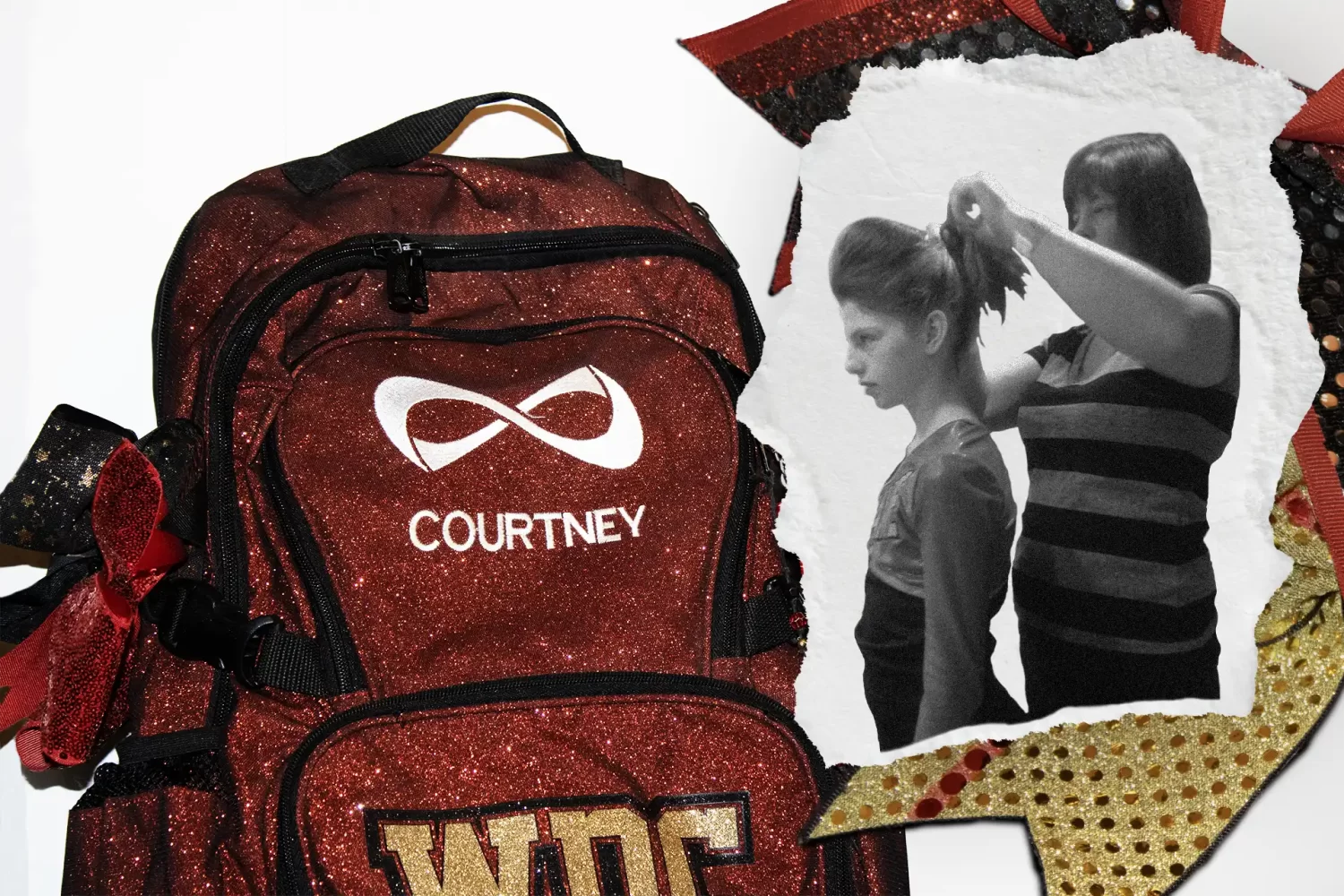
Another part of performance is the look of the team. On top of big grins, cheerleaders wear eye-catching uniforms — tight, sparkly outfits, a full face of makeup, and a glittery hair bow to top it off. Growing up, getting ready for a cheer competition meant waking up three hours early to give my mom enough time to tease both my sister’s and my ponytails and follow a ten-step tutorial for the red and gold eyeshadow look our cheerleading club required us to wear at competitions.
In an article about cheerleading and the gendered politics of sport, researchers noted that cheerleading has had difficulty gaining respect because these feminine elements are perceived as less athletic.
I’d always been sensitive to people perceiving cheerleading as inferior. But I now know the props, chants, outfits, or performance aren’t the reasons for cheerleading’s trivialization — it’s misogyny.
One minute and forty seconds into the routine
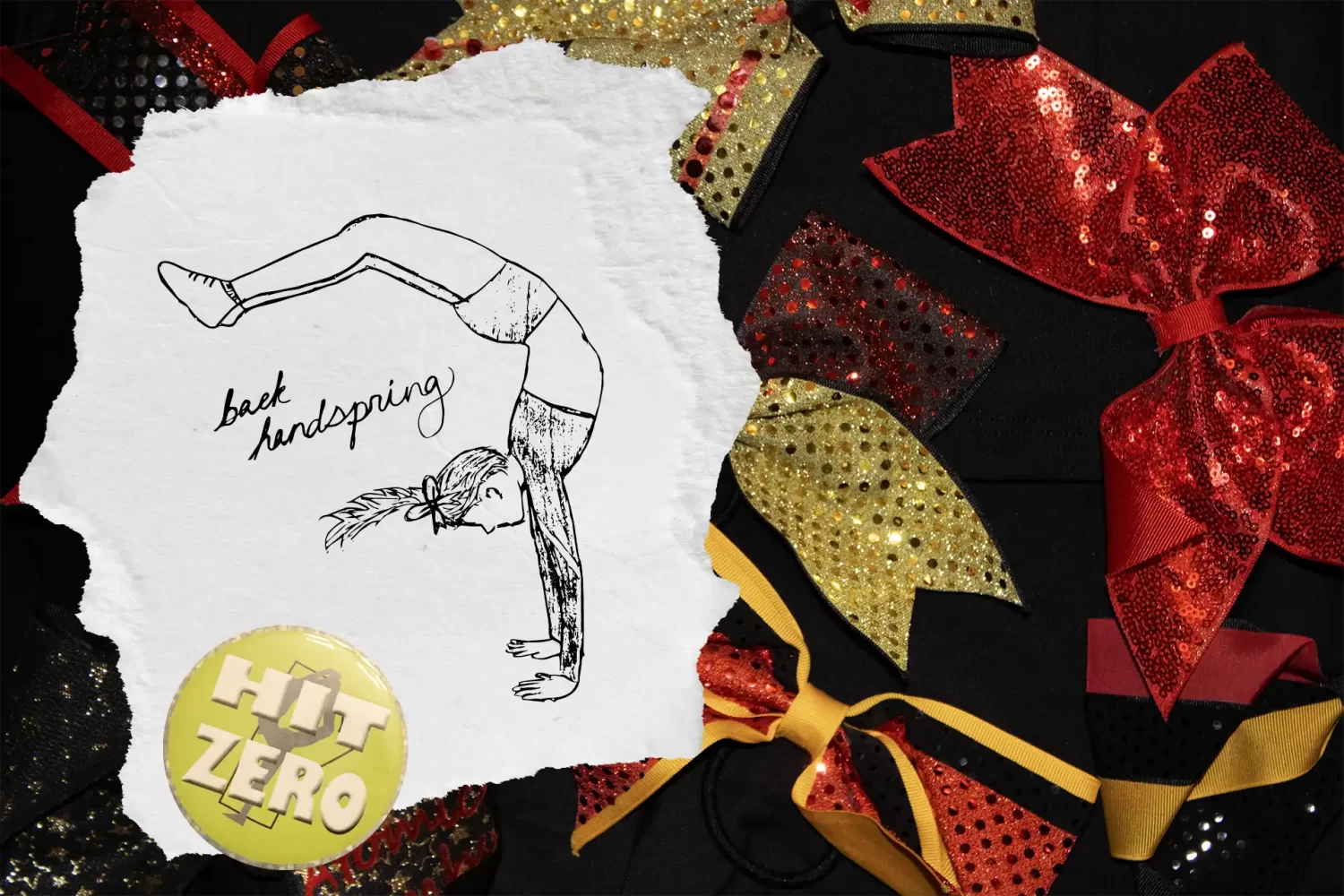
“Hit! Pull!” the crowd yells as we jump into a toe-touch followed by a back handspring. We land with a smile, then move into a new formation across the middle of the mat.
On five, we set up.
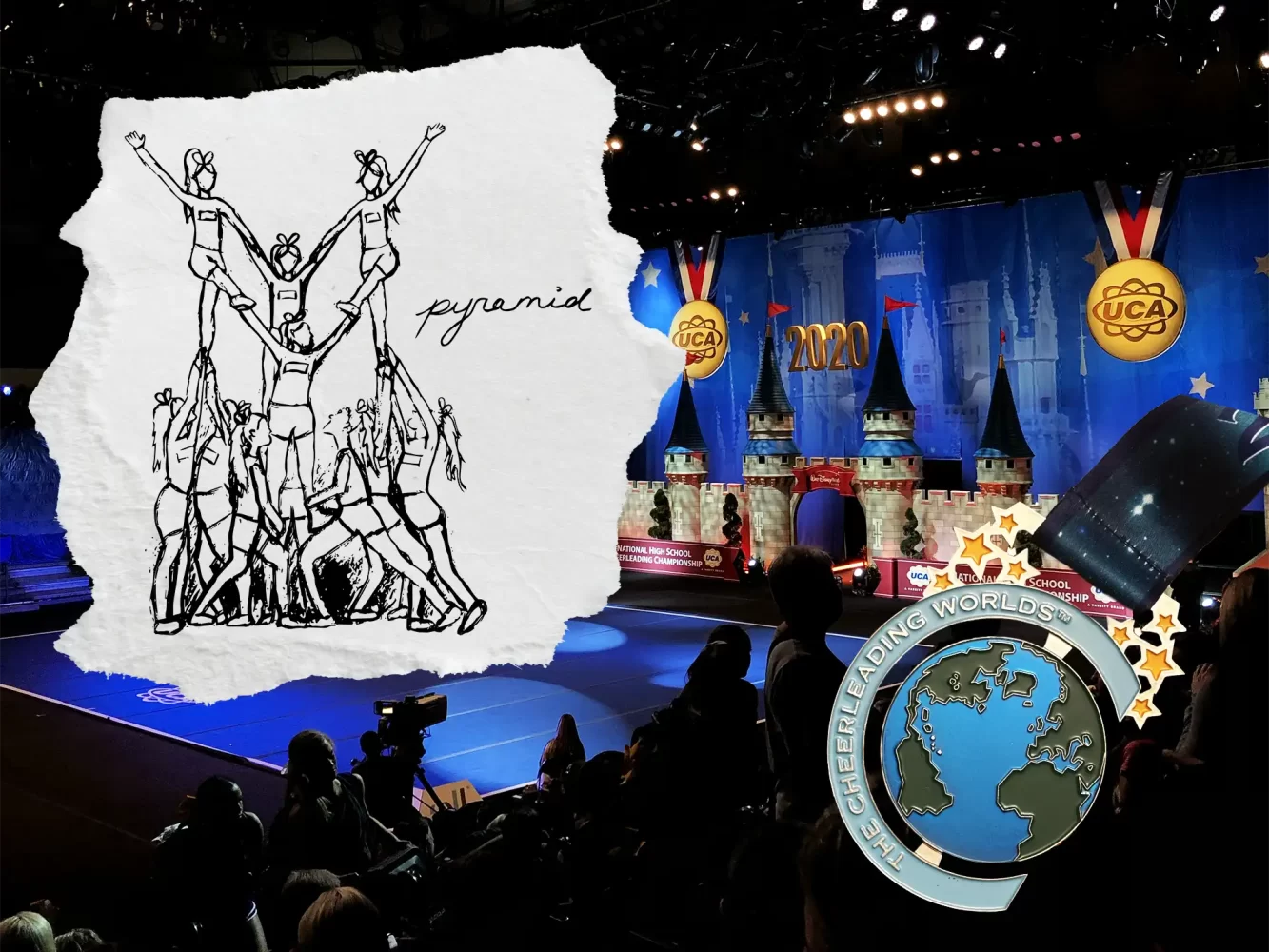
On one, our team forms one large stunt — the pyramid.
I concentrate on securing my flyer as other groups push to full extension or flip into a handstand. Our flyers connect, then dismount into backflips, twists, or cradles. We stack flyers on top of flyers and then throw them into other groups.
This is the hardest part of the routine. We’re killing it.
When Haley came home from practice concussed, she was competing at nearly the highest level possible.
Over the years, Haley and I collected a plethora of injuries — a dislocated elbow, a fractured wrist, and fingernail scars up our forearms. We also witnessed our teammates’ injuries, including concussions. Seeing others get hurt could be scary, but it was also just something that happened. It a was a part of cheerleading we were used to, something to be expected, a cultural norm.
The teammates I’d seen with concussions always looked fine to me, but that doesn’t mean the injuries weren’t serious. I never truly understood how severe they could be until I saw how it affected Haley.
After being kicked in the head at practice, Haley was not the same. My usually sunny sister spent her recovery in the dark, piecing together a puzzle in silence because it was the only thing that didn’t hurt her head. With pale skin and deep bags under her eyes, she looked sick and exhausted. When I spoke to her, she hardly looked up. This was not the sister I had grown up with.
My parents knew it was possible to get concussions from cheerleading. They’d seen other kids get injured the same way, so after Haley got hurt, my dad took her to a concussion clinic to get assessed, and then, we waited for her to get better.
Unlike many other injuries, concussions can’t be seen on routine X-rays, CT scans, or MRIs. But there were other signs. I could tell Haley was in pain because she was unusually quiet. Bright lights made her head pound, and talking made her dizzy. Sleeping was her only solace.
No one outside the family saw what we did. Some of Haley’s classmates thought she was lying to get out of her year-end exams, and others said she was lucky to skip school, but Haley’s concussion was the worst pain she’d ever been in.
Women often work hard to get their needs taken seriously. This is especially an issue when it comes to invisible injuries like concussions. In her memoir, Run Towards the Danger, Sarah Polley writes about her experience with a concussion and talks about being accused of “malingering,” a word she says she had to look up, which means “to exaggerate or feign illness to escape duty or work.”
After a few months, Haley was cleared by her doctor and cheerleading coaches to continue practicing. She made the team again the next year, excited to continue.
Only a few weeks into the new season, Haley came home one evening after practice and threw her cheer bag on the floor of our front hallway. She’d been hit on the head again.
Another concussion.
When it comes to safety, cheerleading has very little equipment. Athletes are required to wear running shoes, remove their jewelry, and practice on mats.
Cheerleading skills are also separated into levels to prevent athletes from performing extreme skills before they’re ready. If skills that are more difficult than the team’s level are performed at competition, they lose points.
Cheer Manitoba requires coaches to take concussion training to be certified. Cheer Canada has a Concussion Protocol Policy that clubs, coaches, athletes, and parents must follow before the athlete can return to the sport. Clearly, there are enough concussions within cheerleading for these regulations to exist.
Yet the article in the Orthopaedic Journal of Sports Medicine reports academic research on the risks of concussions in cheerleading is lacking, and research published in the journal Operative Techniques in Sports Medicine found female athletes experience concussions at higher rates than males in comparable sports, and with more severe symptoms.
Once doctors cleared Haley to continue practicing after her second concussion, she was terrified to go back. She didn’t want to get injured again, but her devotion to her team pushed her to continue.
She chose to keep wearing a special foam helmet for the rest of the season to protect her head. Every time she was even slightly bumped, she’d experience phantom concussion symptoms for days.
The brain injury made her anxious and caused her to sleep too much or not enough — symptoms that still affect her today even though she is still taking antidepressants which were prescribed after she got her first concussion.
Haley tried cheering for a less intense team, but it wasn’t the same. By the end of that season, she quit for good. She’d wanted to go back for another season — we both knew many cheerleaders who were still training after three or four concussions — but my mom refused to pay to put my sister in a position where she was likely to be injured again. If she returned, injury seemed inevitable, especially since after being concussed, it’s much easier for it to happen again.
So, leaving claw marks behind, Haley let the one thing go that had defined her life for over a decade.
Two minutes into the routine
The last thirty seconds of our routine is dance — our last impression for the judges.
Finish strong.
We move into formation, smiling as wide as we can. I hit my motions sharp and fast. The audience claps to the rhythm of the music, and our coaches scream the counts to keep us in time.
As our music ends, we hit our last motion.
We pause, pant, and take in the audience’s cheers.
And then my eyes well up. I know we hit a good routine.
I watch my teammates embrace with tears streaming down their faces. Then I see my sister coming my way. I smile at her and she jumps in my arms.
When cheerleading is trivialized, the invisible injuries common within the sport are trivialized too, putting athletes at risk. If cheerleading isn’t considered a sport, then it’s not given the same amount of time, attention, or funding other sports have.
In 2020, my sister and I watched Netflix’s docuseries, Cheer, which follows a college-level cheerleading team as they train to compete in world competitions. Finally, it felt like someone was seeing cheer for what it is.
In 2021, cheerleading got another big win after the International Olympic Committee officially recognized it as a sport, the first step towards being included in the Olympic Games. And this January, Cheer Manitoba released a four-year strategic plan to increase exposure of cheerleading and it’s high-level competition to the public.
A few weeks ago, I watched Haley spread her cheerleading gear across the floor of our living room. She sorted through her cheer shoes, uniforms, t-shirts, and practice gear, deciding what she should keep. She knew she’d never go back, but these items held precious memories.
It’s been three years since her last concussion, and Haley and I don’t spend time together like we did when we were cheerleaders. I don’t know if it’s the side effects of her concussion or the loss of identity, but Haley’s personality has changed. While she once hated sitting still, she now hardly leaves her bedroom. Her positive attitude has been replaced with irritability and sadness.
After Haley chose a few meaningful items to keep, my mom posted the rest on Facebook Marketplace. When a young cheerleader came by to look at them a few days later, my sister retreated to her room.
I watched the girl shuffle through my sister’s old clothes. I don’t know what the gear meant to her, but for us, it was a symbol of our family’s shared and complicated relationship to the sport.
I felt a bittersweet connection to her. While this exchange officially marked the end of an era for my sister and I, it also acted as the passing of a torch. Now, it’s up to this cheerleader, and her generation, to show the world what cheerleading is and can be.
I hope she’s seen differently, the way I wish my sister was.