
Reclaiming Romantasy
When romance and fantasy are more popular then ever, why are the readers who love them still so often ridiculed?
Listen to this story:
When reading became a regular part of my life again a few years ago, I unexpectedly found myself defending my book choices. A co-worker recommended Fourth Wing by Rebecca Yarros, a fantasy romance novel about dragons and magic. I finished it in under a week and was hooked. I started reading other novels in the fantasy and romance genres and wanted to talk about my revived love of reading with everyone. I expected my enthusiasm to be contagious; what I didn’t expect was the judgment — and I heard a lot of it: That isn’t real literature. Romance isn’t written well. There’s no substance to it. Isn’t that just all porn?
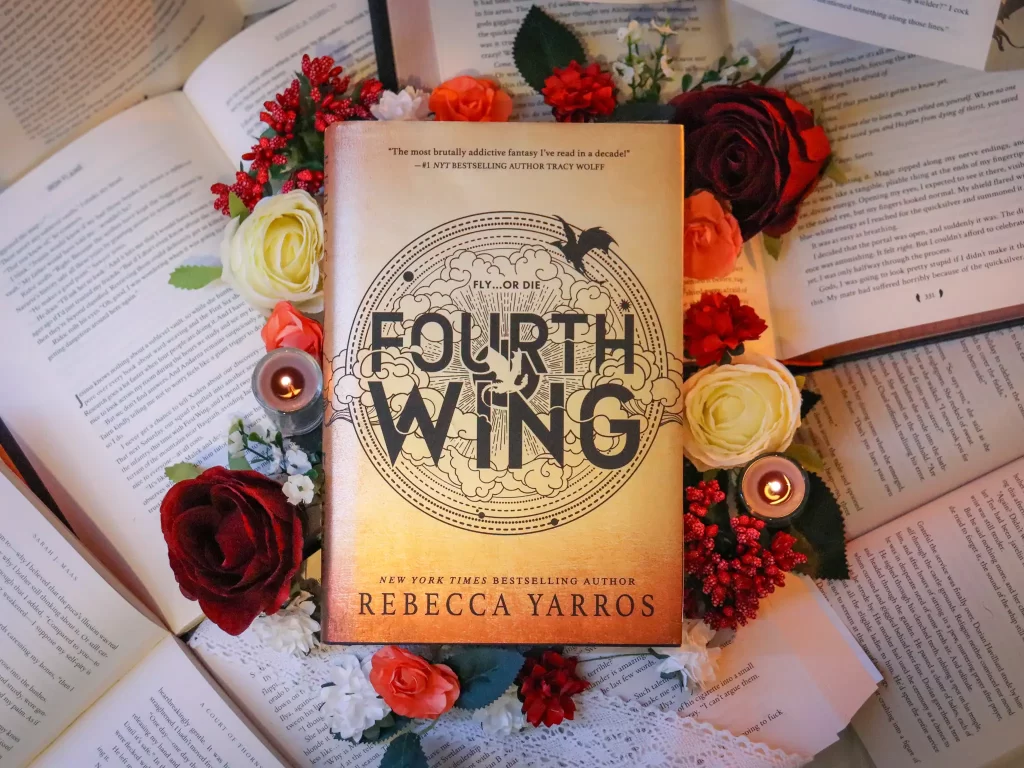
I was taken aback by people asking me to justify what I enjoy, especially considering how popular these books are. According to BookNet Canada’s Canadian Book Consumer Study, in 2024, fiction accounted for 63 per cent of all books purchased by Canadian book buyers, with fantasy ranking as the top fiction category at 19 per cent of all sales. Fantasy and romance novels — books such as Fourth Wing, A Court of Thorns and Roses, and Heated Rivalry — currently dominate bestseller lists, bookstore sales, and TikTok feeds. Yet they carry cultural shame, an attitude I was surprised to learn has followed them for centuries.
That contradiction is most visible online. In a digital culture where posts, reviews, and reaction videos document much of everyday life, people make their tastes public. The internet provides space to express identity through the things that you enjoy.
From Shelves to Screens
Reading, once a largely private activity, now takes place publicly through apps designed for sharing opinions and reactions. On TikTok, romance and fantasy fiction have become some of the platform’s most visible reading communities. These genres are often grouped into the subgenre “romantasy,” a label for books that blend fantastical elements with romance.
Authors such as Sarah J. Maas, Rebecca Yarros, and Carissa Broadbent have captured millions of readers. Their work constantly circulates through BookTok feeds, a sub-community of TikTok where users post book-related content or search for it by using the hashtag #BookTok. Videos tagged under BookTok routinely rack up millions of views, with readers filming emotional reactions, annotating favourite scenes, and recommending their favourites to strangers. Many readers, including those who talk about it on BookTok, turn to romantasy for its expansive world-building, emotionally driven storylines and, for many fans, yes, the explicit intimate scenes.
According to Circana Bookscan, as reported by the New York Times, BookTok helped authors sell 20 million printed books in 2021, with even higher sales in 2022. The platform’s influence reshaped which titles dominated bestseller lists and bookstore displays.
Even as the publishing industry changes over time, romance remains one of the most profitable genres in the world, rising in both popularity and sales. A Publishers Weekly article found that while Canadian book sales dipped by two per cent in early 2024, romance and fantasy fiction sales rose by 235 per cent, making them one of the only areas of market growth. Despite dominating sales, these genres are rarely granted the same cultural respect as literary, historical, or science fiction novels.
One of the most visible examples of BookTok’s power is Colleen Hoover, an author whose books found renewed popularity years after their original publication. According to the New York Times, Hoover sold more books in 2022 than James Patterson and John Grisham combined, two writers who have long dominated bestseller lists through traditional publishing and mass-market appeal. Her resurgence reflects a cultural shift in how books gain popularity, driven less by critics and publishers and more by online communities, emotional appeal, and reader-led promotion.
Behind the viral videos and dramatic sales increases, readers and BookTok creators are navigating how openly they can enjoy these books, and why some people still resist taking them seriously.
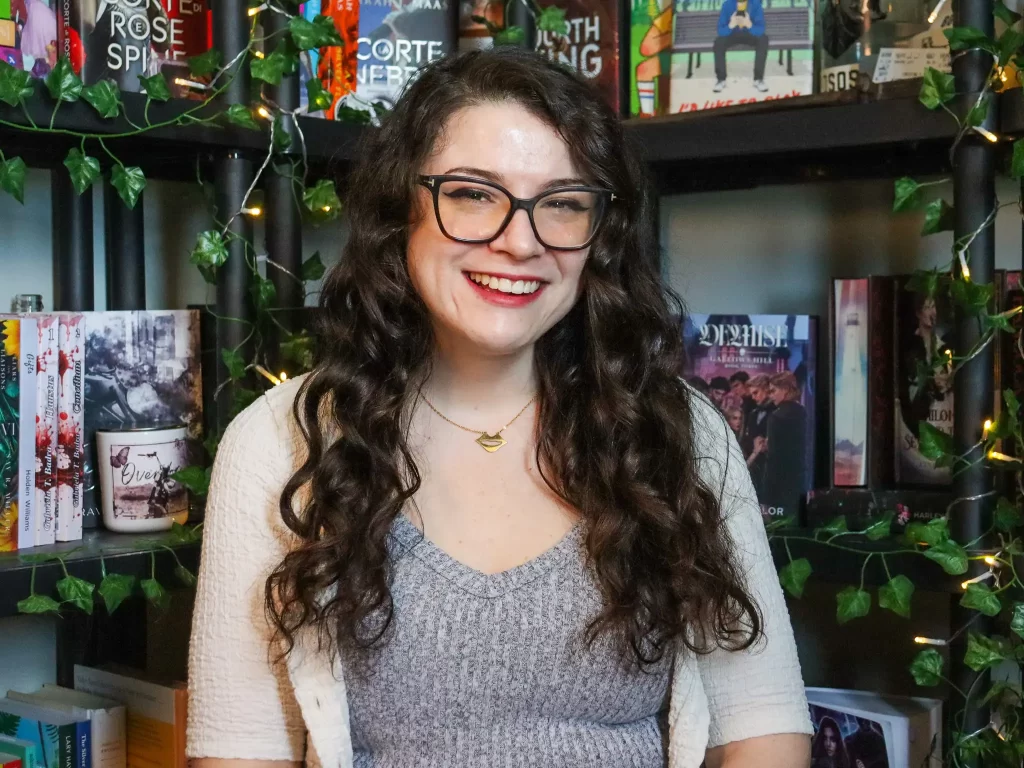
Emma Ivison, 28, a Manitoba-based BookTok creator, says that much of the criticism comes from people who have never read the genres. For romantasy, sex is only a part of how love is portrayed. Those who undermine the genre to that element miss the tension, longing, and fear that differentiate a romance novel from pornographic content.
“They don’t even want to give it a shot,” said Ivison. “They assume it’s all about sex.”
Ivison argues that critics focus on explicit scenes rather than the rest of what draws in readers: the world-building, emotional arcs, and long-form storytelling that define the genre.
“It’s intimacy,” said Ivison. “Not porn.”
For readers and online creators, BookTok has created a sense of belonging that wasn’t as accessible before. At the same time, the platform has made its users’ tastes more visible and thus more vulnerable to ridicule. Ivison says that she frequently notices criticism online but still enjoys the digital reading community.
“I really like the community. Even when it’s hectic, it’s still fun. I wouldn’t have found all these books without it,” said Ivison.
A hobby that once lived quietly on bedroom shelves now circulates publicly in algorithm-driven feeds, where it receives celebration one moment and dismissal the next.
Ivison’s experience isn’t new. Long before TikTok, critics dismissed romance novels as frivolous or trashy literature, particularly because they were written and read by women. That attitude didn’t appear overnight; the stigma surrounding these genres has deep roots in literary history.
A History of Dismissal
Long before BookTok and book review platforms such as Goodreads, romance and fantasy fiction held a fraught place in the literary world. Romance novels, in particular, have been commercially successful for over a century, yet they are rarely afforded the same cultural legitimacy as other genres. This stigma traces back to the early history of the novel itself.
In A Natural History of the Romance Novel, an analysis of romance fiction, literary historian Pamela Regis writes that the romance novel has been misunderstood by literary culture more than any other genre.
Regis argues that critics in the 1970s established this negative perception by portraying romance readers as emotionally needy or intellectually inferior, framing the stories as fantasies of submission.
“These critics reduce romance readers to a state of childlike helplessness, and the novels themselves to the sort of books that such children read,” she wrote in her book.
In the 1970s, the bodice ripper era came in. It is a period marked by romance novels with dramatic covers and aggressive male love interests, and significantly shaped negative perceptions of the genre.
This early framing helped cement the idea that romance fiction was frivolous, an attitude that continues to influence how people perceive these books and their readers.
Helena Fairfax, a freelance editor and romance author in the United Kingdom, states in her blog post “#Respectromfic! In praise of romance, with ten of my favourite romance novels of the year,” that even major literary publications have excluded romance from their “best books” lists. In 2021, the Sunday Times, a prominent British Sunday newspaper, published a feature titled “The Best Books of 2021 – in Every Genre.” The only issue with that was that it didn’t include every genre; it failed to include romance at all, despite multiple romance authors holding several places on its bestseller lists at the time. The omission was noticeable and later prompted the publication to remove the phrase “in every genre” from the headline.
This cultural pattern reflects a broader bias that has persisted for decades: romance is widely consumed but rarely respected.
In an essay posted in 2018 by WBUR-FM, Boston University’s NPR-affiliated radio station, Megan Rubiner Zinn writes that, especially in public academic settings, romance readers often feel embarrassed to admit their preferences. She recalled an experience during graduate school, when a class discussion about romance novels made her reluctant to speak up, even though she was an active reader of the genre. The discussion entailed comments suggesting that readers of romance novels are poorly educated stay-at-home moms, and that the novels give women unrealistic expectations of love. Zinn’s experience illustrates how judgement of romance novels has been taught and reinforced in educational and cultural spaces, not just through casual conversation or online commentary.
The idea that stay-at-home moms make up romance’s readership is a stereotype, but more revealing is the assumption embedded within it, that anything enjoyed by women in their free time cannot be taken seriously. And even if that were true, there is nothing wrong with reading for pleasure. The criticism says less about the books than it does about how little value society places on women’s leisure.
The stigma surrounding romance and fantasy reflects a long-standing gender bias in how society values stories. An article published by Literary Hub, a literary website that focuses on personal and critical essays, notes that while romance is now slowly entering mainstream cultural spaces, including publications like the New York Times, this acceptance is relatively recent, a drastic change from perceptions as recently as just 10 years ago.
This history helps explain why many readers today feel compelled to justify their enjoyment of these genres. Cultural suspicion toward women’s emotional storytelling has been reinforced for centuries through publishing, criticism, and media representation.
This narrative still echoes in the present literary world. Even with BookTok’s popularity and the genre’s record-breaking sales, the stigma attached to romance and fantasy has not disappeared; it has simply shifted form. What was once only dismissed in print or face-to-face is now questioned in comment sections and casual conversations.
Today’s romance and fantasy authors continue to shape their work and how they present it based on the legacy of these attitudes.
Writing Between the Lines
While digital spaces like BookTok and Bookstagram — a niche of Instagram where authors and readers discuss and post about books — have helped create a new digital community for readers, they haven’t fully erased the assumptions that romance is simplistic or that modern fantasy is only about sex. These spaces have reshaped how and where readers talk about books, but authors face many of the same assumptions from a different perspective.
Kate Beaumont, 30, a Manitoba-based fantasy romance author, began writing her own stories after years of reading the genre. She publishes independently and writes novels that blend magic, adventure, and romance, a combination she says is often dismissed before readers engage with it.
“A lot of authors who write in the genre that I do get very quickly dismissed,” said Beaumont.
She recalls being judged as a reader after telling a friend’s male partner that she enjoyed fantasy.
“I said I like to read fantasy, and he was like, ‘Oh, you read that fairy porn,’” said Beaumont.
Hearing Beaumont describe her hesitation to show off her hobbies felt uncomfortably familiar. I recognize that same instinct in myself, the quiet mental calculation of whether it’s worth explaining what I read or whether a laugh and a shrug are the best way to react. That defensiveness I carry isn’t about the books themselves, but about the assumptions attached to them: that enjoying romance or fantasy signals something unserious, immature, or explicit.
There is something worth examining in that last assumption. Pornography is widely consumed and increasingly normalized, yet when sexual content appears in a novel, woven into a story about love, it becomes a source of shame. This discomfort doesn’t seem to be about sex itself, but about who is enjoying it and in what context. When women read about intimacy, that appears to make people more uncomfortable than explicit content alone.
Those reactions now influence how Beaumont presents herself as a writer.
“That was just as a reader, so I can’t tell people that’s what I write now because it’s awkward,” she said.
Beaumont argues that not only does content shape the stigma surrounding romance and fantasy, but also the identity of the writer. The result, she says, is that society boxes women who write fantasy into a narrow category.
An example of this is J.K. Rowling. According to J.K. Rowling’s personal website, before Bloomsbury published Harry Potter and the Philosopher’s Stone, her publisher requested to publish the book under a different name, changing Joanne Rowling to what we all know as J.K. Rowling. This marketing decision was intentional, aiming to make the books more appealing to both girls and boys by disguising her gender with a pseudonym.
Beaumont notes that similar considerations still affect writers today.
“I have a friend who’s writing an epic fantasy, and she did the same thing J.K. Rowling did because she’s aware that women writing epic fantasies can limit the market,” Beaumont explained. “If you’re a woman and you’re writing fantasy, it’s automatically thought to be a romance.”
For Beaumont, these stereotypes reveal how deeply culture and personal bias still shape what people consider to be serious art.
Hearing Beaumont describe her hesitation to talk about her work made me realize how deeply these assumptions shape behaviour. This stigma doesn’t just affect discussions about romance and fantasy fiction in online spaces; it shapes how writers choose to identify themselves and present their work. What should be an exciting milestone and chance for self-expression instead becomes something to justify or dim down to avoid judgment.
In Present Tense
For some young readers, that stigma appears in everyday conversations.
Justice Beckman, 23, an avid reader from Winnipeg, says she has loved romance stories all her life, beginning with fanfiction and later with novels. Today, she reads daily, often turning to romance and fantasy as a form of escape from everyday stress.
“I’ve pretty much been reading forever,” said Beckman. “I read at least 12 hours a week, and I always read every day.”
Beckman says her taste in reading is often met with consistent mockery but finds it most noticeable at work at the Jets Gear store in Canada Life Centre. She finds herself in a male-dominated environment due to the customer demographic, although most of her co-workers are young women who also enjoy reading. Beckman notices that conversations about romantasy books often turn dismissive with the men who try to start conversations with the staff. As soon as she mentions romance, they respond with dismissive comments. “They’re like, ‘Is it just smut?’ or ‘Is it just porn?’” said Beckman.
She believes romance is often reduced to its most explicit moments, ignoring the emotional buildup that defines many of the stories she reads. “There’s a story there, and the sex part of the relationship is also a big part of the relationship sometimes,” said Beckman. “But sometimes these characters have been pining for each other for years. That’s the actual story.”
Online spaces can be just as harsh for regular scrollers as they are for online creators.
Beckman finds that readers of romance and fantasy are often criticized online for enjoying certain authors or genres, frequently by other women. She rejects the idea that reading romance reflects a lack of intelligence. “Reading is reading,” said Beckman. “Just because I’m reading a fluffy romance book doesn’t mean I’m stupid. What I read doesn’t affect other people.”
Beckman also believes that gender shapes much of the stigma. “Romance books, Taylor Swift, iced coffee, shopping, anything that women like, there’s an issue with it,” said Beckman. She questions why people see love stories as unserious when nearly every genre relies on them. “It’s human nature to want to fall in love,” said Beckman. “So, what’s wrong with reading about it?”
For Beckman, romance fiction offers more than entertainment. It provides emotional connection and relief from everyday stress. “Sometimes you need a romance book to cheer you up,” she said. “It’s like an escape.”
What stands out in Beckman’s experience is not the mockery, but how routine it has become. Her stories echo Beaumont’s as well as my own, shaped by the same assumption that romance novels are shallow and that the people who enjoy them must be too.
The Next Chapter
Over time, I’ve grown used to explaining myself before anyone asks what a book is about. Explanations often sit in the back of my mind, ready to surface at any moment, with responses such as “the writing is good,” “there’s an actual plot,” and “it’s not what people assume.”
I’ve never seen someone who reads non-fiction or self-help books get questioned in the same critical tone that romance and fantasy fiction do.
That reflex to defend my choices reveals that there is a societal expectation that reading must be productive or educational.
Romance and fantasy fiction challenge that idea. These books are often read for enjoyment, while providing comfort, escape, excitement, and emotional release. After talking with local authors, content creators, and everyday fiction readers, it became clear that these genres are not merely escapes, though there is nothing wrong with that either. They allow readers and authors to explore love, desire, and connection in a safe and imaginative space. What gets dismissed as “trashy” or “porn” is simply entertainment that centres on pleasure and love.
The stigma surrounding romance and fantasy fiction is not really about the books themselves. It’s about who can enjoy everyday hobbies openly without facing judgment. People are more likely to mock stories associated with women, especially stories involving romance and sex, even when they are widely loved and commercially successful.
Looking ahead, the question is whether readers will feel free to enjoy these genres without justification. Platforms like BookTok have already shown that people want stories that move, comfort, and entertain them. These communities have made reading more visible, not as a school task or self-improvement project, but as something people choose because it feels good.
Change isn’t going to come from abandoning or ignoring these stories, it’s going to come from accepting that not all reading needs to be useful. Some books aim to teach; others aim to entertain. Emotional storytelling can be meaningful, but it can also be enjoyable, and that doesn’t make it shallow.
The voices of creators like Beaumont and Ivison show that change is already happening, especially among women. Romance and fantasy have always traveled through women’s networks — passed between friends, recommended by co-workers, shared within book clubs, and now, across social media feeds. The books themselves become a kind of currency, a way of saying I thought of you, or this book had an impact on me. That shared reading culture is part of what makes these genres so powerful. Women have never waited for critics or society to tell them what was worth reading, they have always decided for themselves.
Beaumont and Ivison’s work and their communities suggest that readers are claiming space for the kinds of stories they love, no matter the genre. Romance and fantasy don’t always improve productivity, but they offer enjoyment, connection, and escape. And that, on its own, should give the people enough reason to take them seriously.
When someone asks, isn’t that just all porn? What they’re really asking is whether stories about love and fantasy deserve the same respect as any other kind of story, and whether the hobbies and lifestyles that women enjoy are worth taking seriously. The answer, according to the millions of readers quietly turning pages every day, is a resounding yes.


