On Her Own Terms
A business collapse. A child’s leukemia diagnosis. A realization that life could be different. For three Manitoban women, midlife became the moment to rethink work and to rebuild their careers on their own terms.
Listen to this story:
At first, Sonya Pop thought it was just another slow season. She’d watched the income from her husband’s business dip and recover many times over the years, so she told herself this time was the same.
It wasn’t.
Weeks of waiting for work to pick up stretched into months. Late at night, after the house had gone still, she sat at the kitchen table with a pen and a stack of bills. She shifted numbers from one column to another, trying to make them all fit. Groceries cost more. Activities for the kids added up. Mortgage and car payments loomed. Financial stress that once felt temporary began to feel permanent.
Her husband finally said what they had both begun to sense: the business that had supported their family for years was no longer viable.
“This realization left a sick feeling in my stomach,” Sonya said. “It felt like a death in a way, like we were mourning the life we’d been living.”
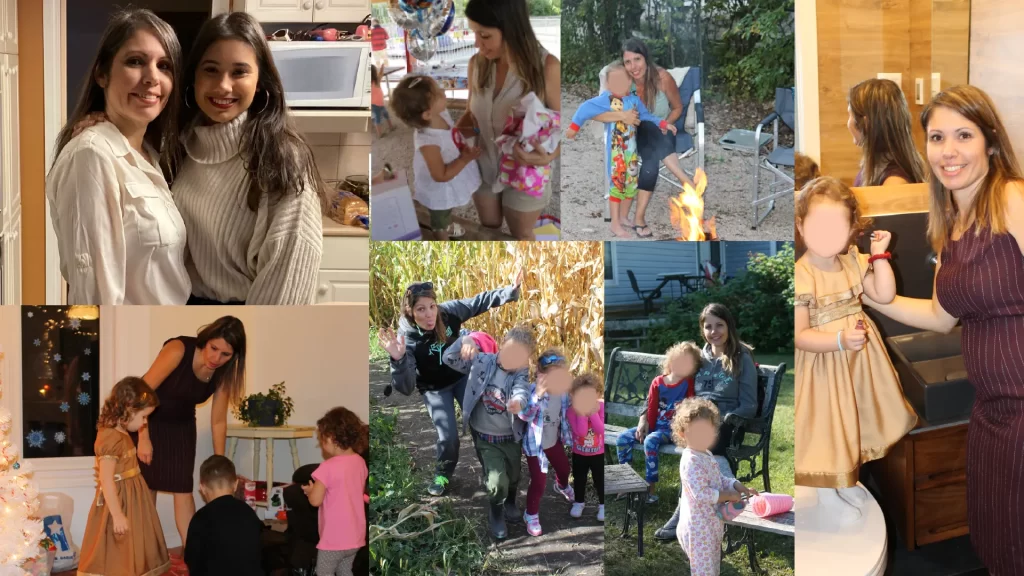
For more than a decade, Sonya had been a stay-at-home mom. When it became clear the business would no longer support their family, she knew she would have to return to work. At 51, she began looking for a job in community outreach and administration — the field she had worked in years earlier. What followed would lead her into an entirely new career path.
This was a deeply personal experience for Sonya (who happens to be my mom), but it reflects a broader shift.
Across Canada, more women in midlife are re-entering the workforce, retraining, or changing careers altogether. Statistics Canada reports that women aged 35 and older now make up a growing share of the country’s labour force. At the same time, research from AARP, a nonprofit focused on issues affecting older adults, notes that longer working lives, economic shifts, changing workplace norms, and evolving personal priorities have made career paths far less linear than those of previous generations.
Midlife, often defined as the years between 35 and 60, has become a period of reassessment for many women. By this stage, work is no longer just about ambition or advancement. It becomes a practical and personal question: does this work pay the bills and still fit the life I’ve built and the person I want to become?
In a study of women navigating midlife career change, researcher Terry Bahr found that many women were motivated by improved quality of life, the desire to be a positive role model for their children, and growing confidence. Beneath those reasons was a shared theme of timing. Whether their career change was prompted by a crisis, life transition, or a quieter realization, many described reaching a point when staying the same felt more costly than taking the risk to change.
Career shifts at midlife often unfold alongside caregiving responsibilities, financial pressures, age-based assumptions in hiring and education systems, and health transitions that complicate the act of starting over.
Sonya’s shift began with rejection. She recalls sending out over 100 applications and hearing back from few.
She didn’t expect the process to feel so unfamiliar. Hiring no longer happened through conversations or first impressions like it did when she was looking for work in her early 20s. It happened online, through automated systems scanning resumés for keywords before a human ever saw them. Sonya worked in community engagement and administration for more than 20 years before becoming a stay-at-home mom, and it had been nearly three decades since she had last formally applied for a job.
As the rejections and silences accumulated, she began to question how her resumé was being read — the gap, the length of her experience, her age.
Sonya’s experience isn’t uncommon. A 2021 Government of Canada report on older workers found that age-based stereotypes continue to influence hiring, with women reporting these experiences more frequently. Assumptions that older applicants are less capable, slower with technology, or more expensive to employ can shape who employers consider from the start.
At the same time, research on women’s career interruptions published in the European Journal of Training and Development show that stepping away from paid work, particularly for caregiving, can have lasting consequences. Even when women return with strong qualifications, gaps in employment are often associated with lower wages, slower advancement, or re-entry into positions below their previous level.
After months of searching, Sonya eventually found work as an office manager at a school.
“It was the worst job I’ve ever had,” she said.
Despite being hired for one role, she was quickly reassigned to front-desk duties in a language she didn’t speak, and she described the environment as toxic. Most days, she ate lunch alone in her car, calling family to decompress enough to make it through the afternoon.
“I couldn’t stand it, but I went back in because I needed the paycheque,” she said.
After a month, she was told she wasn’t the right fit.
Driving home that day, she felt embarrassed, relieved, and exhausted all at once. She had done what she thought she was supposed to do — updated her resumé, taken what was available, pushed through — and it hadn’t led anywhere she wanted to stay. But instead of discouraging her, the experience clarified something she had been thinking about for months: if she was going to re-enter the workforce, it had to be different from her previous experiences.
After years of shaping her days around her family’s needs, returning to rigid hours and answering to someone else no longer felt like progress. She wanted work that felt meaningful, aligned with who she had become, and gave her control over how she spent her time.
When she came across an 11-month hypnotherapy program, her interest was piqued. Hypnotherapy focused on helping people facilitate and process change — something she understood intimately through her own life experiences. She had been drawn to therapeutic work, and the course offered a path toward building her own practice.
This time, she wasn’t applying out of urgency. She was choosing.
Despite the interest, she knew the timing was risky and money was tight. Her husband had found a job, but they were still budgeting carefully.
“I just knew,” she said. “I couldn’t explain it, but it felt like this was the direction I was supposed to go.”
So, she enrolled.
School, however, added another layer of labour to an already full life.
Studying didn’t happen in quiet libraries or neat, uninterrupted blocks of time. It happened between school drop-offs, grocery runs, appointments, and endless household tasks. The responsibility of making it all work rested largely on her.
“I would do everything that needed to be done during the day,” she said. “Then once everyone went to bed, I’d start my schoolwork. Sometimes I was up until two, three, even four in the morning, and then I’d get up again and do it all over,” said Sonya.
Research consistently shows women continue to carry a disproportionate share of unpaid domestic and caregiving labour. According to UN Women, globally women spend two-and-a-half times more hours per day on unpaid care and household work than men — a load that often persists even when they pursue new opportunities.
For Sonya, the strain wasn’t only logistical. Stepping into something new demanded a kind of focus she hadn’t exercised in years.
Some nights she would read the same paragraph three times and still not remember what it said. Other times, she would stop mid-sentence, the words hovering just out of reach.
Like many women her age, Sonya was also navigating menopause. Brain fog, memory lapses, fatigue, and trouble concentrating were not occasional inconveniences — they were part of her daily reality.
According to a 2024 Women’s Health Research Institute report, up to 80 per cent of women have cognitive challenges, mood changes, sleep-related issues, and physical symptoms such as hot flashes, night sweats, and joint pain during menopause. Despite how common these symptoms are, many remain under-recognized and under-supported in healthcare and daily life, even though they can significantly affect work and overall well-being.
For a while, it felt like her body was working against her. Then, slowly, something shifted. Between the fatigue and frustration, there were moments when a concept clicked, a connection held, or a term she had struggled to remember suddenly came naturally.
For Sonya, taking a chance became more than a step toward a new career; it became a way back to herself.
“As a stay-at-home mom, I had put a lot of my own goals on the back burner, and I was at peace with that for a long time,” she said. “But through all of this, I realized this was a chance to finally ask what I wanted and thank God I did.”
Now finished with her course, Sonya is building her hypnotherapy practice with a sense of ownership she hasn’t felt in years. She talks about the future with a steadiness that wasn’t there before — about growing her practice, continuing to learn, and reaching people beyond her own community. She says the confidence she rebuilt shows up at home, too, in how she parents, how she communicates, and how she moves through challenges.
“I’m still figuring it out,” she said. “But I feel empowered.”
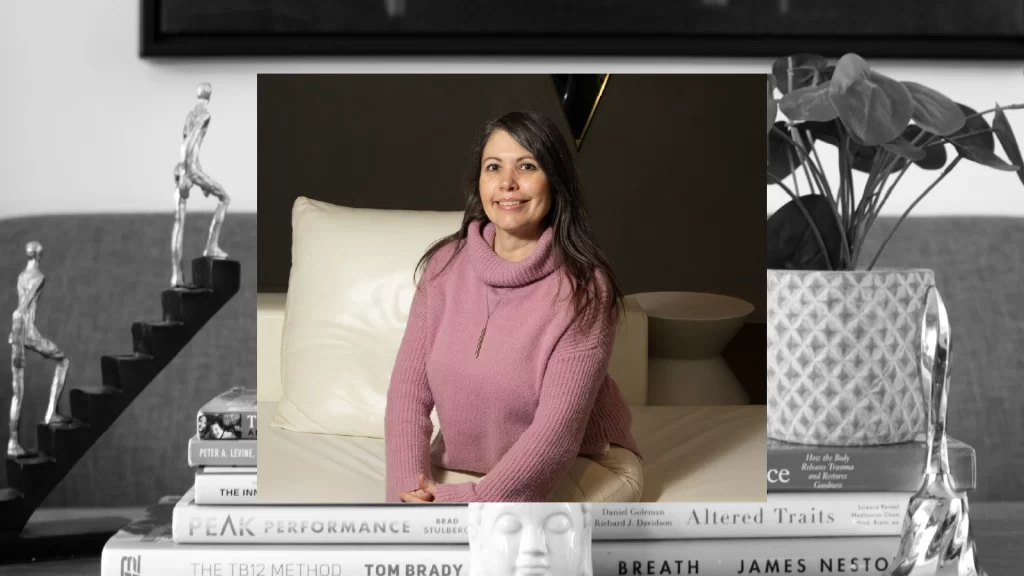
Every midlife shift is different. While Sonya went from being at home to building a private practice, Kirstie Brooks went from owning a business to craving something steadier. At 35, the Winnipeg entrepreneur stepped away from running her food truck after a family health crisis.
From a young age, Kirstie wanted to be her own boss. To her, this meant freedom and control over her time and how work fit into her life.
After a year living in Vancouver, where food trucks lined the streets, she decided she wanted to run one herself. Back home in Winnipeg, she bought an old electrical service van and converted it into Bright Side Kitchen, a vegan food truck.
“It was scary,” she said, smiling. “It was like, okay — I guess I’m really doing this.”

Around the same time, she found out she was pregnant with her son. On paper, the timing seemed ideal. Running her own business was supposed to give her control over her days, something she thought she could shape around a growing family. But in reality, the work followed her everywhere.
“When you’re a new mom, especially a breastfeeding one, there are just inherently more duties on the mom’s plate,” she said. “I felt like I was working constantly.”
In 2023, she completed her first full food truck season. The following spring, while preparing for another busy summer, she received news that changed everything.
“It was a busy week full of inspections,” she said. “And then my world came to a halt.”
Her two-year-old son, Javi, was diagnosed with leukemia.
They were in the hospital for 12 days immediately after his diagnosis. For months afterward, Kirstie lived between hospital rooms and cancer care clinics.
When she eventually thought about returning to the food truck, she felt dread. Stepping away forced her to see the business differently. The “freedom” she had built depended entirely on her constant attention. If she stopped working, the income stopped too. The job had never just been serving food — it was prep, paperwork, social media, and planning that lingered long after the service window closed.
“My brain was always going, and I couldn’t focus on him,” she said.
There was also the financial reality. Kirstie wasn’t paying into employment insurance and had no health benefits to fall back on when life veered off course. A successful GoFundMe helped her family survive a year when both her and her husband’s work were disrupted, but it also clarified the full scope of what being self-employed looked like.
Over time, her sense of what she wanted from work began to shift. The new direction didn’t come as a job posting or a plan. It formed gradually in the hospital rooms where she spent her days and nights beside Javi.
She remembers watching a nurse write Javi’s name on the whiteboard at the start of a shift. The nurse turned, explained the next medication in simple language, then knelt beside Javi’s bed to ask about his favourite animals. She showed him a photo of her dog and was fully engaged as she listened to him. In a space defined by uncertainty, the care felt steady. Intentional. Human.
“The nurses were our support system,” Kirstie said. “They cried with us and smiled with us. They made us feel safe and like we mattered.”
At the time, she wasn’t thinking about careers. She was thinking about blood counts, side effects, and getting through the day. But something about the way those nurses moved through the room stayed with her.
As the months passed, moments like these accumulated. When Javi’s frontline treatment began to wind down and life started to inch toward a new version of normal, Kirstie found her thoughts returning to those hospital rooms — not with dread, but with a quiet pull.
“I just kept thinking about being a nurse,” she said. “I know it’s hard work, but I saw the care our team gave us, and I wanted to do that for someone else.”
So, she approached the decision in the same way she had learned to handle everything else: one step at a time.
“Okay, I’ll just apply,” became, “I’ll start with these prerequisite courses,” became, “I’ll see if I can get into this program.”
Kirstie applied to the University of Manitoba’s Pathway to Indigenous Nursing Education (PINE) program and was accepted. As a Métis student, she joined a cohort designed to reduce barriers Indigenous students often face in post-secondary education.
Going back to school in her mid-30s meant reorganizing nearly every part of her life. There was childcare to coordinate, a commute to manage, coursework to keep up with, and, at times, food truck work to help cover expenses.
Research on mature student success from the International Journal of Education notes that although mature student participation in post-secondary education has increased, participation among traditional 18-to-22-year-old students has remained flat or declined. Yet many institutions still operate around systems originally designed for recent high school graduates. As a result, those navigating career transitions later in life often move through environments that do not fully reflect the responsibilities they carry. The research also shows that having targeted supports and a sense of community significantly improve persistence among mature students.
For Kirstie, the PINE program became that support.
“Being in class with other Indigenous students gives me motivation,” she said. “It makes me want to show up and do well.”
Although not designed specifically for mature students, the PINE program reflects what the research identifies as critical: when institutions acknowledge the realities people carry outside the classroom, students do better.
While Kirstie has not officially entered the faculty of nursing yet, she is already thinking ahead. She talks about working in pediatrics, becoming a nurse practitioner, travel nursing, and even serving in northern and remote communities.

Kirstie has decided to sell her food truck as she works toward becoming a registered nurse. But she isn’t walking away from Bright Side Kitchen entirely. She imagines using the brand for pop-ups, community events, or small catering projects when it fits around the rest of her life. The food truck once represented freedom. Now, freedom means something different: a career that supports her family, allows her to be present, and feels deeply meaningful.
A midlife career change doesn’t always follow a crisis or major life shift. Sometimes it begins with a deliberate decision to pursue something else in the same field. For Jo-Ann Machado, now 57, that decision looked like going from an educational assistant (EA) to a teacher at 40.
After high school, Jo-Ann spent a year at university and briefly considered becoming a teacher before dropping out. Then life filled in quickly: marriage, children, and steady work as an EA. For years, she supported students with intellectual and physical disabilities, but her role rarely stopped there. She helped wherever she was needed, forming relationships with students and staff throughout the school.

By her mid-30s, she was working multiple jobs — an EA during the day, then evenings and weekends at places like Safeway and Rona.
Labour market data consistently show that educational attainment shapes employment outcomes. According to Statistics Canada, workers without post-secondary credentials tend to have lower earnings and employment rates compared to those with credentials. Jo-Ann felt that ceiling.
“I loved being an EA,” she said. “But I knew being a teacher would be more rewarding. And let’s face it, more money.”
Teaching was the end goal, but she moved toward it slowly. She completed her Bachelor of Arts part-time, often online, while raising her kids and working full-time.
When she was accepted into an education program, her first response was hesitation. Returning full-time meant stepping away from steady income and a routine she had learned to manage. The financial risk and time commitment weighed heavily, making her doubt her decision.
Then, during a shift at Rona, she recognized a familiar face. A former student she had once supported at school approached her, excited and smiling. She had just been accepted into the education program.
Jo-Ann listened, congratulated her, and felt the hesitation loosen. “If she’s going, I’m going,” Jo-Ann recalls thinking.
She returned to the University of Winnipeg full-time and spent the next two years completing her education degree, while continuing to support her family and work part-time. When she graduated, she was hired at the same school where she had worked as an EA.
The relief was immediate. Teaching offered stability and a level of financial security she hadn’t experienced before.
“It’s different when you’re not standing in the store thinking, can I put that in my cart?” she said. “Now, I don’t have that worry.”
Teaching allowed her to focus on one job instead of spreading herself across several to supplement her income. Now, more than 15 years into her teaching career, Jo-Ann talks about teaching as work she feels proud to do. She describes the moments when students realize they’ve improved, when confidence replaces hesitation, and when former students return years later to say she made a difference.
“I’ve never gone to work dreading my job,” she said. “It’s truly a privilege.”

Women like Sonya, Kirstie, and Jo-Ann make the decision to change careers while navigating complex lives. And yet, many are happy they did.
Research on women navigating career change found that many experienced increased confidence, renewed purpose, and a stronger sense of self after making the transition. The decision was rarely simple, but many reported feeling more aligned with their values and assured in their abilities.
At midlife, reinvention is rarely impulsive. Instead, it unfolds through a series of decisions made by women who know themselves better than they once did, and who are no longer willing to separate how they earn a living from who they are and how they want to live.
Working Draft asked Sonya, Kirstie, and Jo-Ann to share their advice for any women in mid-life considering a career change: