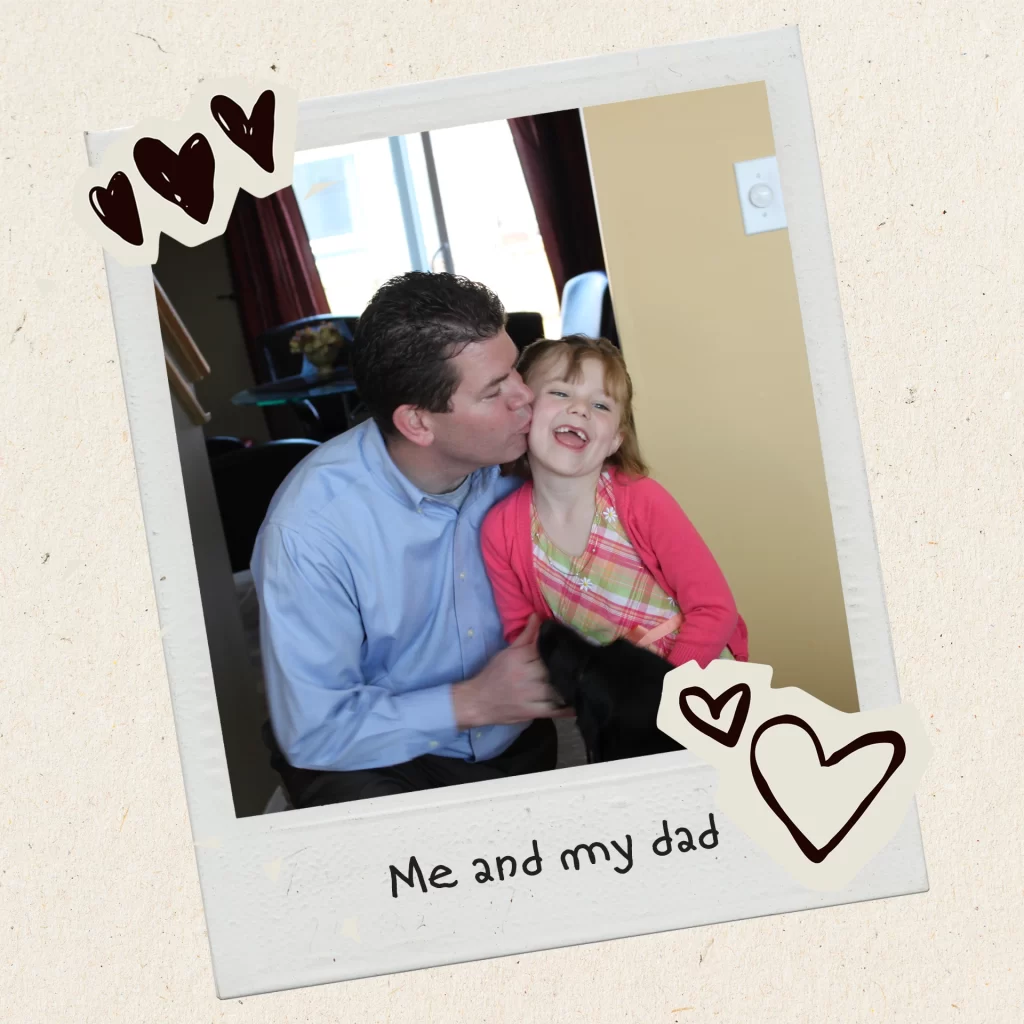
Durga-Mia!
Like Sophie, my dad’s life features three potential fathers. Unfortunately, no singing and dancing are involved in this story.

When we’re born, we rely on those who raise us. When we are kids, parents are the world’s biggest encyclopedia, the magic healer of wounds, and our protectors in the unknown. It’s almost impossible to imagine that they were once babies, too. I didn’t see my dad as fully human until I started learning about his actual history. The image I had of him as an unbreakable hero changed abruptly when I learned he was adopted. Over the years, I’ve found out other things that have shaken this childhood image of him and forced me to see him as a person with a complicated past. While my simplistic understanding of him is “Slipping Through My Fingers,” I’m learning to be grateful to know my dad as he really is.
Then — “Slipping Through My Fingers”
My dad’s life is like a bad parody of Mamma-Mia! Like Sophie, he ended up with three fathers, but instead of meeting them over a fun weekend in Greece, these men showed up in my dad’s life over a span of decades.
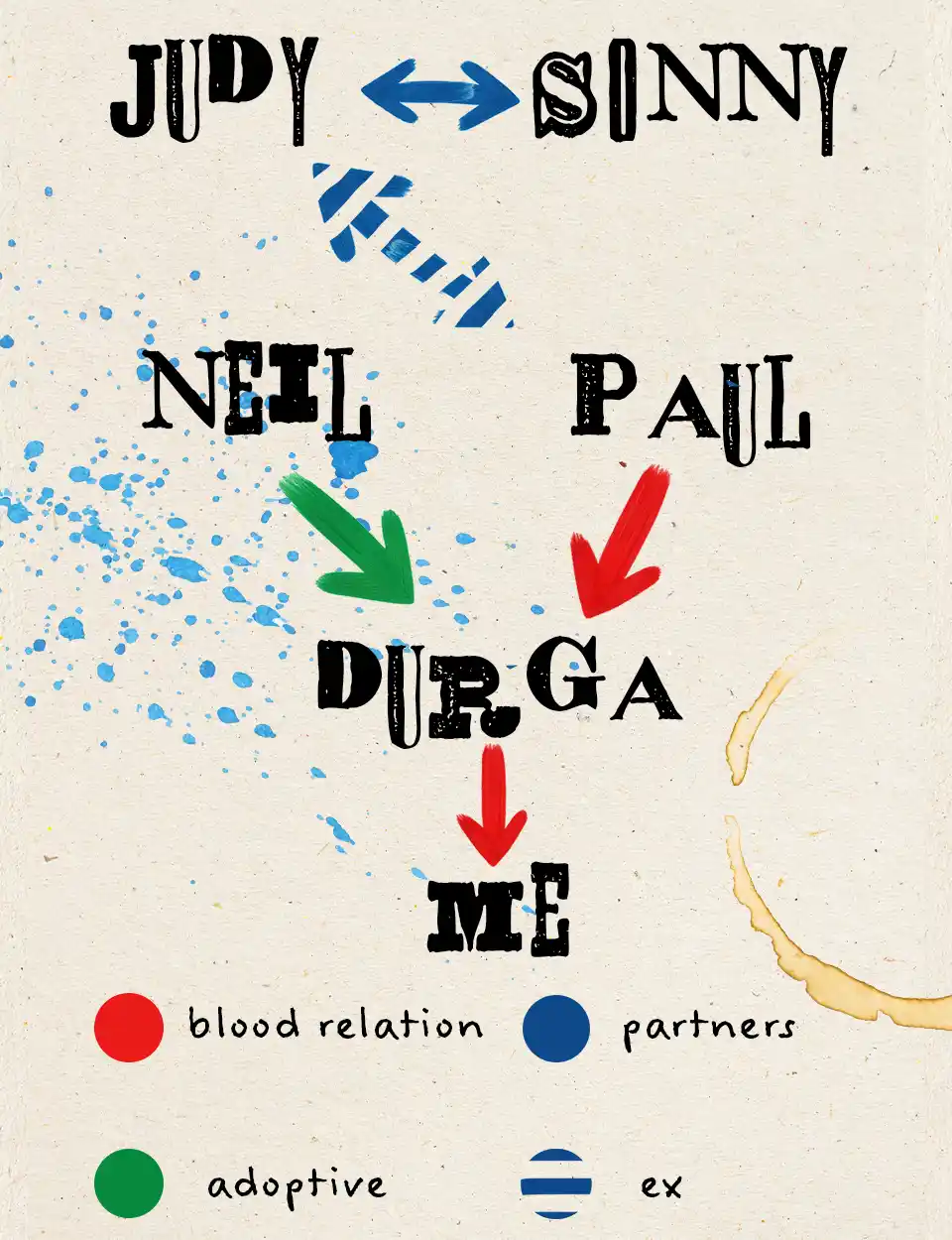
My dad, Durga, was adopted into the Maharishi Mahesh Yogi’s Transcendental Meditation (TM) cult by my grandmother and my grandfather, Neil, hence my white dad’s Indian goddess’s name. He found who he thought was his biological father, Sonny, as a young adult, and later his actual biological father, Paul. All of these men have affected my dad in complex ways. In turn, they have affected how my dad chose to raise me — but not in the way you may think.
The first time I saw my dad as a real person and not some godly caregiver was when I was around seven. He told me about Sonny, who he thought was his biological father, on a walk home from the park.
“So, he’s my grandpa.” I said, smiling up at him, my hand in his.
“No, my dad is your grandpa. Grandpa Neil,” my dad said.
“But, Sonny is your dad?” I asked.
“No, he is my father.”
My head still hurts from the complete confusion I was feeling. This was the first time I learned that words hold weight to them. “Dad” and “father” meant different things.
“How come he’s not grandpa?” I asked.
“He and I don’t like each other very much,” he responded, turning his face away from mine. It’s a good thing he did, because I’m sure my eyes were popping out of my head like a cartoon character. At the time, this didn’t compute. How could someone not like their own child or their own father?
In her book, Adult Children of Emotionally Immature Adults, Dr. Lindsay C. Gibson explains that culturally, we are instilled with the belief that all parents love their children and that they will always be there for them. But in fact, parents have differing levels of emotional maturity. Those who have emotional immature parents eventually learn that these cultural beliefs about the nature of the parent-child relationship are not always true.
I remember feeling sad for my dad and having lots of questions. I wondered if he would ever dislike me like his father did him. It made feel empty; like the hand guiding me back home was ripped away. Why did people have kids anyways? What’s the difference between a “father” and a “dad”? It hurt to think about and I couldn’t bring myself to ask any more questions.
As a young adult, I’ve only recently worked up the courage to ask my dad about his childhood.
Neil — “Dancing Queen”
My grandpa Neil lived in the Transcendental Meditation (TM) cult for the majority of his life. TM is mainly considered a “new religious movement” but in this story, I will be referring to it as a cult, like my dad does.
Maharishi Mahesh Yogi started TM in 1955, but it got really popular during the ’70s. They practiced meditation, yoga, and spiritual enlightenment. They believe that if everyone in the world meditated at the same time, world peace could be reached. Maharishi created courses, universities, and products (and did work in science and research) to further push the beliefs of TM. They also believed they could fly and turn invisible, so I take the science with a grain of salt.
Many of the Maharishi’s followers were hippies, artists, and lovers, not fighters. My grandpa Neil happened to be all three of these things.
When I asked my dad how his family got involved in the cult, he went to the fridge to grab a beer.
“My dad’s father was a minister, so he came from a very rigid upbringing. So, he kind of swung the pendulum the other way in terms of belief,” my dad said, cracking it open and turning on the football game.
This completely made sense to me in light of the research I had done about emotionally immature parents. My grandpa had no emotional connection with his kids, and emotionally immature parents often have immature parents of their own. Gibson says the lack of proper emotional connection with parental figures makes children develop “tough defenses to survive emotional loneliness” throughout their lives. Honestly, the discussion of emotional anything was completely taboo back in my great-grandfather’s family, so I imagine these patterns were easy to pass on.
My grandpa Neil was always focused on himself, he was his own “Dancing Queen,” always the centre of attention. While TM’s focus is world peace, that doesn’t start until you have inner peace and are able to self-reflect. This focus made Grandpa Neil a little self-absorbed.
My grandpa Neil was an artist. He made beautiful pottery out of clay and water colour paintings, selling them at Bluerock Gallery just outside of Calgary, where he lived, for years. After a flood in 2013, he used the clay from the flood to make plates and bowls. He also loved to be outdoors. In the ‘60s, he and his friends were the first to traverse from Jasper to Lake Louise. The Globe and Mail even wrote an article about their hike. His art and sense of adventure came before his children.
“He was always working. He had a shop in the 60s. He ran a retail operation in the front, studio in the middle, and a kiln in the back,” my dad said, plopping himself down on the couch. “He missed my high school graduation because he was too busy with the kiln.”
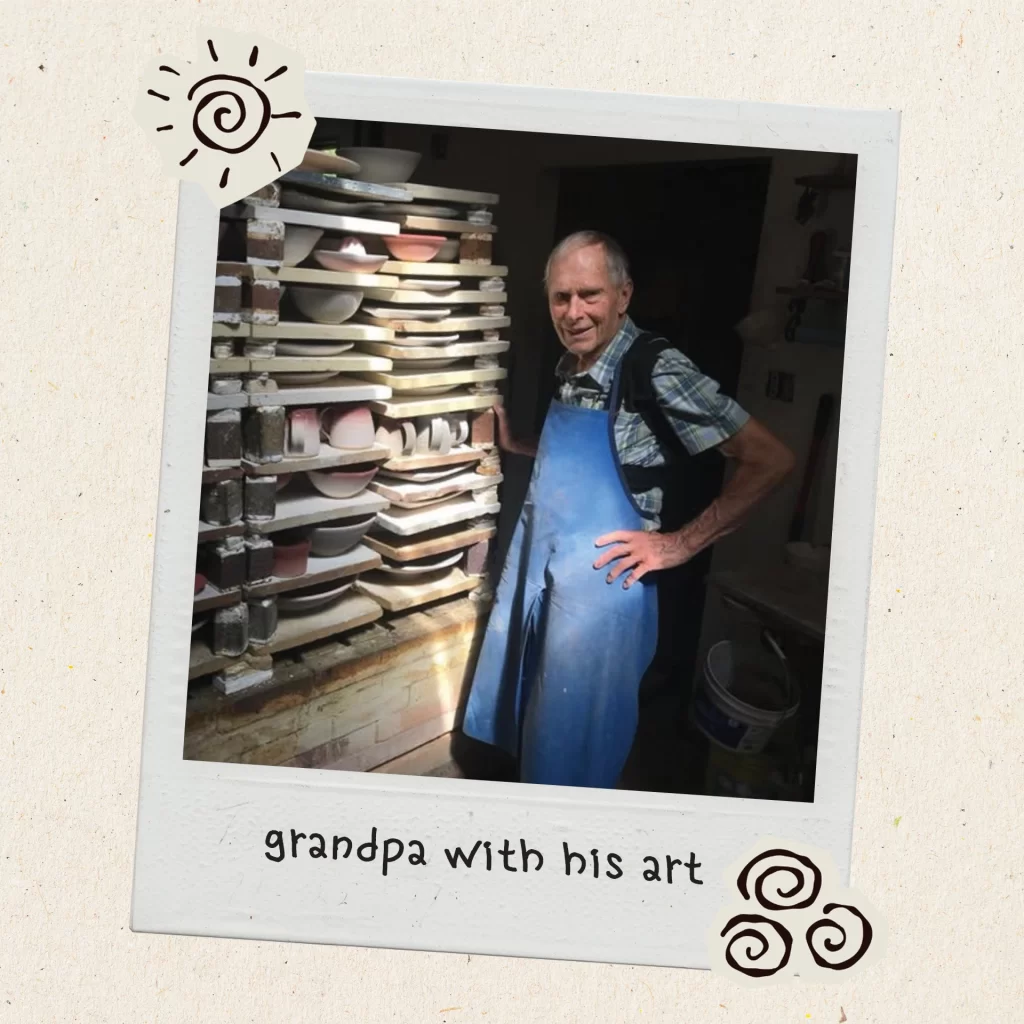
My dad sometimes describes Neil as a narcissist. I wonder if my grandpa became so self-involved because of the cult.
I remember my grandpa being a “laissez-faire” kind of guy. When my brother and I would visit him in Calgary, he would always let us do our own thing. I guess we got a little taste of how my dad grew up on those visits.
My grandpa’s parenting style falls under one of Gibson’s four emotionally immature parent types: the passive parent. She explains that the passive parent likes to take the backseat on parenting. They may be emotionally available, but only to a certain extent. As Gibson puts it, “They may love you, but they can’t help you.”
Listening to my dad talk about my grandpa made me think back to his funeral. There were so many people I didn’t know; so many women I didn’t know. I knew that my grandparents had gotten divorced when my dad was 10 or 11, but I never connected the dots until after the funeral.
“We were moving into a house in a condominium complex that was part of the cult. They got divorced quickly afterwards,” my dad said as we sat side by side on the living room couch. “My dad was sleeping with other women. I remember distinct conversations — it would’ve been like Grade 6, where my mom’s having a conversation with a man about how my dad was sleeping with his wife.”
Sitting there next to my dad, the thought of my grandpa cheating made me uncomfortable. My grandpa had a lot of relationships with women in his life, and many of these women were part of the cult. I guess they really focused on the love part of “peace and love.”
The more my dad talked about his parents, the more difficult it was to listen to.
“Around that time, my mom had gotten pregnant with a fourth child, and she was, I guess, guided by my dad to have an abortion. She was also guided by the cult to have an abortion, so she was influenced by a lot of people to have an abortion,” my dad said, taking his eyes away from the TV screen, “I don’t think she ever wanted to have an abortion. I think that broke her, spiritually.”
This statement felt like a punch to the gut.
“Did that ever make you resent your dad a little bit?” I asked, even though it was hard to. I remembered my dad smiling and being happy around my grandpa over the years.
“Oh, yeah,” my dad said, like it was obvious. “I had an okay relationship with both my mom and dad, but I probably laid most of the blame at my dad’s feet for having the affairs.”
My dad moved his focus back towards the TV. I sat silently, thinking about my grandpa. Only a few months ago, I was at his funeral and now I’m grappling with this new information.
After this conversation with my dad, my memories from the funeral took on a new meaning.
“I’m so sorry for your loss, I loved your grandfather,” said one of the many women at my Grandpa Neil’s funeral. The funeral was held at my Grandpa Neil’s house, which wasn’t big. It felt suffocating with the number of people in attendance.
“Um, thanks, that’s nice to hear,” I responded, trying my best to escape the hoard. Looking around, I realized how much my grandpa really loved women. I didn’t know who half the people were at his funeral, yet they seemed to feel the same grief as his immediate family. One woman claimed to be like his daughter, which was weird. Even weirder was that a lot of these people felt entitled to my grandpa’s art. I managed to sneak off with a clay juicer he had made before someone could say they’ve already claimed it.
“Hey Durga, I’m sorry for your loss,” a man said. I turned my head towards my dad with the juicer behind my back. The man who spoke to my dad was older and wearing bright clothes. He didn’t look like he was going to a funeral.
“Thank you,” my dad responded, “I hope we’re not too loud.”
“Oh no, not at all,” the man said, “Neil was a great friend.”
I stepped toward my dad and the man, hoping to hear stories about my grandpa that didn’t include his love life. Their heads turned to me.
“And you must be his granddaughter! I’ve been Neil’s neighbour for years,” he said.
“He’s an artist too,” my dad told me, “He even designed his own house next door.”
“Come see it! I love to show it,” the man said, already heading out the door. My dad and I follow the man down Grandpa Neil’s deck and up his. He opened the door to a beautiful foyer. I looked up the stairs to what I assumed was the primary bedroom.
When the man opened the door to his room, the first thing I noticed was a picture on the dresser. The closer I moved toward it the more the picture became familiar. It was a picture of Maharishi, the leader of TM. I turned to look at my dad who was already looking at me. He gave me a ‘I’ll tell you about it later’ look and I turned my attention back to the man and finally took in the rest of the room. There were paintings of people meditating and praying.
After the tour, I immediately pulled my dad aside.
“Was he in the same cult as grandpa?” I asked.
“Yes. Majority of the people in this neighbourhood are a part of it. A lot of people here right now are too,” he told me, quietly. I looked around at all the strangers that were lingering around my grandpa’s house.
With all these people around, I realized that I didn’t know my grandpa as much as I wished I could have while he was alive. This made me ask myself, who knew my grandpa more? My dad or these people?
Doesn’t matter. I still took the juicer.
My dad cracked another beer as he explained to me how my grandma developed what he assumes is psychosis around the time she had the abortion. Things were rough after that. Throughout his teenage years, she would kick him and his brothers out just for being men. When he would go to his father’s house, things weren’t any better there. It was only when he was older, around 17, that he finally had enough.
“I remember getting into an altercation with my dad where he kind of pushed me. I snapped and threatened him back and it was almost at that point in time we were equals,” my dad said.
It pissed me off that my dad needed to bite back in order to stop his dad from treating him like that, but with emotionally immature parents like his, it’s often necessary. Emotionally immature parents want children who are compliant and easily manipulated. The older the child gets, the harder the parent tries to tie them down. It’s only when they find out that the child may be a threat do they back off, Dr. Gibson explains.
Only after my dad pushed back physically, did a relationship start to bloom with his dad — and it was good timing. Around that time, my dad received a phone call from a couple, Judy and Sonny, claiming to be his biological parents.
Sonny – “Voulez-vous/Take It Now or Leave It”
My dad had always known that he was adopted, and he was always curious about where he came from. Judy (who turned out to be Grandma Judy) gave birth to my dad when she was 20. She and Sonny (her longtime partner) found my dad through a news story about adopted kids wanting to find their biological parents. My dad was one of the children who had been interviewed.
“I think I was 21 when I got the call about your Grandma Judy, and Sonny,” my dad said. His eyebrows are furrowed in what looks like annoyance but with a smirk on his face. “The plan was to meet Sonny first at Peter’s Drive In and drive up to meet Judy and my brother,” my dad said.
“How did that go?” I asked, mirroring his smirk. He laughed.
“We were going to meet at one o’clock, and I showed up early. He showed up late. He said that he was busy helping someone, but I just remember thinking ‘21 years and you’re late to meet your own kid?’”
The first meeting left a bad taste in my dad’s mouth, but it was either “Take It Now, or Leave It.”
From their disastrous first meeting, Sonny lacked empathy for my dad. According to Gibson you can’t have a deep relationship without it. Because of this lack of emotional empathy, Sonny falls under Gibson’s “rejecting parent” type.
Rejecting parents are exactly what they sound like — not interested in being a parent to their kid. Adult children of these parents often find it hard to ask for help.
While my dad was not in contact with Sonny throughout my childhood, I had the opportunity to meet Sonny before he died. I was visiting my Grandma Judy in Red Deer, Alberta around the time he was nearing the end of his life. At this point, I thought he was my biological grandfather, but I felt a bit indecisive about whether or not I should visit him.
I remember Grandma Judy’s brother saying that he was: “Positive he’d want to meet me,” but that didn’t track.
If he wanted to meet me, why didn’t he meet me before then?
“We let him know he was a grandfather and that he needed to make an effort for a relationship. We gave him the tools to contact us,” my dad told me, “But he just never reached out.”
Grandma Judy always made the effort for a relationship, and we are still close. Every summer, she comes and visits us in Winnipeg. She’s paid for me to go and visit her, and she calls regularly (often at a bad time) to see how we’re all doing, so why didn’t Sonny ever attempt to contact us?
I remember getting upset at the idea that he’d want to meet me. I’m getting annoyed right now thinking about it.
Perhaps I was a little harsh when I said ‘absolutely not’ in almost record speed to Grandma Judy’s brother. Sonny clearly didn’t want to meet me either, so why would I put him through the agonizing small talk with a daughter of a son he didn’t care about? I had as much empathy for that man as he did for my dad. Why try to fake a relationship?
A few years later, Grandma Judy visited us shortly before Sonny died and told my dad something that explained a lot.
“He never thought you were his.”
Durga — “I’ll Cross the Stream, I Have a Dream”
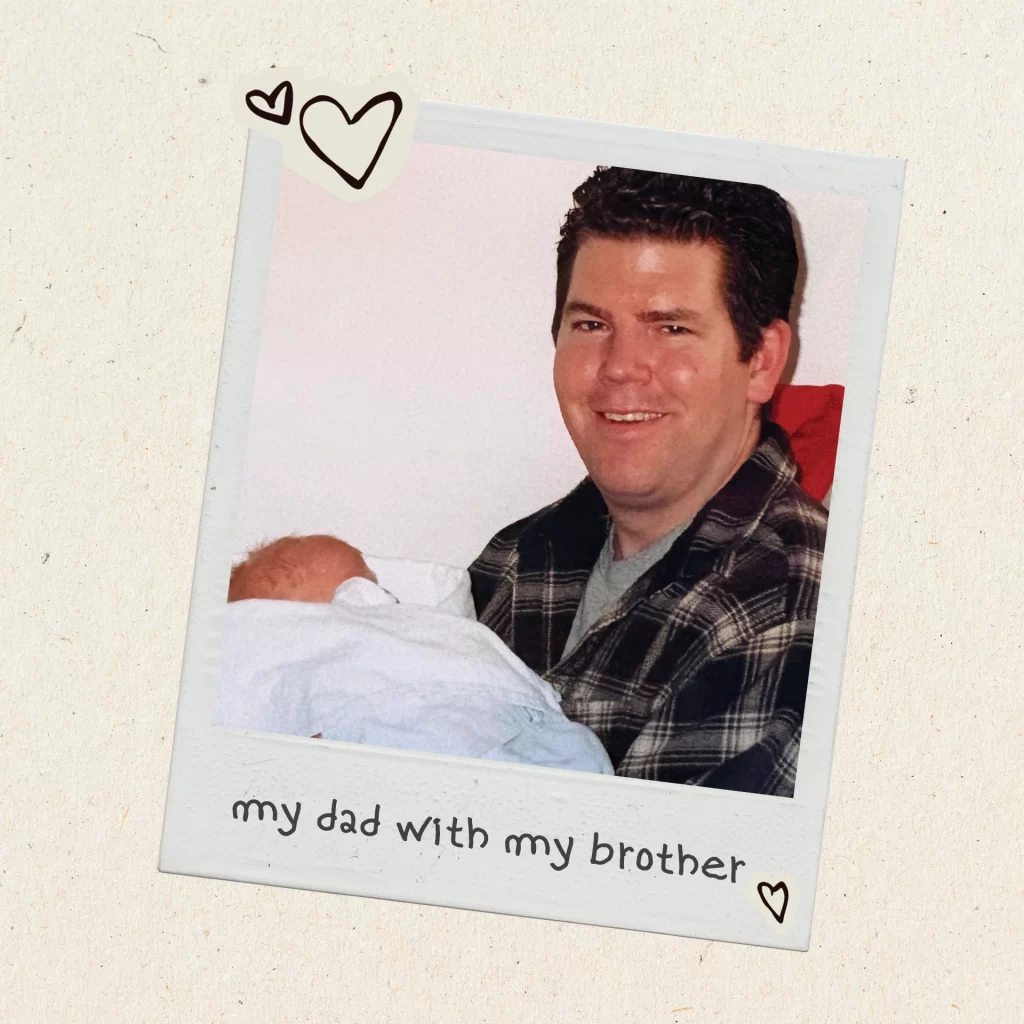
My dad became a father in 2001 when my older brother was born.
“I remember taking a bunch of photos of him with my little digital camera,” my dad said, smiling at the memory. “Right when he popped out, I had to take photos.”
My brother was a C-section baby, and my mother wasn’t too pleased with a camera in her face as she was being cut open, but that’s always been my dad. He wants to capture the moment.
“Weren’t you ever scared of becoming a father? Your father figures haven’t exactly been amazing role models,” I asked him.
“No,” he replied, “When your brother was born, everything changed. Now that I have a kid, it’s like my childhood, my upbringing, and all of the issues around it doesn’t matter anymore. It’s not baggage I have to carry.”
“I wasn’t nervous about being a dad, cause I knew I wasn’t going to be an absent dad,” he said.
And he never was. If anything, he was a little too present. Family dinners every day at 6:00 p.m. and photos for every outing, game, or vacation. He once brought a tripod into a hot tub on our family vacation. I’ve never seen a hot tub clear out as fast as it did that day.

Even before I knew about my dad’s childhood, I noticed that he regularly expressed thankfulness for our family. Once he got teary eyed at dinner saying how grateful he was to have dinner with his family every day.
Growing up, I was an introvert who didn’t want to do anything or be in any photos. My dad was always trying to see what I was up to and be a part of it. As a moody kid, I found him extremely annoying. He really was never absent. He was my soccer coach, my ride for anywhere I wanted to go, and always volunteered for the class trip to the fire station.
As a kid, I wanted to be independent and do things on my own, but now as an adult, I miss his constant presence. Even after all of the hardships my dad faced throughout his childhood, he still wanted to “Cross the Stream.” He had a dream of becoming the dad he never had.
The September after my grandpa Neil died, my boyfriend Kenneth and I were playing Monopoly at my family’s cabin while my parents sat in the sunroom on their iPads.
“That’s my property,” I said with a grin.
From the other room, I heard my dad say “Oh my god.”
I turned to look at him. His eyes were wide and his mouth hung open.
“What’s wrong, Dad?”
“I don’t…oh my god,” my dad stutters.
“Holy shit,” my mom yells then starts to laugh nervously. My dad joins in.
“Everything okay?” Kenneth asks. We look at each other then back to my parents, concerned.
“Uh, yeah,” my dad said. “I just found my father.”
Paul — “Mamma Mia, here I go again”
To backtrack a little bit, my mom had gifted my dad an ancestry test for his 50th birthday. After he used it and got the results back, he told my Grandma Judy about the gift, implying he hadn’t used it yet, and she said that those types of tests are a “can of worm’s you don’t want to open.” This statement confirmed my dad’s suspicions about his biological father. What he didn’t tell Grandma Judy was what the test had uncovered: my dad was not biologically related to Sonny. But he did have a connection to a stranger.
When he got the results, the excitement and shock that my dad had about finding his real father, Paul, lasted for days. I remember him telling me that he had three sisters and then holding up a photo of one of them beside his face to show me how similar they looked. They have the same eyes and face shape.
On top of my dad’s excitement, nervousness plagued him. How was he going to tell my Grandma Judy? Why did she keep this to herself?
He was able to contact one of the sisters and explain the situation. She welcomed my dad and gave him Paul’s number, but explained that her and her father didn’t really stay in contact.
“She told me that Paul lives with alcohol use, which is her way of calling him an alcoholic,” my dad told me. From stories my dad heard about Paul, he couldn’t imagine that Paul was very kind towards my Grandma Judy in their past, so he didn’t pry.
After my dad received Paul’s number, a game started. My dad would call, leave a message, then wait. A few days later, Paul would call and my dad would miss it. This back-and-forth dimmed my dad’s excitement. It made him question what he was expecting from Paul.
My dad’s initial excitement about finding his real biological father was replaced with worry. Did he really need another parental figure in his life? With Paul’s alcoholism, his unkindness to my grandmother, and overall lack of effort, a relationship with Paul didn’t seem like it would be beneficial.
It was like his experience with Sonny all over again — a “Here I Go Again” moment. But now he was an adult with experience. The hopefulness was making him forget what things were like with Sonny.
Just because Paul has the same blood as my dad, it doesn’t mean that Paul will be a part of our family. He may have given my dad life, but that doesn’t make him his dad.
It’s only been a few months since my dad first tried to contact Paul, but the process has been frustrating and he’s not sure if he’ll continue to reach out.
Now — “When All Is Said and Done”
As a new adult, I find it difficult to look at my dad as the complex human being he is. Maybe it’s because I fear change and don’t want my childhood to end. Maybe it’s because I don’t want the image of him in my head to be tainted by what he’s been through. But the more I think about it, the more I realize the difficulty comes from wishing my dad had just one father like I do — a dad who puts effort into making sure his kids to have a good life. A dad that takes little me out to a sports game and lets me have a sip of his beer. He puts on a brave face when he’s scared, so that I can be brave too.
In her book, Gibson uses an analogy about how shining light on the past is necessary for children of emotionally immature parents to be able to break the cycle and move forward. The light shines on everything, not just what someone wants to see, but the bad stuff as well — that’s how light works. For children who grew up with emotionally immature parents, healing from the past isn’t easy. It takes a toll.
The light my dad is shining on his past, has brought up stuff that is tough for me to reconcile with, but it is also allowing me to see my dad more fully.
“When All is Said and Done,” everyone has a father, but I’m one of the lucky ones who has a dad.