Becoming Elsewhere
Caught in the space between my old and new home, I discovered that travelling a great distance was the shortest path back to myself.

Listen to this story:
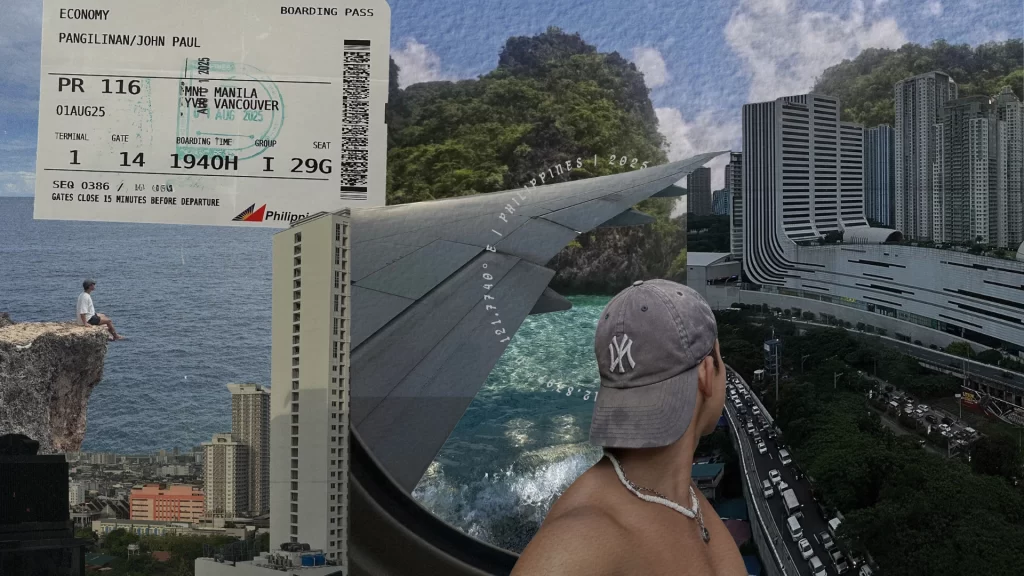
As the plane descended over Manila, I felt like a thread pulled taut between two worlds — one holding my past and the other my future. “If you are visiting, enjoy your stay; if you are from here, welcome,” the pilot announced. I was travelling solo. Families around me shifted in their seats, and I just sat there, listening to the words as if they were meant only for me. The dense city emerged from a sea of clouds, awakening a decade of memories. The smell of jet fuel and humid air hit me with an unexpected wave of nostalgia. The morning sunlight spilled across the cabin — radiating a delicate glow as I stared out the window. Almost 10 years had passed since my parents, older brother, and I migrated to Canada in 2016.
The majority of Filipino-Canadians feel a strong sense of belonging in Canada. In 2023, Statistics Canada reported that over 90 per cent of Filipino newcomers in 2022 felt a very strong connection to Canada, their province, and their local communities. This shows how Filipinos continue building meaningful lives in Canada, rooted in community, geographical distance, and hope for the future. According to the Embassy of the Philippines in Ottawa, nearly one million Filipinos were living in Canada in 2021, each with their own reasons for coming. Like countless Filipinos before us, we left the Philippines to start a new life for a variety of reasons. For my family, it was the promise of economic stability, a strong healthcare system, and better education.
I still vividly remember early 2016 in our hometown of Santiago City. The sun had just set, casting a warm orange glow across the open-air dining area. I sat across from my mom at the wooden table, its plastic cover worn out from years of family meals. Her eyes sparkled with excitement as she shared that the long-awaited application to move to Canada had been approved. Six months later, we were boarding a 16-hour flight — the longest plane ride we had ever taken. I remember looking out the window as we flew over the Pacific Ocean towards Canada. I saw a beautiful scene unfold: mountains silhouetted against a golden sunset and light spilling over a sparkling ocean. In that moment, I imagined the possibilities ahead, stepping into new places, meeting strangers who might become friends, and exploring different cultures. That brief anticipation for what was ahead, however, was mixed with anxiety and uncertainty. Moving across continents meant stepping far outside the life I knew.
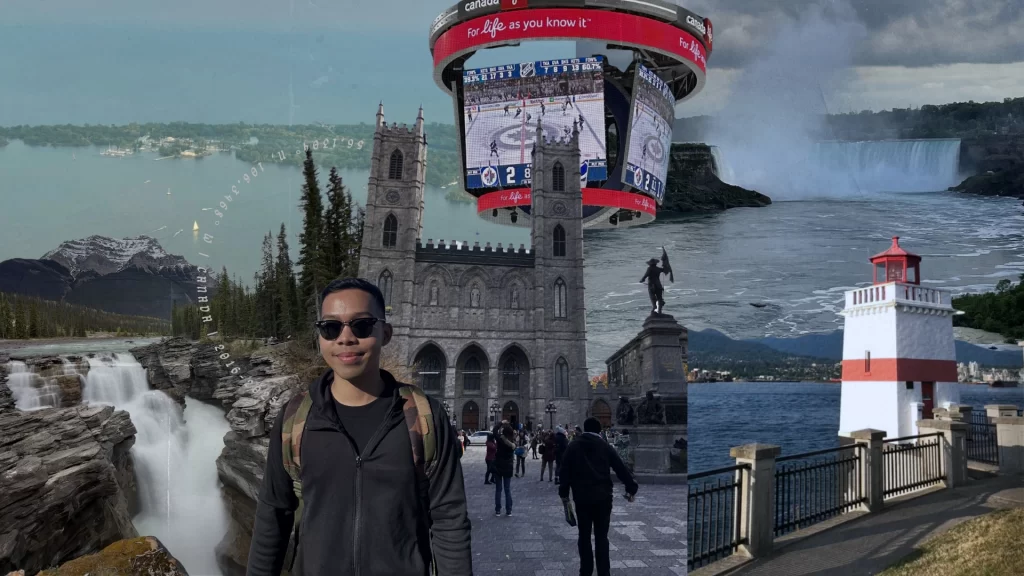
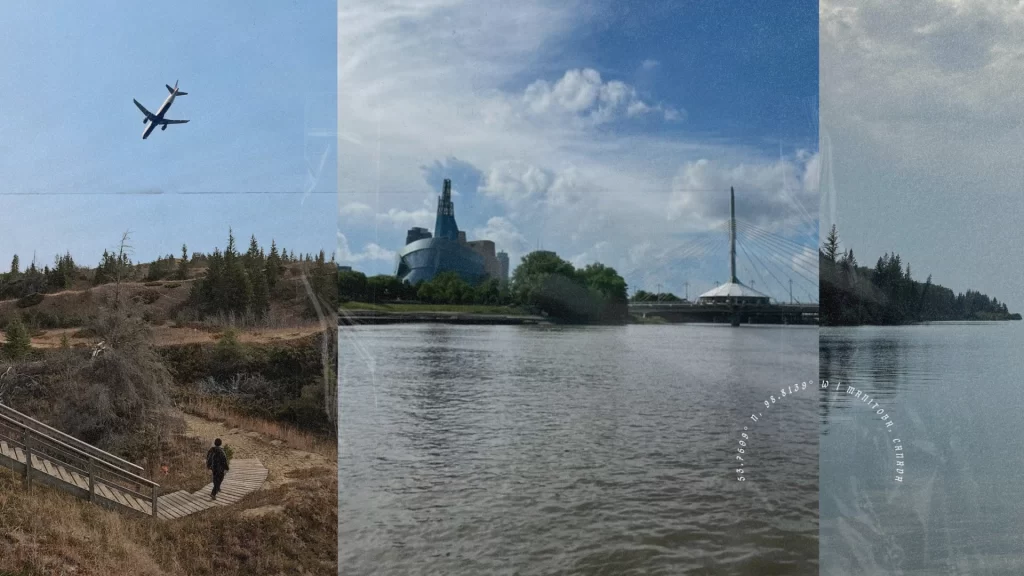
After moving to Winnipeg, travelling became my way of weaving myself into the fabric of Canadian life. Over the next five years, I explored the country piece by piece. I marvelled at the beauty of Niagara Falls, breathed in the crisp air of the Canadian Rockies, wandered the cobblestone streets of Old Montreal, strolled the seawall of Stanley Park, gazed out at a jaw-dropping view of Toronto from the CN Tower, and cheered at my first Winnipeg Jets game. In each place I visited, I learned a little more about what it means to call Canada home. I grew to appreciate its patchwork of cultures and picked up habits that seemed small but meaningful. I learned to say “sorry” in almost every situation, even when an apology was not necessary. I paused in the elevator to let others go first, only for us to exit at the same time. I called out to the bus driver, not because I was mad, but so they would hear me saying “thank you” every time I stepped off. The Canadian way of life gradually stitched into me.
Slowly, the lines connecting me to friends and relatives back home faded, stretched thin by distance and time. I found myself scrolling through old Facebook albums of my cousins and me at our family farm, especially during mango harvest season, when we used to pick as many mangoes as we could. I remember one dark, snowy evening in Winnipeg in January 2018. I tried calling an old friend in Manila, hoping to hear a familiar voice, but no one answered. My gaze stuck on an empty wall, and the heaviness of absence sank in. The silence stretched beyond the walls of my room. As we built a new life in Winnipeg, physical distance mirrored the emotional weight of starting over, creating space between who I was and who I had been, between the people I grew up with and the life unfolding before me.
Over time, I found myself growing more independent, especially when it came to shaping my own path and choosing my future. I decided to work full time after earning my high school diploma, even though my parents had always wanted me to pursue post-secondary education right away. This decision marked a departure from the strong family-oriented values I grew up with, which centred on respect and community well-being. Drawing on Dutch social psychologist Geert Hofstede’s Cultural Dimensions theory, which compares national values like individualism and collectivism, a 2025 study of Filipino-Canadians by Dave Estrella found that Canada ranks high in individualism, while the Philippines ranks much lower. Filipino collectivist culture thrives on tradition and shared values, where the needs of the family often take priority over individual desires. Embracing self-reliance in Canada, where individualism prevails, revealed to me the stark difference between the two cultures. My decision to put off post-secondary, signaled how Canadian culture had influenced me. At the same time, I was curious to know more about the country I had grown up in. After working full time for a few years and starting post-secondary, I planned a trip to see my homeland through adult eyes.
Returning Without Fully Arriving
Stepping off the plane, the humidity hit me like a wall — thick, familiar, and inescapable. It was strange after years of crisp Canadian air. I was now a balikbayan. “Balik” meaning return, and “bayan” meaning country, a word often used to describe a Filipino returning home after living abroad. As I strolled along the streets of Manila, my native language swirled around me. The familiar chaos began to sink in. “Bili na kayo!” a vendor shouted, urging people to buy her freshly cooked turon, a popular Filipino street food made of sliced bananas wrapped in a spring roll wrapper, coated and fried with caramelized sugar. I watched kwek-kwek, quail eggs coated in bright orange batter, sizzle in oil. Eating on the roadside felt authentic, but it also felt like an adventure rather than the routine I once took for granted.
“Sakay na!” a jeepney driver yelled, inviting passengers to hop on. What once felt ordinary now felt overwhelming. Jeepneys, a local public transportation system also known as “King of the Road” in Metropolitan Manila, manoeuvred through tight spaces with practiced precision, squeezing past buses and other vehicles. The traffic jams that had been part of my everyday life became personal again, though now, I questioned how people managed them day to day. Amid the chaos, everyone seemed to understand the unspoken rules, when to move, stop, and push forward, while I found myself taking my time to cross the busy street.
When Arlene Dela Cruz, a second-generation Filipino-Canadian and a family friend, visited the Philippines in 2019, she reflected on the city’s density, the motorcycles crowding the roads, and people walking elbow to elbow — a different experience from what she had grown up with in Winnipeg, which was predictable and orderly. Her experience mirrored my own sense of being overwhelmed by a place that once was home. Many in the Filipino diaspora return home only to experience reverse culture shock, a term coined by researcher Kevin F. Gaw. In his research paper “Reverse culture shock in students returning from overseas,” Gaw describes reverse culture shock as “a period of emotional and psychological re-adjustment, similar to the initial adjustment to living abroad.” As I navigated Manila’s streets, questions crept into my mind: What if my family had never left? What shape would my life have taken if I had stayed? These thoughts lingered as I moved through the strange familiarity of my return.
Looking back, I recognize that I was experiencing a liminal phase, which EBSCO Information Services describes as a period people go through when they move from one stage of life to another — the feeling of being “betwixt and between,” a time of uncertainty and change that occurs during significant life events, like moving to a new place. During times of transition, people often feel caught between their old and new lives, unsure where they entirely belong, and they tend to lean on others who have gone through similar changes.
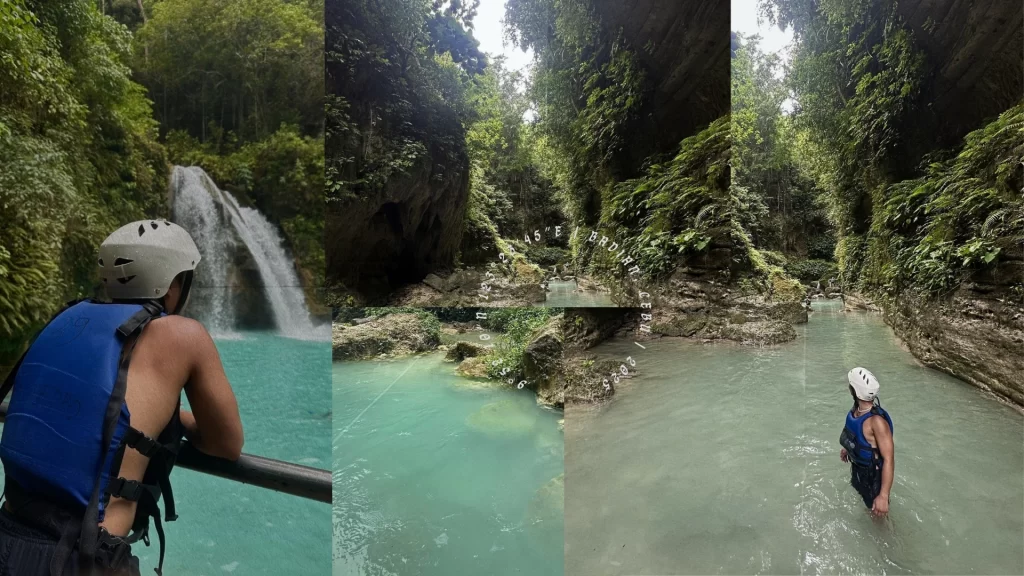
A few weeks after arriving in Manila, I travelled to Badian, Cebu, a town famous for canyoneering in the south of the Philippines. There I met tour guide Mark Saranillo. I buckled on a life vest and slipped into battered water shoes. The trail wound along a river sculpted by time, dotted with ledges for daring jumps up to seven metres high. At the edge of the first jump, my heart hammered against my chest. The turquoise water below beckoned, making my palms slick with equal parts fear and exhilaration. I hesitated, but another part of me wanted to dive in and surrender to the rush. I drew a deep breath and took a leap.
My conversation with Mark flowed easily as we navigated the trail. I was drawn to Mark’s story: a criminology student at the University of the Visayas in Cebu City, guiding tourists during school breaks, dreaming of becoming a police officer to serve his community. I teased him about a police officer leading a canyoneering tour, and he laughed. We moved along, and he shared how tourism had transformed his hometown, for better and worse. He remembered splashing in the river as a kid with his friends, long before outsiders claimed it. Now, parts of the river were off-limits to locals. What once felt like his now seemed distant. I recognized that ache — the home I came to was still beautiful, still known, but it was no longer mine. It made me wonder: who really owns a place re-made by tourism. Is it those with deep roots, or those who bring new stories?
Rooted in Connection
After exploring the tourist spots on my list, I boarded a flight north to visit my hometown in the province of Isabela. I caught a bus to Santiago City, where my childhood had unfolded. The air buzzed with the honks of tricycles. The bus station felt stifling — or maybe it was the heaviness of coming back to a place that no longer felt like home. As the bus rumbled on, the sharp tang of exhaust mingled with the earthy scent of rice fields reminded me of where I once belonged. Guilt crept in for letting life abroad keep me away — for hesitating to reconnect because everything had changed. Would my friends and relatives still see me as they once did? Part of me expected my hometown to be frozen in time, and familiar scenes flickered past the bus window, both confronting and strange.
As I turned off the main road onto the narrow path to our house, dark clouds gathered, and rain burst down, mirroring the heaviness inside me. I sheltered in a corner store for a brief moment, spotting a recognizable face through the window. Would they recognize me? Maybe they wondered, “Is that John? Has it really been that long?” I glanced away. Across the street, I saw a woman who had been my lola’s (grandmother) friend. Would she remember me after all these years? When the rain refused to stop, I dashed to another store across from our house. I bought a chocolate bar. It was smaller than I remembered. Behind the counter stood a face I recognized — the child who had once crawled around the store, now grown and in charge. For a moment, I was a child again, running to the store for my lola and buying snacks for our meriyenda, our version of afternoon tea.
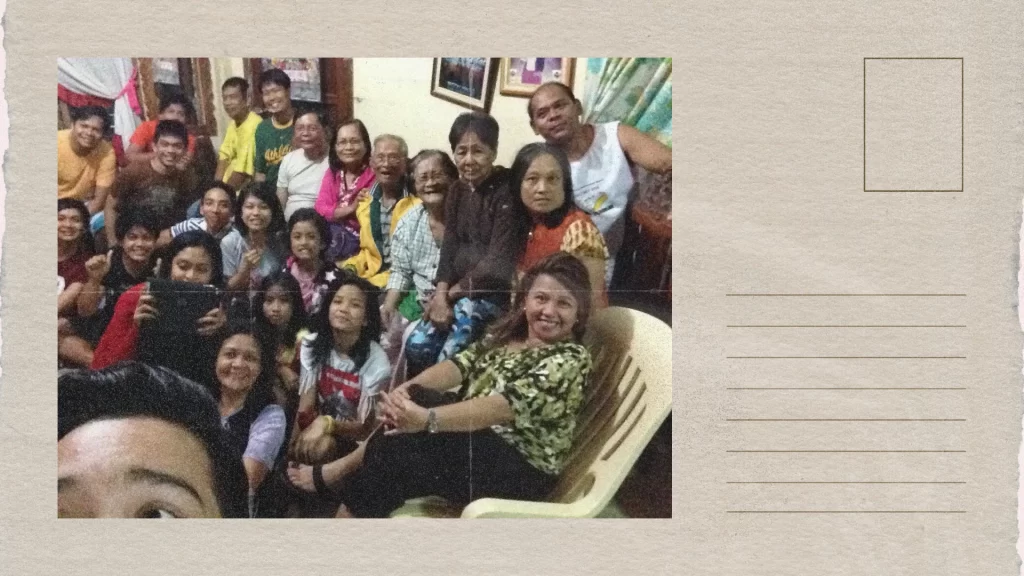
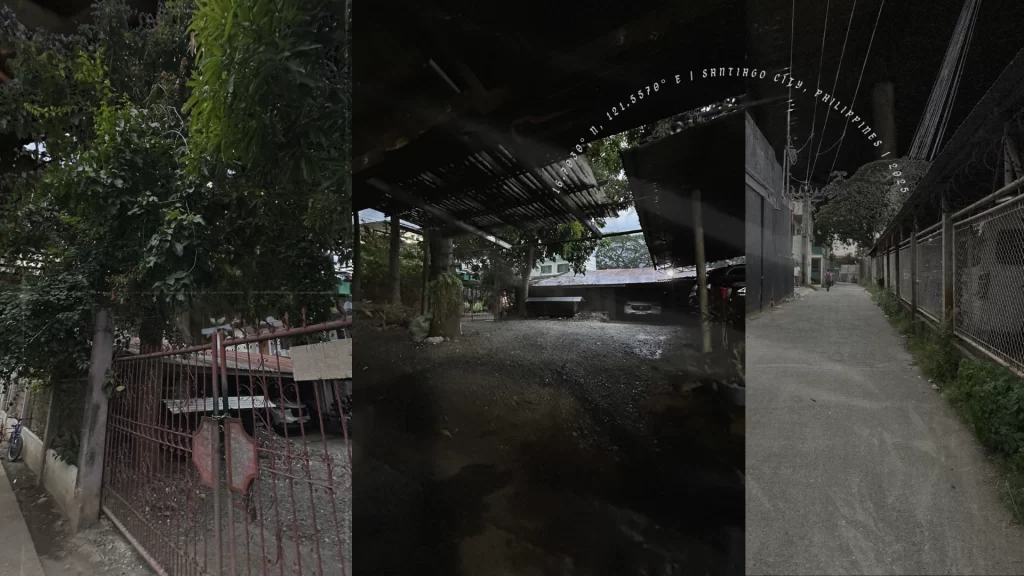
I stepped back into the rain and walked a few steps to our old gate, its once-bright red metal frame now faded. The house looked unchanged, but time clung to it. The mango tree standing firm in front of the house was still full of fruit. I remembered getting into our cars and climbing onto the roof to pick them and eat as many as I could. My lolo (grandfather) and lola filled that home with so much warmth — tending plants and fruit trees, sometimes letting me help water them as they sat outside, enjoying the afternoon air. During the holidays, relatives would gather from across the country, filling our home with laughter, singing, celebration, and a table laden with food. My lolo made sure we said our blessings first before we feasted. My grandparents were gone now, and I stood at the gate without them waiting on the other side.
Inside, the house felt hushed and dim, even though other relatives now occupied the space. Memories kept flooding in. I could see my lola on the porch, watching the yard as the breeze played with her hair. “Have you eaten yet?” she would always ask, while I asked for mano, a Filipino gesture where someone presses an elder’s hand to their forehead to show respect. I pictured my lolo tending his plants, digging holes for yet another coconut tree he was trying to grow. My cousins and I once scrambled onto the roof to pick fruits from the trees: mangoes, star apples, and guavas. We would lie on a blanket and spend lazy afternoons up there, telling stories until the sun slipped away.
Standing there, I wondered how I could carry their legacy forward — maybe by planting new trees or passing down our family traditions. Even though everything had changed, the idea of future visits filled me with hope, picturing laughter ringing through those old spaces again. I felt the roots my grandparents planted guiding me, wherever I am, connecting my past to the person I am becoming, and that is a comfort I carry with me, no matter where I go.
When my friend, Hannah Papelleras, moved from the Philippines to Winnipeg in 2017, she found ways to maintain strong connections with friends and family back home. She used video calls, group chats, and shared funny memes to stay connected. I reflected on her experience, which made me realize how different it was from my own, since I struggled to maintain those bonds. Many Filipinos have found ways to maintain bonds with their loved ones who are far away.
Between What Was and What Is
Growing up, delivery trucks occasionally stopped outside our house with big, corrugated boxes. My cousins and I would gather, anxiously waiting for our grandparents to open the packages. The boxes were sent by my relatives who had long migrated to Italy. This is a familiar experience for many Filipinos with relatives abroad. In fact, GMA Integrated News reports that LBC Express (a delivery company) delivered more than 1.1 million balikbayan boxes across the Philippines from 29 countries in 2021. These boxes are more than just a container; they hold love and longing. Each item is carefully selected by families overseas.
Opening the boxes was a special moment for us. The distinctive mix of chocolates, soap, canned goods, and other items filled the air. The smell of another country, as I describe it. On top was a neatly folded towel, covering the inside. I was always the one to pick it up and breathe in a scent. The boxes carry a sense of distance and the desire to stay connected. Just as my family gathered around, many other families have their own versions of opening these boxes, each with their own memories, creating a shared story of the Filipino diaspora — a symbol of being in between, caught between the homeland and a new home, never fully settled in either and longing for home and connection.
As I get older, I see the balikbayan box as more than just something I received. I now understand the care behind each item, the clothes that offered comfort, the chocolates that made my day a little sweeter. The boxes reflect my family’s effort to stay close. In many ways, my life feels like that box — shaped by what I choose to hold on to and what I learn to let go of. My box holds memories of my first home — the view of the streets I grew up on, the mango tree in front of my lola and lolo’s house, familiar voices laughing around the table — alongside the new relationships and routines I have built in Canada.
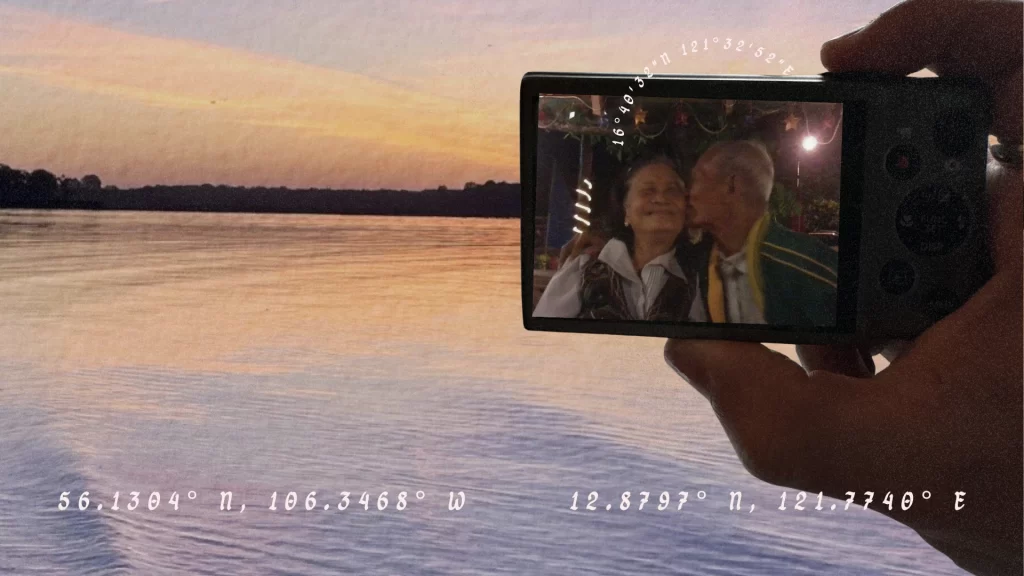
In Winnipeg, I find home in shared meals with old and new friends, in conversations that move easily between English and Filipino, and in spaces where Filipino traditions continue. These conversations remind me of who I am and where I come from, much like balikbayan boxes once did. They allow my culture to live on, changing as needed but never fading away. It makes me think of something my lolo and lola used to say: “Nandito kami kung nasaan ka,” (we are wherever you are). When I returned home from my trip to the Philippines, I realized the home I once thought I left had always been with me. “Ikaw ang iyong tahanan.” You are your home.