A Messy Canvas + A Fresh Palette
In the messy middle of Winnipeg lies an opportunity. A suite of city development plans paint a bright future for the city and its residents.
By Dre DeBattista
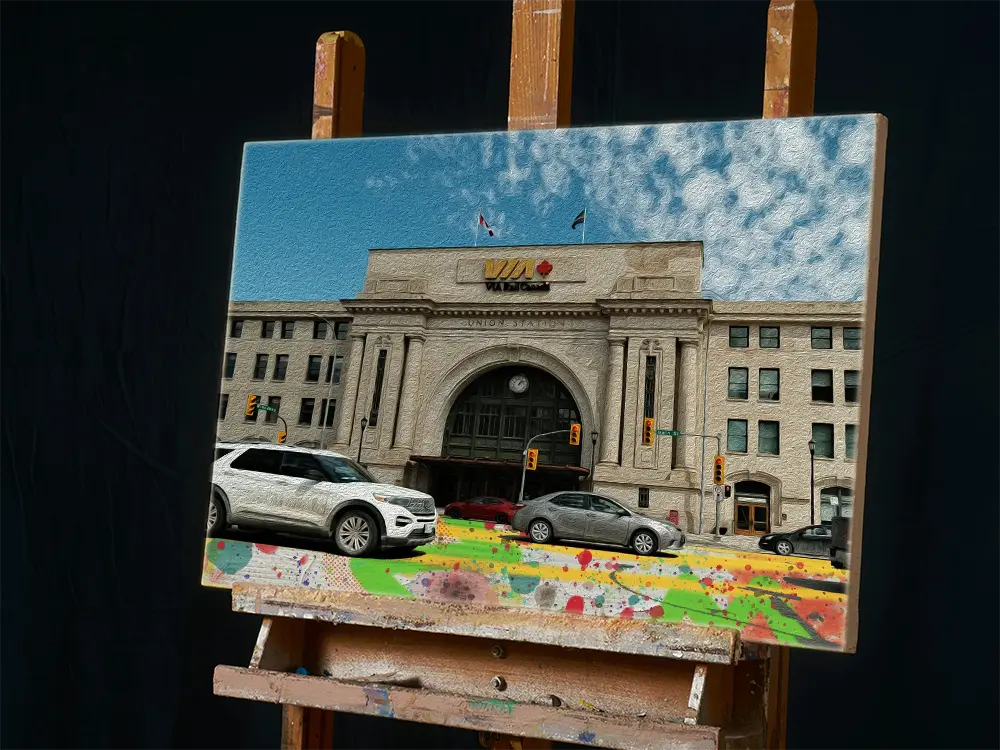
Imagine it’s 8:41 a.m. and you’re commuting down Winnipeg’s Broadway Avenue — the historic Union Station lies ahead. A horn blares as a cyclist dips between lanes of crawling traffic. A bus is trying to enter the lane next to you. Three cars pass before the bus driver can inch his way in. You lay your head on the steering wheel and let out a sigh as you stop for the second red light on this block.
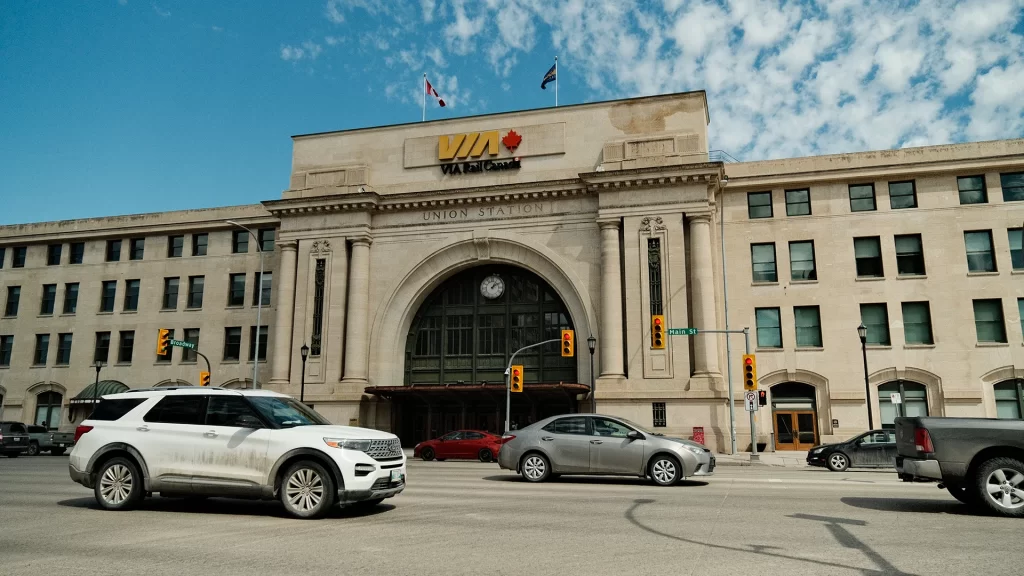
This scene illustrates some of Winnipeg’s design challenges. I often find myself in the shoes of the motorist, the cyclist, or the bus passenger in this scenario, asking myself, “isn’t there a better way?”
The truth is there are about a thousand and one better ways. Different design solutions look better from different vantage points. From a car, one thing makes sense, but things look different from a bus, bike or wheelchair.
Our city is faced with challenges stemming from decades of investment in car-centric design built on top of decades of prioritizing trains. All those tracks, roadways, and parking lots get in the way of people in an urban environment.
Serving the needs of Winnipeg’s diverse and growing populace is difficult. An ever-changing climate and uncertainty about the future paired with the city’s storied past, makes some Winnipeggers afraid of change, and that fear stifles progress. Others take innovative and sustainable — sometimes radical — approaches. Striking a balance is a real challenge for the public service, but there are several development plans under way guiding Winnipeg towards a more equitable landscape over the next 20 to 25 years.
Winnipeg City Council passed the OurWinnipeg By-law (No. 120/2020) on May 26, 2022. It’s an overarching development plan to shape the future of Winnipeg. More specific plans have been adopted following this framework, like ”Transportation 2050: Reimagining Mobility” which passed June 26, 2025, and CentrePlan 2050 By-law (No. 72/2024), passed Sept. 26, 2024. The transportation masterplan aims to move 50 per cent of trips to walking, cycling, transit and ride sharing, while the downtown development plan aims to create thriving neighbourhoods in Winnipeg’s urban centre.
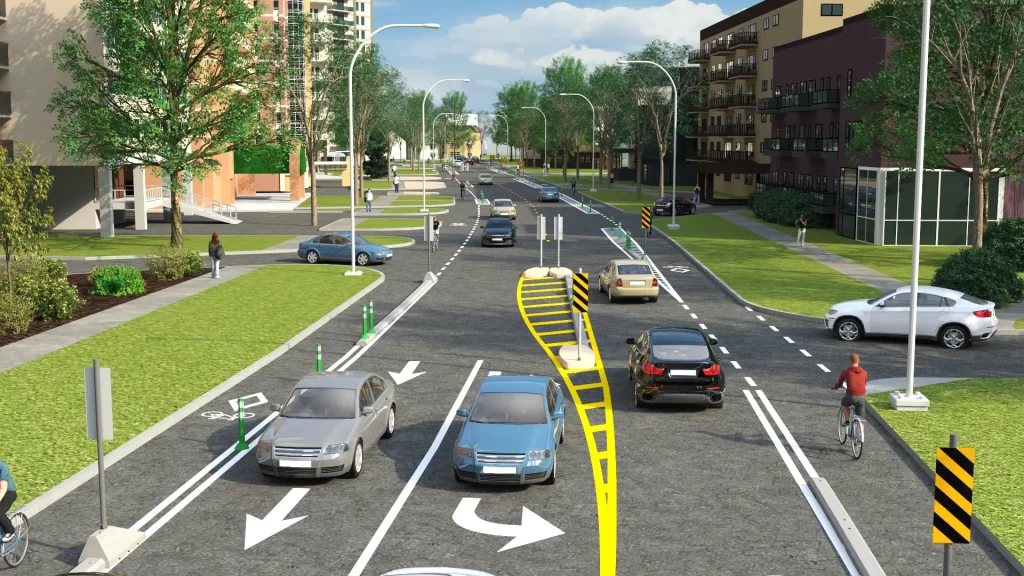
Winnipeg’s infrastructure is having a hard time keeping up with demand, and as a result, safety concerns emerge. After a driver collided with and killed Rob Jenner while he was cycling on Wellington Crescent in 2024, city council voted to reduce the speed limit there to 40 km/h from the current 50 km/h limit. Zoe Vander Aa wrote on the subject for Working Draft magazine last year. The March 26 decision was accompanied by the rejection of a pilot project to install temporary bike lanes along Wellington between Stradbrook Avenue and Academy Road, which would have been implemented this spring and would have cost $400,000 from an already allocated budget.
The public was divided in their responses to the plan. Some showed support, especially from the cycling community. Other stakeholders raised concerns about how the interim plan would affect access to nearby homes, shops, and restaurants. As a compromise, the city fast-tracked a plan to develop permanent bike lanes in the area. Construction is slated to begin next year.
Cyclists are not the only commuters who are seeing changes. In June 2025, the city overhauled public transit. The overwhelming majority of transit riders were unhappy with the change according to a Downtown BIZ survey from December 2025. In a meeting on March 4, the Standing Committee for Public Works reported Winnipeg Transit evaluated high-demand routes in December 2025 and increased the service to target routes that had been underserved since the overhaul.
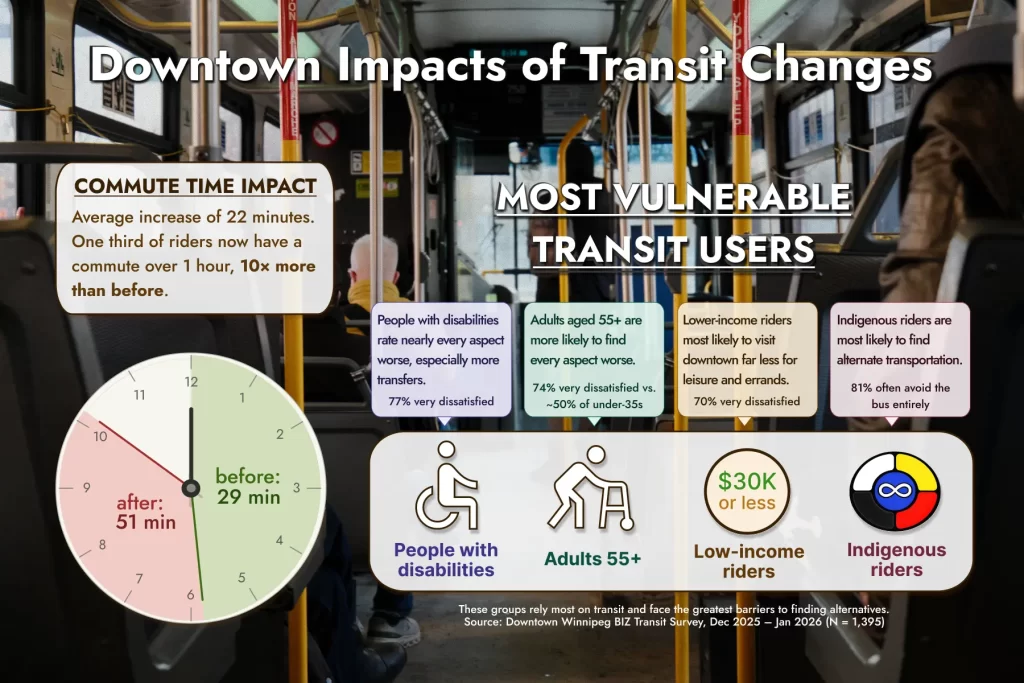
The F8 route, which runs along Pembina Highway through downtown and along Henderson Highway, was particularly underserved for the first few months. The route is an alternative to the BLUE Rapid Transit Line for people commuting downtown or to the University of Manitoba. It’s the route my partner takes on her commute, and I recall a few times when she waited at a bus stop as two or three full buses passed her by. Some of my classmates at Red River College Polytechnic had similar experiences getting downtown. Winnipeg transit increased the number of buses operating on the route at peak times, and the issue has been alleviated, but the network still faces growing pains.
Winnipeg Transit also adjusted schedules to help keep buses running on time in December 2025. It plans to increase service on busy routes again this month, split the D16 route into two, and add service after midnight to 10 routes.
It took me at least 15 minutes to get to MAKE Coffee + Stuff on Corydon Avenue by bus, but I could walk there in 20 minutes or cycle in about seven. The café has been one of my favourite places to write over the past decade. Urban design projects and literature lined the walls, which I found mentally stimulating.
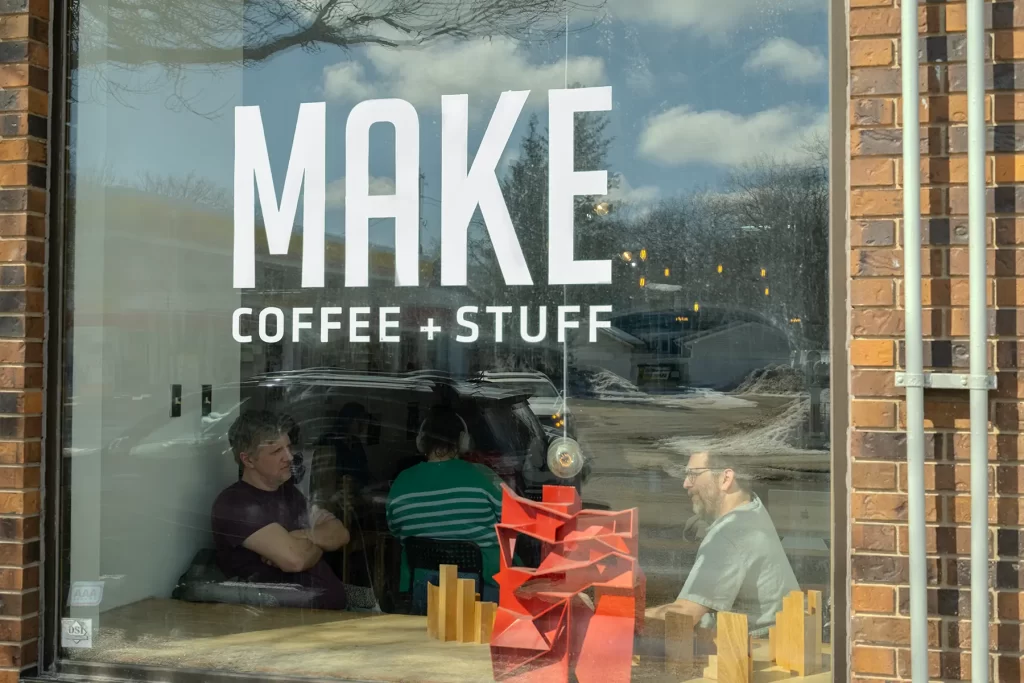
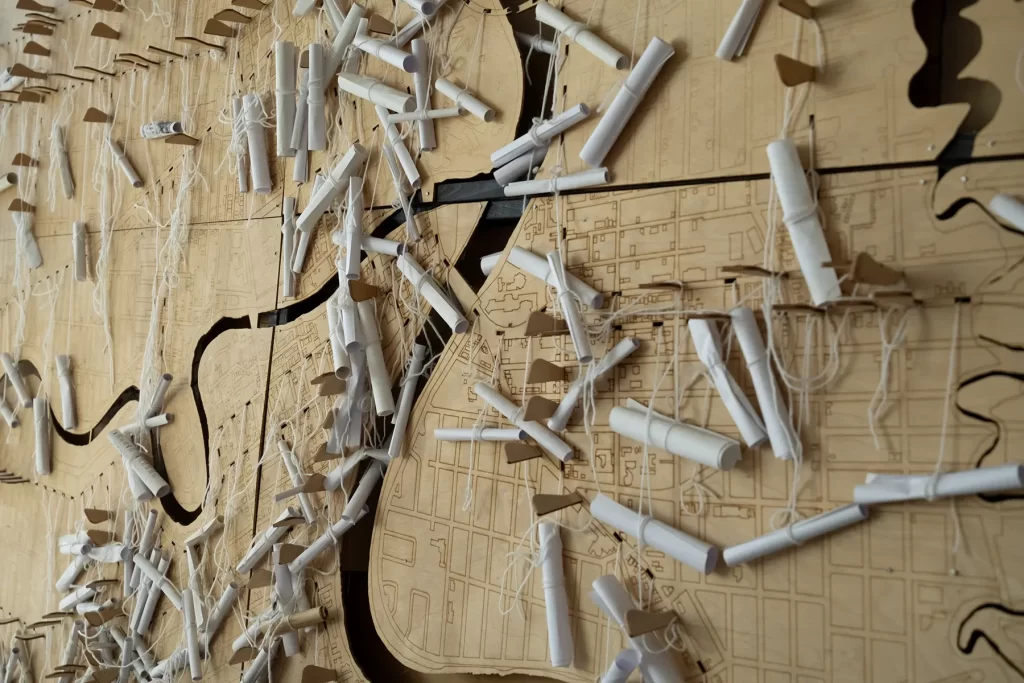
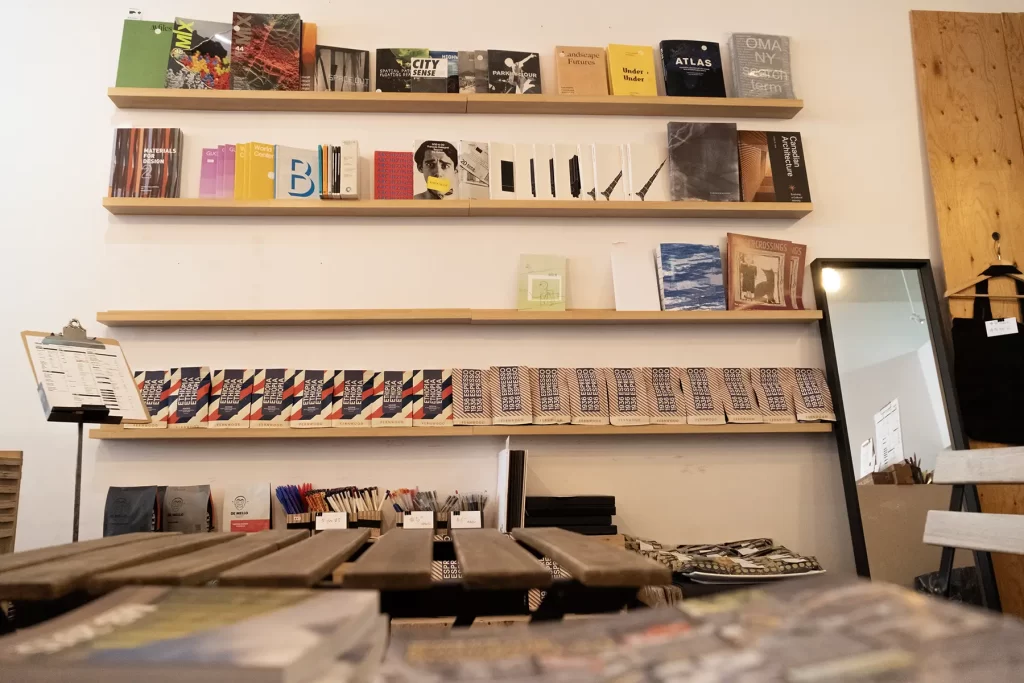
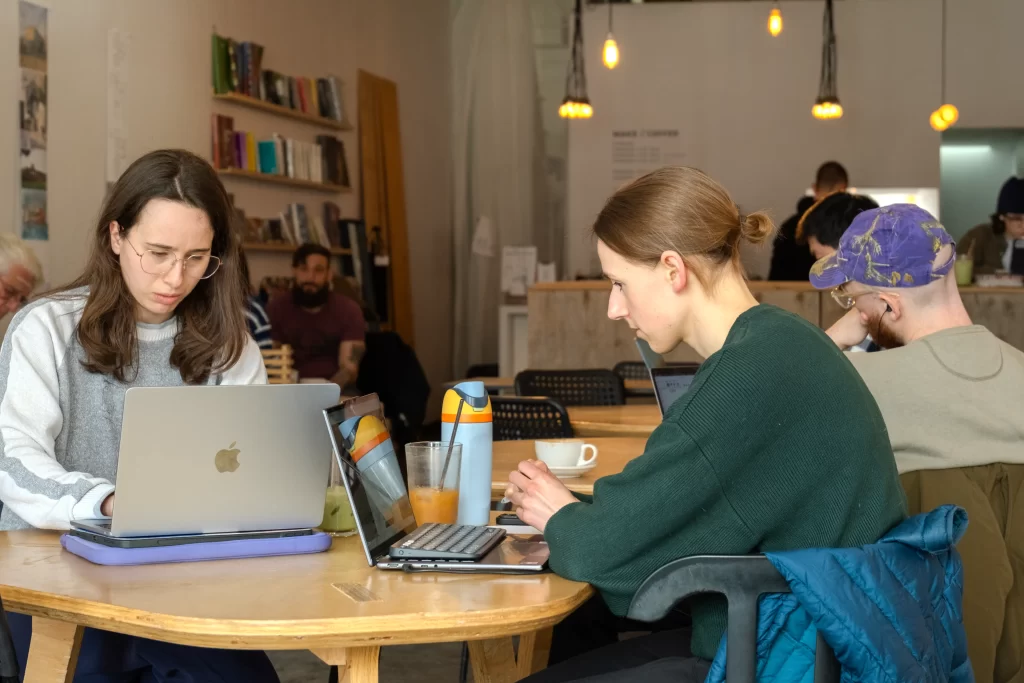
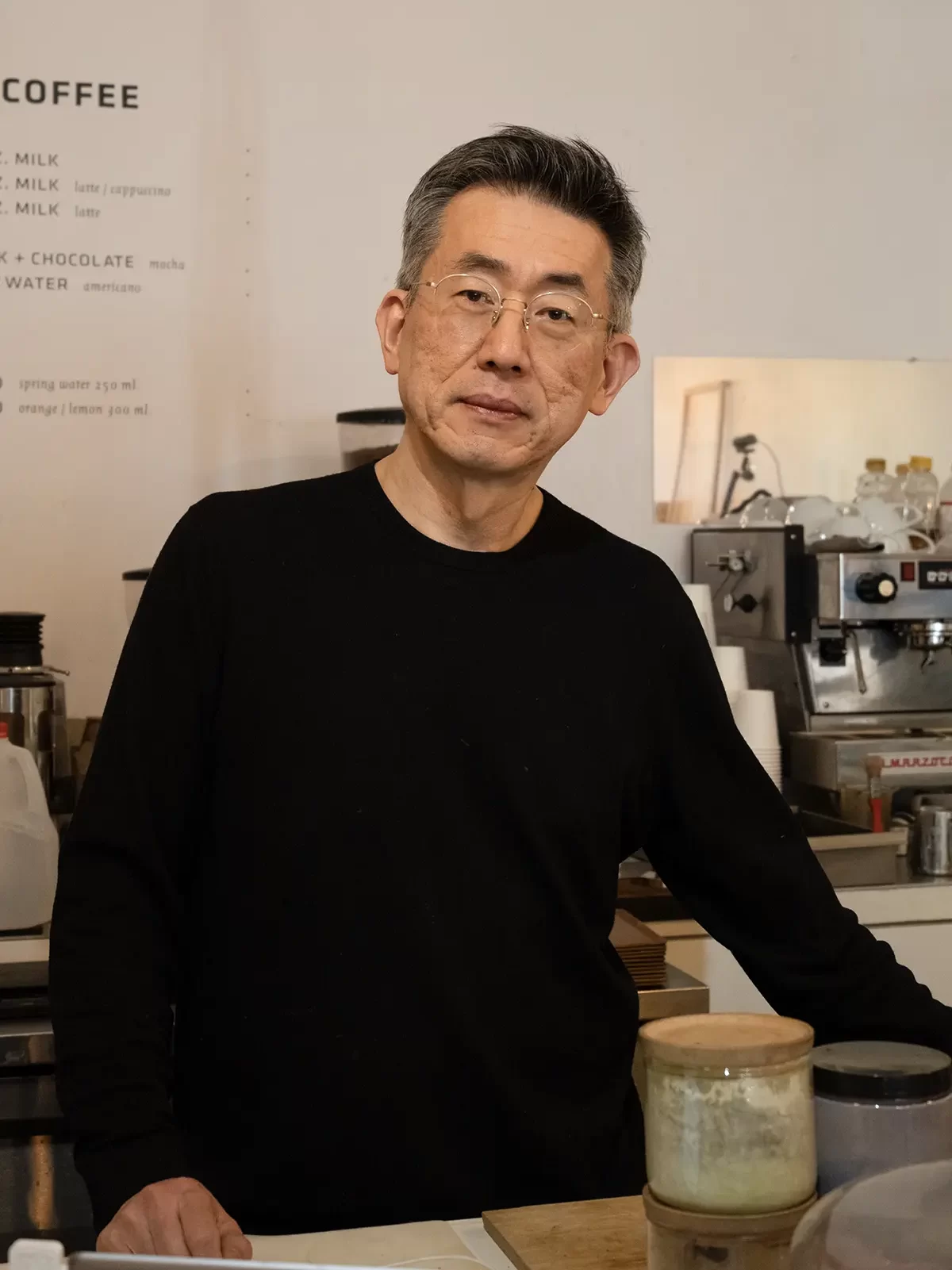
Jae-Sung Chon, owner of MAKE, was often behind the bar kindly welcoming me and sparking my creativity through our conversations. He is an urban design instructor and the Chair of the Environmental Design Program at the University of Manitoba Faculty of Architecture. Chon is a dreamer.
“What is this place?” he asked himself when he arrived in Winnipeg in the ’90s. “Does everyone drive electric cars here?” he wondered, noticing the network of outlets in parking lots with cars tethered to them. What he was really seeing were the block heaters to keep the cars’ engine oil from freezing up in the depth of winter. He saw the city as a messy canvas, ready for its next brush stroke. To Chon, Winnipeg’s quirks are opportunities. He has long seen the electrical grid in Winnipeg parking lots as the perfect opportunity to electrify our vehicles.
Chon, who is Korean, brings his curious sense of innovation, along with his outsider perspective to his urban design. When he first arrived in Canada, he landed in Toronto. As he interacted with the city, he came to see it as a “wannabe New York” and moved on. He travelled to Vancouver to be with his parents. As he explored this other Canadian metropolis, he found it was a “wannabe Seattle.” He didn’t like that these cities were trying to be something else: importing designs from their American counterparts and bringing culture with them.
These are the western cities Chon heard about growing up. Winnipeg was different: one of the many mid-size cities that made up most of the North American landscape. “I have arrived in Canada,” he thought as he decided to settle here. Decades later, Winnipeg has new layers of paint, but it’s still as messy as ever.
Karin Kliewer, the project lead for CentrePlan 2050, hopes to make art of the canvas. She said she has been working on rebuilding downtown streets with a focus on housing and pedestrians.
“For too long downtown has been a place where people drive to visit,” said Kliewer, “but it hasn’t been a place where people go to live. Downtown development was focused on businesses, but now we’re revisiting it, to make it more welcoming. We want people to stay downtown.”

In March 2026, city council adopted Kliewer’s plan to permanently establish Graham Avenue as a plaza, allocating $4 million over four years to the project and an additional $3 million to other CentrePlan actions in the same time frame.
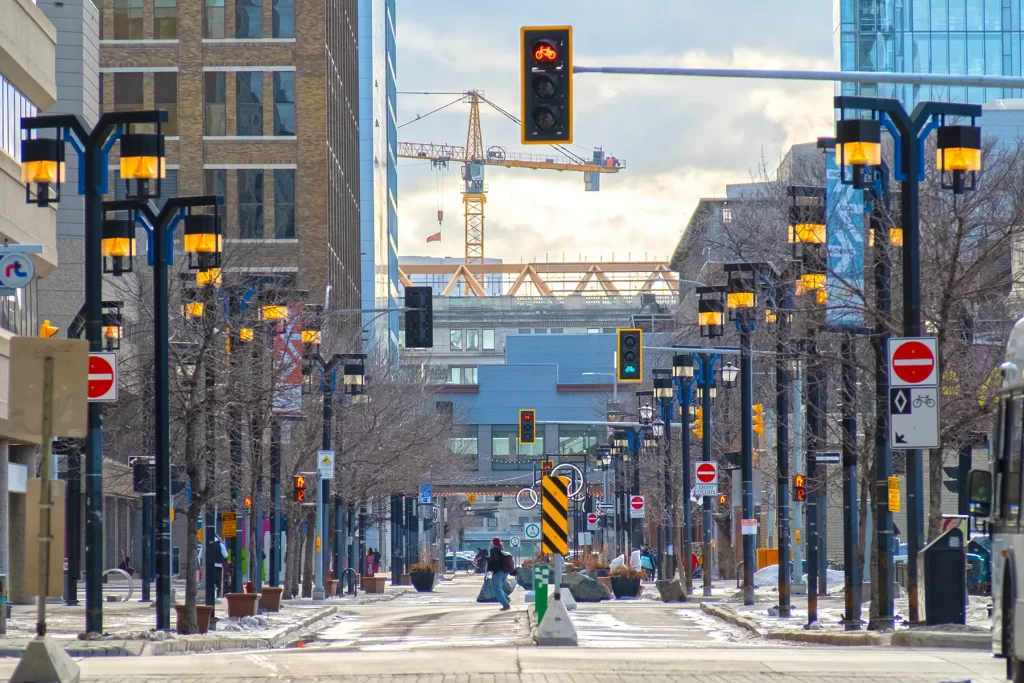
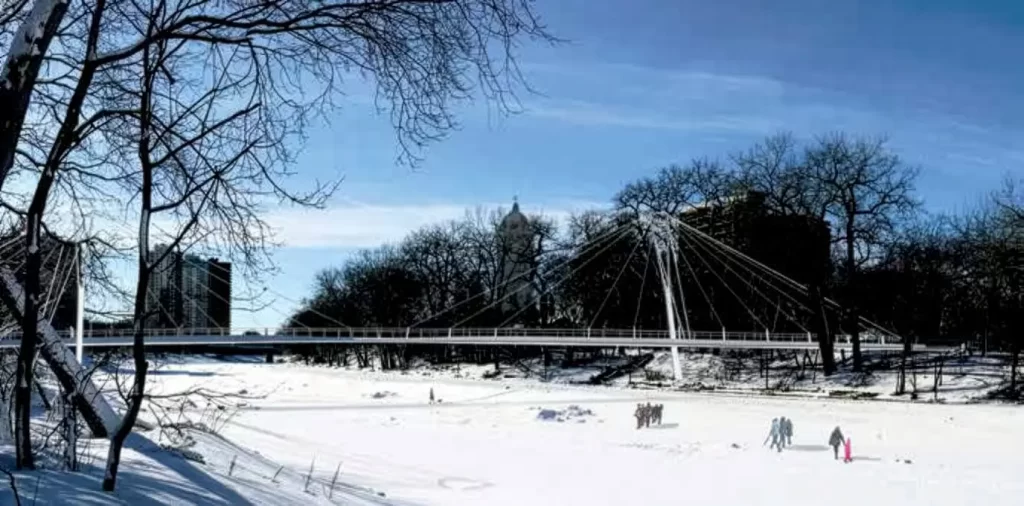
Kliewer noted there are crossing streets marked for reconstruction over the next few years which she would like to modernize to add to the neighbourhood feel. One of them is Edmonton Street, which will connect the redeveloped Portage Place to Graham and act as a corridor all the way south of Broadway. A proposed foot bridge would eventually connect McFadyen Park at the corner of Edmonton Street and Assiniboine Avenue to Fort Rouge Park across the river in Osborne Village.
Kliewer likened her vision for the Downtown neighbourhood work to Waterfront Drive, which was a rail yard twenty years ago, and today is a parkway with a mix of business and residential spaces.
Chon says the benefit of a mid-size city like Winnipeg is there are enough people to support urban development without the layers upon layers of red tape of large metropolitan cities.
“How many people do you think you have to go through to get to the mayor in Toronto?” asked Chon. “Probably seven or eight, but in Winnipeg you can cut that in half.”
To Chon, this makes for a perfect test bed for everything from street design to app development. Companies like Skip the Dishes, a Winnipeg-based food delivery app, have proven this to be the case.
Bicycle Valet Winnipeg, which provides secure bicycle parking at large events, is another example of a novel idea tested in Winnipeg that fits into a modernized transportation network, the kind of “adaptive decarbonized infrastructure” Transport Canada is calling for.
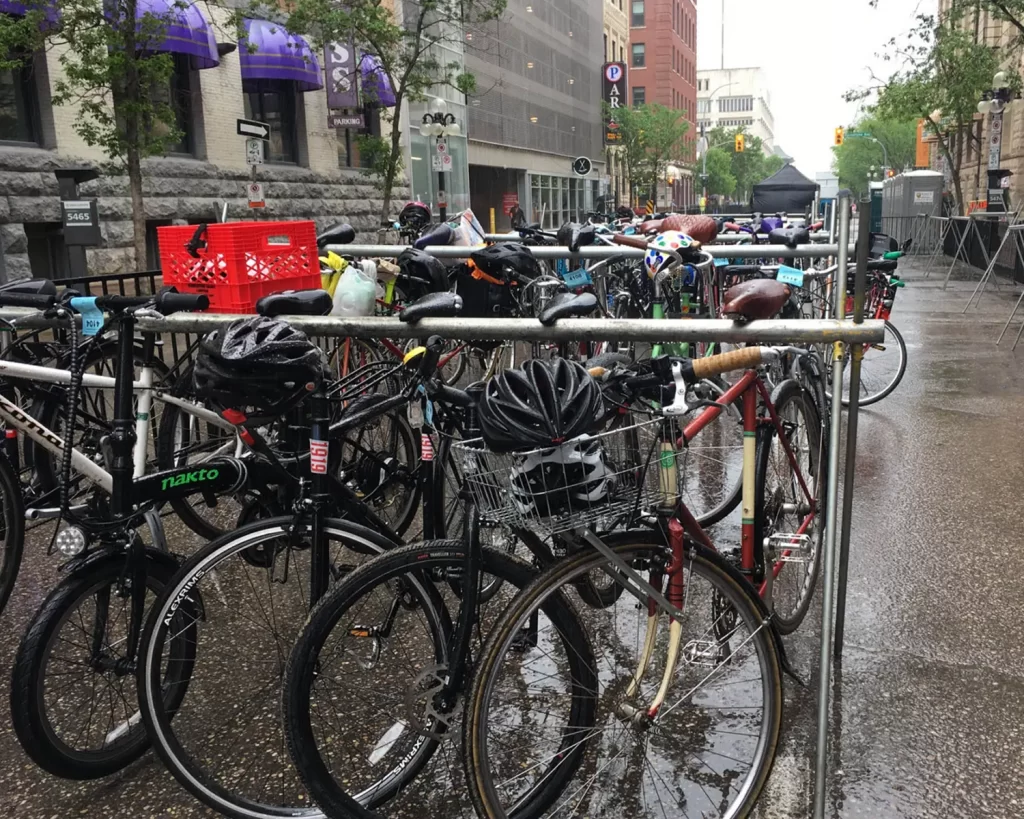
Chon encourages innovation in his university courses. He teaches students to design specific solutions for Winnipeg rather than copy designs that worked somewhere else. Winnipeg has a unique climate after all — environmentally, socially, and politically. But that doesn’t mean Winnipeg can’t learn from other places.
In her book Streetfight: Handbook for an Urban Revolution Janette Sadik-Khan recalls her experience as the commissioner of the New York City Department of Transportation from 2007 to 2013. In that time, she revolutionized how people move through the bustling metropolis.
She famously closed five blocks of Broadway to cars at Times Square. It was a controversial idea at the time, and she almost didn’t get the job because she proposed it in her interview. She was met with “we’re not Amsterdam, we’re not Copenhagen, so we can’t do these kinds of changes.” She pushed for it as a trial anyway. It was an immediate success. There were fewer injuries and more people walking through Times Square, elevating it to one of the top ten shopping destinations on the planet.
More important for New Yorkers though, Sadik-Khan focused her efforts on hundreds of small projects with a measured approach: placing GPS trackers on all 13,000 of New York’s yellow cabs. Her team measured where traffic was slowest, and they tried new approaches. They built bus rapid transit lines, protected bike lanes and plazas, and they continued to monitor to make improvements. Over time they saw improvements to safety, mobility, and retail sales.
“If you can change streets in New York, you can change them anywhere,” said Sadik-Khan in a 2022 interview with Maddalena Monti for Domus, a European architecture and design magazine. “Each city has what it thinks are unique reasons why safe infrastructure for people to walk and bike is impossible to build.”
Sadik-Khan credits her success in shaping the narrative to advocacy groups who agreed with her in principle. She shared her proposals with them, and they promoted her ideas and lobbied the city to support them.
The same can be done in Winnipeg, but rather than importing generic designs, perhaps we can persuade the city to design and build infrastructure that supports our unique needs. People notice when they have problems with places, and they love to gripe about it. Good community leaders can harness this to enact change. There are many organizations that want to make Winnipeg work better.
Business improvement zones (BIZ) across Winnipeg primarily serve the retail interests in their neighbourhoods. One of their primary goals is to draw people to the area and improve the public experience. You may recognize the work they do to bring life to city streets with flower beds, benches, bike racks, stylish streetlights, and of course — their signage. Some go beyond this with initiatives like the Downtown Community Safety Partnership (DCSP) to walk people to their bus stop and provide wellness checks, for example.
Neighbourhood associations do similar work, but in service of residents. They may not have the corporate funding of a BIZ, but they unify and amplify the voices of their communities to improve public spaces and offer relevant programming.
Then there are the more niche advocacy groups serving people with specific interests across Winnipeg. Manitoba Eco-Network advocates for sustainable development in Winnipeg, and so do many of its member organizations like Winnipeg Trails Association, Trees Winnipeg, and Compost Winnipeg. Safe Speeds Winnipeg and Bike Winnipeg are examples that work in the transportation sector.
These three types of community organizations have been working behind the scenes, and Winnipeggers can engage with them to create the changes they want to see.
As we look to the future, we should also study the past to understand how we got here.
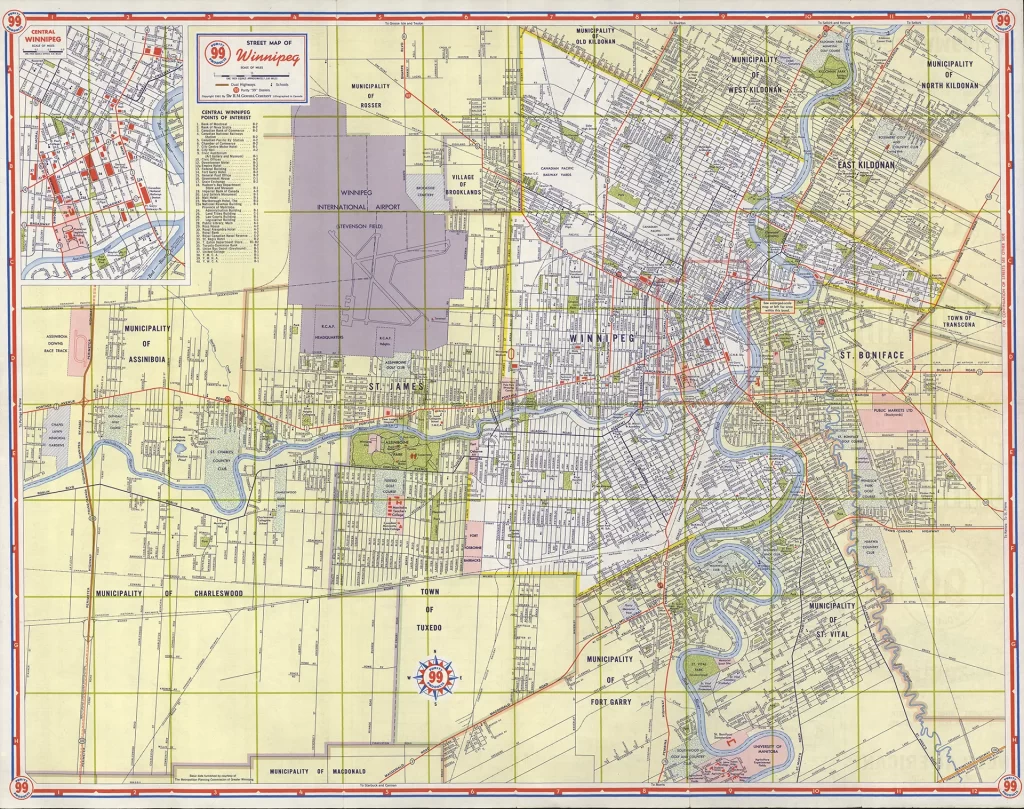
Winnipeg was fundamentally different in the 1960s.
The Metropolitan Corporation of Greater Winnipeg acted as an additional governing tier to coordinate shared development like transit services between municipalities. The two tiers of government vied for power according to a 1978 paper by University of Winnipeg Urban Studies Professor Dr. Lloyd Axworthy. By his account, the political strife often caused stale mates that would halt development plans — and then came a solution.
In 1970, city council led by Mayor Stephen Juba proposed a Unicity scheme that would combine municipalities to form “One Great City!” — Winnipeg’s slogan from 1990 to 2008. Skeptics at the provincial level denounced the idea arguing more localized governments would be more effective at handling the needs of their constituents, but by 1972 a new provincial NDP government was sympathetic to the idea.
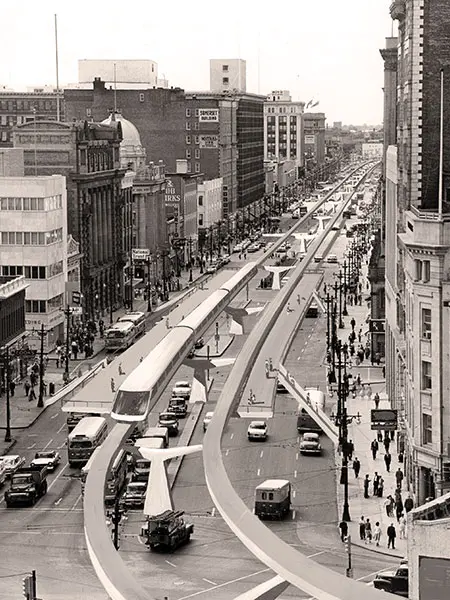
Axworthy’s paper affirms that the unified tax pool balanced the scales following the amalgamation of municipalities. Certain services improved, but the scales tipped perhaps too far into the hands of middle-income suburban residents by virtue of the new electoral wards. The automotive lobby won out against other transportation proposals such as bus rapid transit routes, a subway, and a monorail.
Chon introduced these proposals to me. He was particularly keen on the monorail proposal, comparing it to Vancouver’s Sky Train. “Seeing the city from that vantage point builds engagement,” he said. “People look outside and have conversations on the Sky Train instead of keeping their heads down looking at their phones in a tunnel.”
Mayor Juba was a strong proponent for monorail lines as the backbone of an improved public transit system in the 1970s, and here we are half a century later with a dysfunctional bus system and one incomplete rapid transit corridor.
In an effort to advance the transportation master plan, the city has made an agreement with CN to co-opt one track on the downtown rail overpass running parallel to Main Street to work with rapid transit. It will select a contractor to build out the Blue line on the overpass and along Portage Avenue with a stop at Union Station.
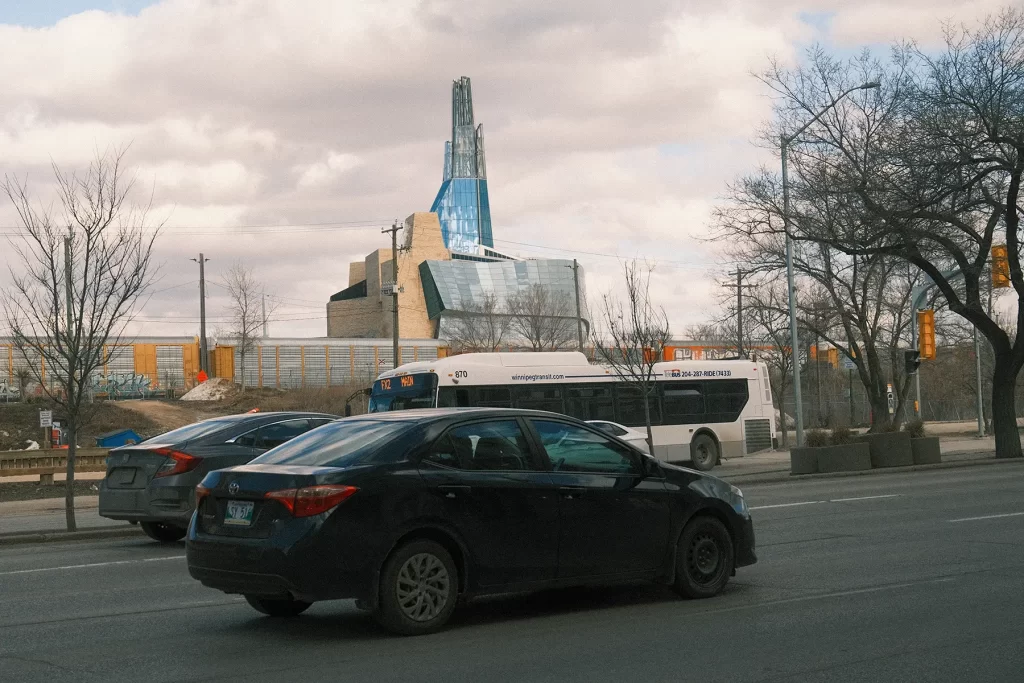
Union Station was designed to be a passenger rail hub situating Winnipeg as the “Chicago of the North.” It housed routes to Minneapolis, Lake Winnipeg’s beaches, and light rail lines across Winnipeg. Today it houses the Winnipeg Railway Museum and still serves two Via Rail lines: the Canadian line (runs between Vancouver and Toronto), and the Winnipeg – Churchill line.
The neoclassical behemoth lies mostly dormant waiting for an unlikely hero to wake it from its slumber — to become the roaring metropolitan transportation hub of its conception. The city has marked it as a transfer station in the upgraded rapid transit system, so maybe that day will come.
Kliewer said after the downtown rapid transit corridors are complete, they will continue to expand and each of the bus routes with an “FX” designator would eventually be slated for rapid transit development.
On Jan. 15 just across the tracks from Union Station, The Forks CEO Sara Stasiuk cut a ribbon with officials from three levels of government to mark the start of the ambitious fifteen-year Railside neighbourhood development project.
Construction has begun on three buildings, with a goal to open 350 housing units in the next two years. Eventually 10 mixed-use buildings, arranged to maximize daylight and reduce wind, will cover much of the existing parking lot. Stasiuk said The Forks has consulted Indigenous Elders, Knowledge Keepers, and community members in the planning, and they will have an archeologist on the construction site to ensure the historic site is treated with care during construction.
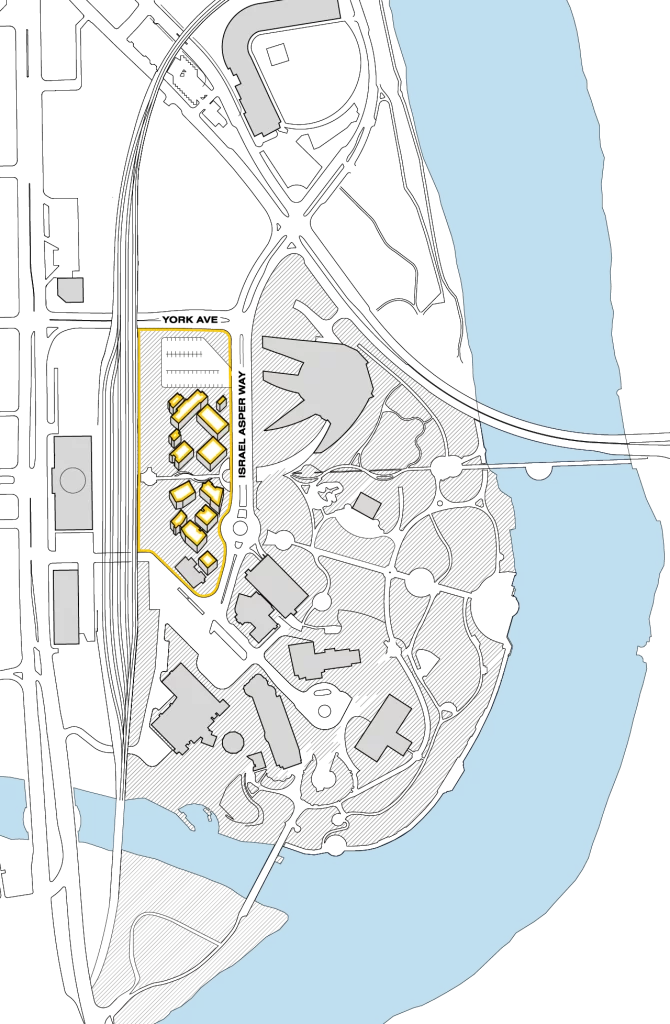
This is one of several medium-density neighbourhood redevelopments taking shape in Winnipeg, which will work in tandem with rapid transit lines to grow the city without adding more cars to already congested streets. Three other downtown examples are Portage Place, Wehwehneh Bahgahkinahgohn — “It is Visible” in Anishinaabemowin, in the former Hudson’s Bay Company building, and Market Lands on the former site of the Winnipeg Police Service headquarters.
Each of these spaces is first and foremost a housing development, but they all integrate multi-use spaces in their design. Central plazas and atriums are public gathering places, with retail space surrounding them. Portage Place favours medical clinics while Market Lands will house an indoor market. The developments each meet modern accessibility requirements and include some below-market housing units. Wehwehneh Bahgahkinahgohn, will offer affordable housing to First Nation citizens, according to Southern Chiefs’ Organization’s webpage about their project. The Indigenous governing body is also a key player in the Portage Place redevelopment.
Meanwhile a whole new neighbourhood named Naawii-Oodena (“centre of the heart and community” in Aniishinabemowin) is taking shape at the site of the former Kapyong Barracks west of Route 90. The first-of-its-kind urban reserve project is being co-developed by Treaty One Nations, an Indigenous organization that represents property development interests of its members, and the Canada Lands Company (CLC), a federal Crown corporation which manages surplus real estate. A gas station was the first development to open last summer. Twenty-seven townhouses and other medium-density housing will follow in the next few years off of Taylor Avenue according to a June 2025 newsletter issued by CLC.
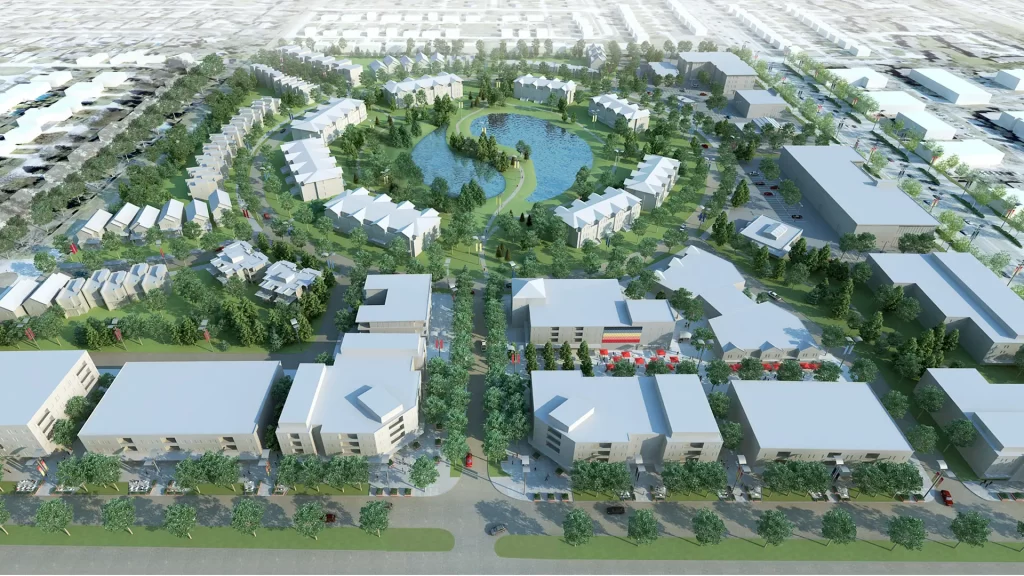
Build Canada Homes selected Naawi-Oodena as one of six locations for a fast-tracked housing project last year. In November 2025, the newly formed federal Crown corporation posted a request for qualifications to attract potential builders. It will facilitate a selection process to construct approximately 320 medium-density housing units.
The June newsletter included a design for a 1.6-acre park with a stormwater retention pond, native Manitoba plants, and public art installations that offer teachings.
Danielle Desjarlais is Cree and a member of Peguis First Nation. In her 2022 Master of Architecture design thesis through the University of Manitoba, “New Ways of Indigenous Thinking: Architecture Made From Resiliency,” she asks: “How can Indigenous Nations reclaim identity with colonial ideologies dominating today’s world?”

She explores architectural elements present in pow-wow and how they can be integrated in urban design to reconcile Indigenous lifestyles with present and future cityscapes: land back through redevelopment. There were less than 20 Indigenous architects registered to work in Canada when Desjarlais began her studies in 2016, but she is seeing increasing representation of Indigenous designers and design principles. She was a founding member of the University of Manitoba Indigenous Design and Planning Students Association and said she saw it grow from a handful of students to over a dozen in her time there.
After centuries of settlers displacing Indigenous Peoples from their traditional lands, Indigenous-led projects are necessary. Restoring equity to historically marginalized demographics doesn’t happen overnight though, and cooperation from the city and surrounding community will be paramount for reconciliation. Painting a red road on Winnipeg’s messy canvas will give the city direction.
We must consider this and other prevailing wisdom when we examine the canvas. Can we find beauty in its imperfection and imagine a future where Winnipeg is thriving?
I visited MAKE for the last time on March 25. Chon has made the difficult decision to close his shop after 13 years to slow down, take care of his aging parents, and look at the messy canvas from a new perspective. He said he will miss the community that has grown around the space and hopes another urban designer will open a new location to foster creative design.
While patrons of the café may mourn its loss, there are many thriving communities of forward thinkers in Winnipeg ready to fill the void and amplify the new voices in their midst. Since its closure, I have enjoyed spending more time in public libraries, and it’s got me wondering about opportunities to invest more into those spaces and the services they offer.