
A Culture of Leaving
Working abroad has become a billion-dollar industry in the Philippines and provides for many Filipino families, but at what cost to those who leave and those who are left behind?
Listen to this story:
Paglapag (Landing)
After a 14-hour flight from Manila, with a layover in Vancouver, I landed at the Winnipeg Richardson International Airport. I moved to Canada in June 2022 as a 22 year old. I had permanent residency under my mom’s status. She had already been in Canada for a number of years. Moving seemed like a cool opportunity, plus I would get to live with my mom, something I hadn’t done since I was 11.
As I came down the escalator, I saw my mom, my stepfather, and some extended family waiting for me. They greeted me with warmth. Throughout the trip, I hadn’t felt the difference between the Philippines and Canada, but when I stepped through the airport’s automated doors, I felt the coldest summer breeze of my life.
I’ve spent a lot of time in airports. My mom left the Philippines in 2011 to work in Qatar, before moving to Canada in 2017. Every time she visited, we had to pick her up and eventually take her back to the airport. I was 11 years old and my brother was 13 when she left for the first time. My father died before I was born, so with my mom away my brother and I lived with aunts, uncles, and people my mom hired throughout our adolescence. In 2015, my Lola (grandma), who also worked overseas, retired and came back home from Israel to take care of us.
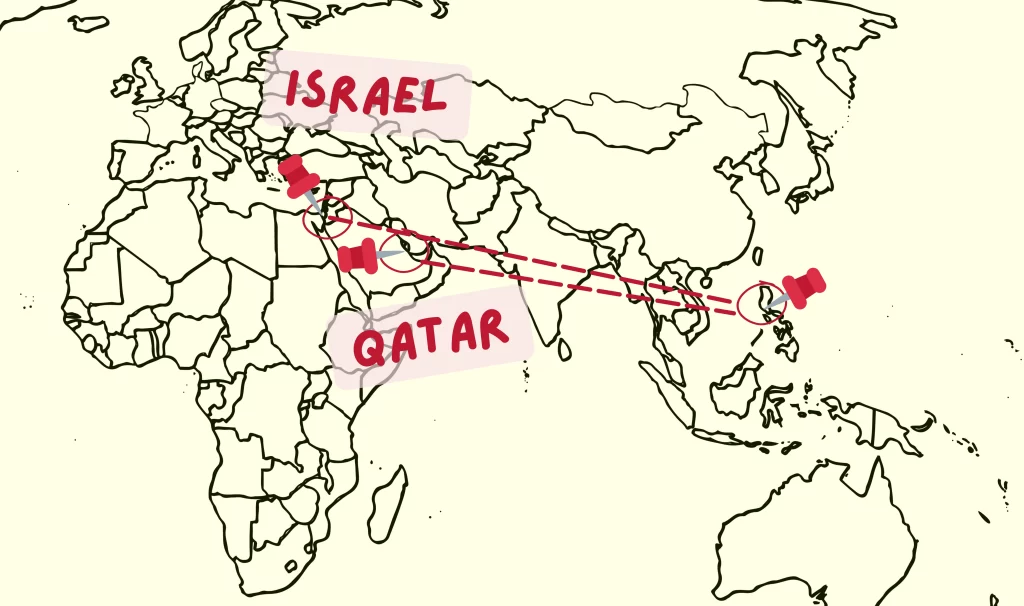
As overseas workers, my mom and Lola were part of one of the leading industries in the Philippines. Overseas workers helps boost the economy and creates a comfortable life for millions of Filipinos. Overseas work became so prevalent that on May 10, 2016, the Philippine Government approved the Republic Act 10801, which aims to protect Overseas Filipino Workers (OFW) who are temporarily working in a country where they are not citizens or permanent residents.
This protection is done through a membership system with the Overseas Workers Welfare Administration. This membership gives OFWs access to Overseas Workers Welfare Administration’s services, benefits, and programs should they need them while working abroad.
There were 2.19 million OFWs abroad in 2024, according to a report done by the Philippine Statistics Authority. About 74.5 per cent work in Asia, with a majority in the Middle East in countries like Saudi Arabia, the United Arab Emirates (UAE), and Kuwait. Four in every 10 OFWs are in jobs with simple and routine tasks like cleaning, food preparation, or manufacturing, even though many OFWs have post-secondary degrees.
OFWs sacrifice a lot, sometimes even their lives, to give their families a better life. As a result, millions of families are separated like mine was.
Paglipad (Takeoff)
Louise Alcala, a 20-year-old Business Administration student at Red River College Polytechnic in Winnipeg, grew up in a family with an OFW. She vividly remembers the time her dad left to work in Dubai. She was four years old and didn’t fully understand what was happening.

Louise, her mom, her Lola, and her dad waited in a long line of travellers at the Ninoy Aquino International Airport (NAIA). At four years old, Louise didn’t know why they were there and why her dad was carrying luggage. The longer they waited, the more annoying it got for Louise. When the time came for her dad to leave, Louise didn’t know how to react. Lola was the first to cry, then her mom, and eventually her dad. Louise looked at them, confused. At that time, it didn’t click why their ride back home from the airport was so bleak, but looking back, she realizes she was missing her dad’s jokes and stories.

Her dad worked in Dubai for two years. Even when her mom, Lola, and Lolo (grandpa) were there to care for her, she still felt her dad’s absence, even though she understood why he left.
“If you don’t have a choice, and the opportunity presents itself, you grab it. Even if it means you won’t be with someone you love for a long time. You accept that you have to do this for your family,” said Louise.
While she missed her dad, she now appreciates that her parents could afford to send her to a private school, and at the time, she was happy her parents could buy her the toys she had wanted.
Children with OFW parents face reality at a young age. If you ask how they feel about their situation, they usually say, okay lang, kailangan eh (it’s okay, they had to). It’s frustrating as an interviewer; I can’t blame them though. I’d probably have the same answer if you asked me. Children of OFWs often have complex feelings about their parent working overseas. For Louise, an only child, guilt is part of the mix.
“I regret that I had so many wants as a kid,” said Louise. “I feel like I pressured them to provide more than what I needed.”
She says she wants to pay them back someday. This feeling reminds me of utang na loob, a common Fillipino value and phrase roughly translated as “debt of gratitude,” according to researchers Casiño, Serrano, and Granada.
Many Filipino values are rooted in the pre-colonial Indigenous philosophical concept of Kapwa, a shared identity with the self and others. Digging deeper, this value is more than a “debt of gratitude.”
Utang means debt, and loob can mean both literally inside and the inner self. Utang na loob is more than a debt of gratitude; it’s a debt of the inner self. Adding the concept of Kapwa, this debt becomes more than accountability; it’s a moral obligation, tied to who we are inside, to act with gratitude as kapwa tao — fellow humans. Although ideal in concept, utang na loob can get toxic. A person might provide help but expect help in return. This entitlement could lead to societal pressure or a sense of forced obligation for the recipient of kindness. Sometimes it’s self-inflicted. In Louise’s case, this internal guilt because of utang na loob influenced her decision to study abroad.
After high school, Louise decided to continue her education abroad. Her Tita (aunt) in Winnipeg said that education here is relatively better compared to the Philippines, and she was willing to support her while she studies. Studying abroad was also a chance to reinvent herself in a new country. Louise grabbed the opportunity.

“Right now, I’m the one in Canada, far away from them. I now have a better understanding of how my dad felt when he wasn’t in our lives, and we weren’t in his,” said Louise.
Louise studying abroad is different from her dad working in Dubai. Her move was not out of necessity, much of her extended family lives in Winnipeg, and she is likely to receive better treatment in Canada than OFWs do in Kuwait, where another OFW died in 2025.
Eventually, Louise would like to reunite her family by bringing her parents to Canada, something she feels is her obligation because of utang na loob.
“It’s my time to provide for them,” said Louise, “If I will not, then who will?”
Louise feels right at home in Canada. Even when she arrived in Winnipeg, her Lola and Lolo, who took care of her when her dad left, were here for a 12-month visit.
Himpapawid (Sky)
In Filipino culture, grandparents’ roles are somewhat different from a typical western family. If Filipinos need advice or wisdom from their Lolo and Lola, they simply go out of their rooms and go downstairs. You would usually find Lola sitting on the couch watching Teleserye — a combination of the words telebisyon (television) and serye (series) — while Lolo critiques the writing and hides his kilig (a warm, joyful feeling you get from someone’s sweet gesture, romantic or otherwise) during the romantic scenes.
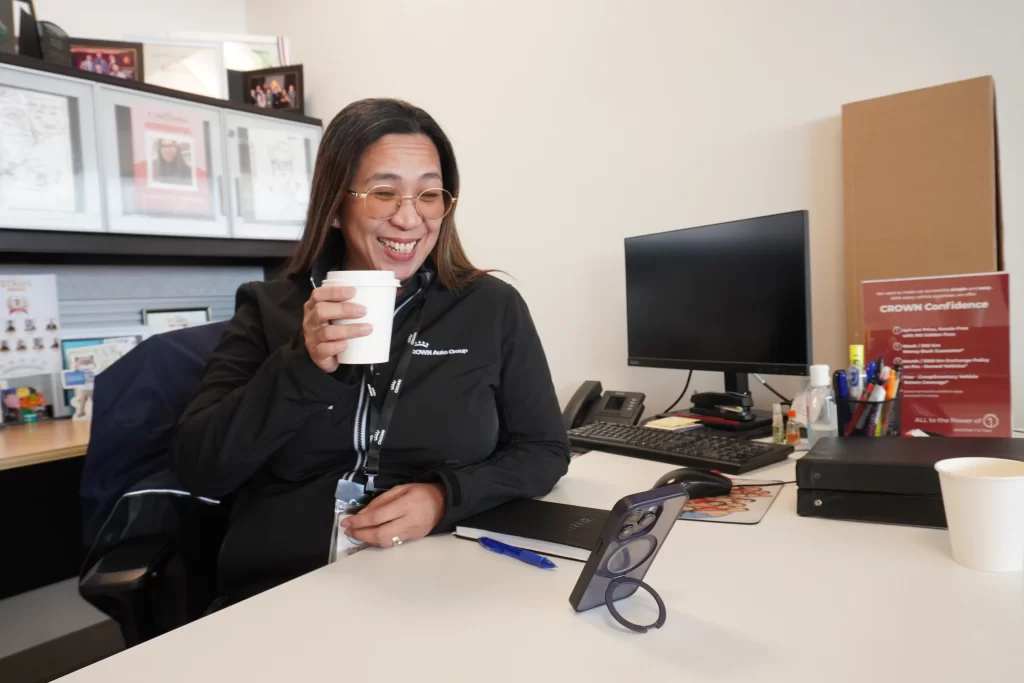
Carolyn Enano, a 46-year-old product adviser at Crown Honda (McPhillips), who sold me my first car, no longer has easy access to her mother and she wishes her kids could walk into the living room and see her mom on the couch. Carolyn moved to Winnipeg in 2014 to follow her husband and start a family. Their kids are now 11 and 13, and Carolyn says being a parent in a foreign country is tough. She had to overcome culture shock and freezing winter seasons, among many things. She wished she had the type of help that only her mom could provide.

“Being far away from my mom is hard. Because when I need help with my boys, it’s almost impossible to get it, but luckily, my in-laws are here,” Carolyn said. “Without them, I wouldn’t be able to work full-time. It’s a big help for us, but it’s still different if it’s my mom.”
Even with her mom across the world, she calls her as much as she can — during her ride to work or on her breaks.
She even calls her mom in the mornings so they can drink coffee together. Because of the 13-hour time difference between Winnipeg and the Philippines, it is evening for her mom.
“Even if it’s morning here and evening there, and vice versa, if I invited her, my mom would say, ‘I’ll drink coffee with you,’” said Carolyn. “It’s one way for us to communicate, so we never pass it up.”
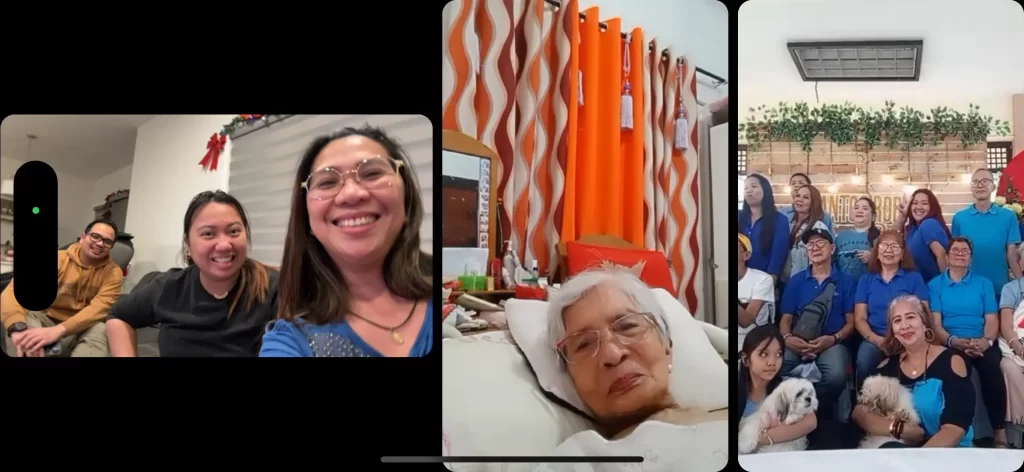
Every year, Carolyn and her partner make it a point to visit their families in the Philippines. It started in 2018, and she’s happy that her kids usually get to see their Lola at least once a year, especially now that she’s 84.
But in 2024, her kids competed in an Arnis tournament, a Filipino martial art, in Portugal and represented Canada. They couldn’t afford to go to Portugal and the Philippines in one year, but her kids still wanted to compete. First, the kids asked their dad, who redirected the request to their mom. Carolyn wanted to say yes right away, but visiting Lola is a commitment to their family’s tradition.
“Of course, every Lola wants to support their Apo (grandchildren). We knew she’d say yes, but the kids still had to ask anyway,” said Carolyn.

They resumed their annual trip to the Phillipines in 2025, but after they went back to Winnipeg, her mom got sick. Carolyn theorized that it was likely due to separation anxiety. It’s Lola missing her Apo’s hugs, kisses, and mano po, a gesture of respect done by placing your elder’s hand on your forehead. (Mano, a Spanish loan word meaning hand, and po, a word used to show respect for elders and authority).
Luckily, it was not anything major, and Carolyn’s siblings, who live in the Philippines, were there to take care of her.
“We’re so lucky because I have three sisters back home who take care of her,” said Carolyn. “And I don’t have to send money back home, but as her kid, it feels good whenever I get to help.”
Remittances are one of the ways OFWs help their families and the Philippine economy. Sending money back home means covering basic needs and accessing better education and health care, according to OTT Remit. Although Carolyn doesn’t need to send money back home — and her mom always refuses the offer — she has made it a commitment to frequently do so.
“My New Year’s resolution for many years is that I hope I can send her money every month,” said Carolyn. “I want the hard work that I do here to get to her too.”
Back in September 2025, cash remittances from OFWs totalled CAD 4.20 billion. A lot of families, including mine, benefited from this system.
Pagbaba (Descent)
My 50-year-old mom, Mailah, also grew up with her mother living abroad.
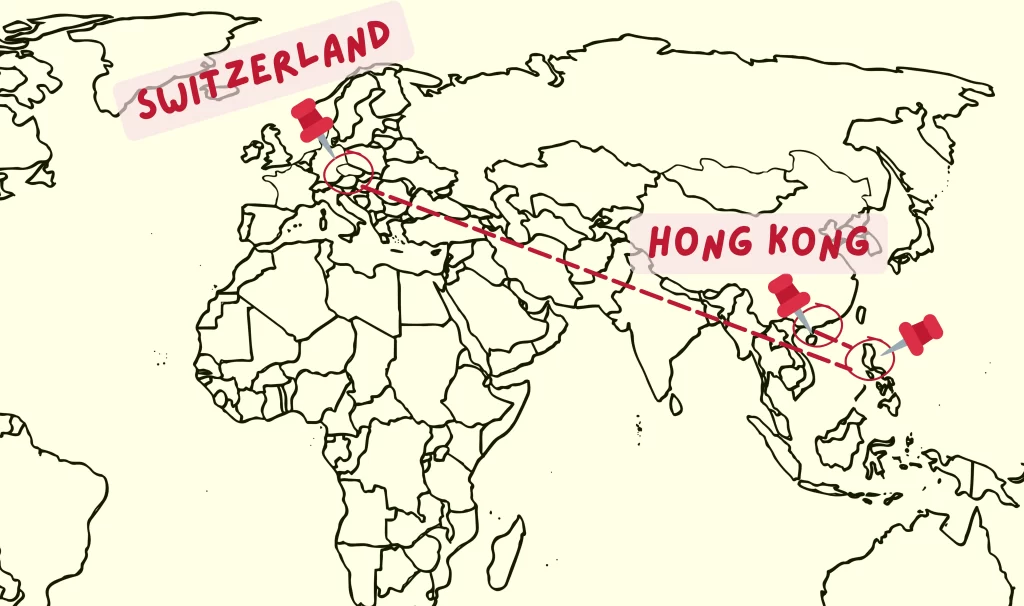
Back in the 80s, my Lola separated from Lolo and had to work in Hong Kong to support her six children. My Lola doesn’t like talking about Lolo. So, long story short, my Lelang (great grandma) was my mom’s and her siblings’ primary caretaker. She understood what it meant to have parents living abroad.
So, leaving my brother and me, 11 years after my dad died, was hard for her. When her sister invited her to work at Qatar University, she consulted my brother and I first. Apparently, we said yes, which was news to me because I don’t recall the conversation.
“You guys were like, ‘it’s okay, mom, you can go if you have to,” said my mom.
I doubt I was that level-headed as a child, but I do believe her.
Back in 2001, my Lola, who had returned from Switzerland, was planning to stay in the Philippines for good, but a year after my dad died, she offered to help my mom out financially by working in Israel. My mom took her up on the offer.
I remember one story my Lola told me about her time in Israel, where she narrowly avoided death when a coffee shop in Israel was bombed. It blew up minutes after she walked out and got into a bus. I will never forget the sacrifices she made for my family — I won’t forget my mom’s sacrifice, either.
Before leaving for Qatar, Mom asked Lola for advice.
“Your Lola said, ‘You should go. Your kids are grown up now, they can handle themselves,” said M om. “It felt like everyone’s telling me to leave, so I asked God what to do.”
Several of my mom’s siblings lives abroad. Mom was the last person who wanted to leave the Philippines, let alone move abroad. Before deciding, she sorted through her old things and found a piece of paper with her favourite Bible verse she had written as a teenager.
Jeremiah 29:11: “For I know the plans I have for you,” declares the Lord, “plans to prosper you and not to harm you, plans to give you hope and a future.”
She took this as a sign and made her decision to leave.
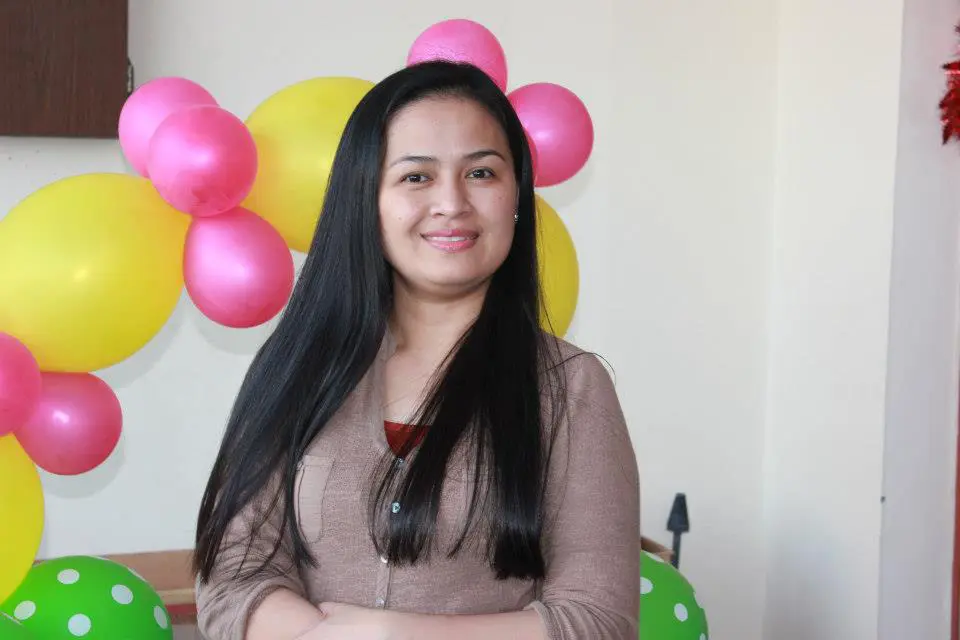
I now get why my mom had to leave. It was hard for her to provide for us, especially as a single mom in the Philippines.
After she left, there were times when I wouldn’t talk to her while on Skype or on phone calls. She hated it, and I tell myself it was just teenage angst. Looking back I realize it might be more complicated than that. I’m still sorting out my feelings. Should I just say “okay lang, kailangan eh” (it’s okay, they had to), because that’s my mom’s line too? But then I remember that every time she told me stories of her past, it didn’t seem like being separated from her mom during her childhood was okay lang. From what she’s told me, it couldn’t just be okay lang, right?
Asking my mom about her side of the experience was awkward, at least at first. I can’t put on any façade with her; she’ll immediately break it apart. But, we sat down to talk, facing each other, crossed-legged, on my bed. Eventually, she moved into a more comfortable position — I did the same. She uncrossed her legs and arms and proceeded to tell me more of our family’s canon events. Some of her answers I already knew, but the majority felt like hidden pieces of family lore that I wasn’t privy to as a kid.
“I didn’t like it when you guys wouldn’t tell me what was happening in your lives during our calls,” said Mom, “because that’s the only time we can talk with each other.”
My mom grew up in the city of Manila. When my Lola Left Lolo, she moved her kids back to Liliw, Laguna, and went to work in Hong Kong. They didn’t have a telephone line in Liliw. So, Mom and her siblings stayed in touch with Lola through snail mail.
My mom and her siblings used to wait for my Lola’s balikbayan boxes, care packages sent by Filipinos from abroad (a combination of the words balik, to return, and bayan, country). It never crossed my mind that my mom and I had had the same experiences. Many kids, including my mom and me, waited for these boxes. These boxes meant love. These boxes meant I didn’t forget about you. They meant new shoes, clothes, and foreign chocolates; they are a glimpse into a family member’s new world. They weren’t just stuff. Balikbayan boxes were my mom sharing her new reality with my brother and me.
My mom also told me about growing up in the city and how hard it was to adjust to rural life after her mom went to Hong Kong. She was not used to buhay probinsya (buhay, life/living, and probinsya, province, which means rural in Taglish).
She wasn’t used to the slowness of the province. It was hard for her to keep in touch with my Lola. Whenever she sent her a letter, it would be weeks or months before she’d get a response. I grew up in the town of Santa Cruz, in the same province that my mom did. But the difference is that when my mom was away, we had the internet. It was easier for us to stay connected.
Mom was a teenager when they finally got a telephone line in Liliw. Lola spent a significant portion of her salary on international calls. When Lola’s kids argued and fought, they would call her. Lola would ask her eldest daughter to gather her siblings in a circle. Tita would put the phone in the middle and tell them to pray.
“After a couple of minutes, your Tita would pick up the phone and talk with her. Of course, it’s a telephone; there was no loudspeaker,” said Mom. “Your Tita would one by one pass the phone to each of us, to tell our side of the story.”
Having your parents thousands of kilometres away was a wildly different experience in the 80s than in the 2000s. Compare that to SMS messages, social media, and video calls. But no matter the era or generation, it’s still the same: families are separated.
To mitigate the loneliness she felt being away from us, my mom came home every Christmas after she left. She would bring pasalubong (souvenir) when she visited. She would have at least one gift for everyone in the family. Sharing is a big part of Filipino culture. But eventually, the gifts become fewer and fewer as we got older.
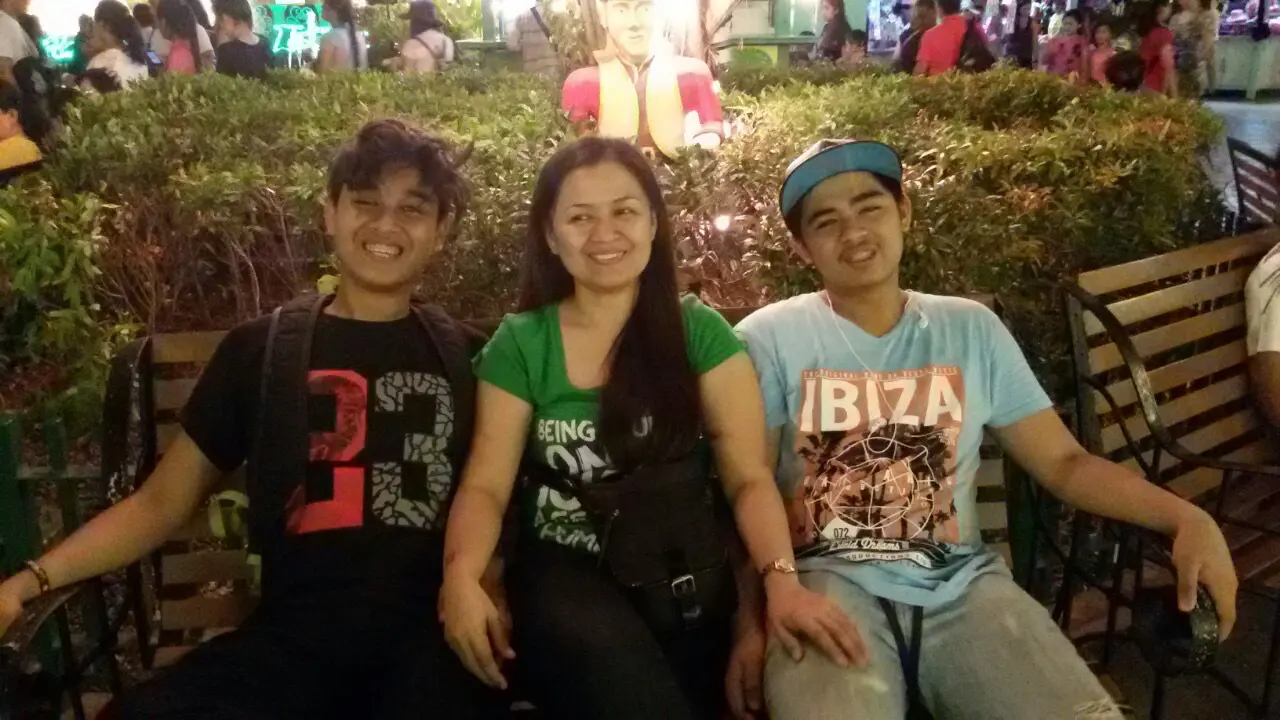
When I was 17 years old, my mom moved to Winnipeg in to join her husband. When I joined her in 2022, it was at the tail end of the pandemic and I had a tough transition. I had to understand a foreign culture, navigate my way in a new city, and brave the harsh winters. Now that I have experienced living in a new country, I understand her point of view more deeply than I did when I was a teenager.
Paglabas (Deboarding)
Moving to a different country changed my perspective on life. It made me more connected to my culture and my people. I used to think being Filipino was simply being Filipino. I never questioned it, and I never had to. Ironically, I feel more Filipino here in Canada than I ever did in the Philippines. I know I’m not alone. There are millions of us experiencing the same pain and the same joy; we are all kapwa Filipinos.
Now I’m walking the same path my family walked, although in a different context. Unlike my mom and Lola, I don’t have kids to provide for. Like Louise, I chose to leave for myself. Like Carolyn, I send money to my Lola whenever I can. It’s complicated to navigate life in a new country, but whenever I need advice — on my career, travelling, or what to wear for a formal event — I can simply knock on my mom’s door.


