
The Sound of Social Change
Where do you see social change happen? For a group of educators and university students, it’s in an unlikely space: an elementary school music room.
Listen to this story:
The Warm-Up
In the El Sistema room at Elwick Community School in Winnipeg, the rumblings of another band rehearsal have just begun. The chatter from weary students after a long day of school echoes through the music room as students make their way to their assigned seats. The music sheets in their hands have pencil markings all over. They adjust their music stands and set up their instruments. Kari Chastko stands at the front of the room, writing the day’s lesson on the whiteboard.
While this may look like a typical rehearsal room, Chastko knows the purpose behind this space is much broader than music theory. The goal of this space is to foster belonging. It’s about personal growth as much as it’s about musical development.
El Sistema, meaning “the system,“ is an after-school music program run by the Winnipeg Symphony Orchestra (WSO). The model is based off a music initiative founded in Venezuela in 1975 by educator and musician José Antonio Abreu. This initiative is rooted in the belief that ensemble playing could promote teamwork, discipline, and social development among disadvantaged youth. Inspired by this model, the WSO helped bring El Sistema’s philosophy to Winnipeg in 2011, adopting its intensive and inclusive approach to support children in at-risk communities through music education. Currently, there are around 250 El Sistema programs globally, with 17 programs available in Canada.
With nearly one in five children in Winnipeg living in poverty, according to a recent report by the Winnipeg Police Board, Sistema Winnipeg (also referred to as “Sistema”) provides music education in some of Winnipeg’s poorest neighbourhoods, creating an emotional outlet for many kids. The WSO partners with both the Seven Oaks School Division and the Winnipeg School Division to incorporate this program into the school curriculum.
Students attend the program for three hours a day, five days a week throughout the school year, where they receive an instrument, a healthy snack, and a safe, supportive space to learn and grow. The program includes general music classes, sectionals, orchestra, and choir. Children can learn instruments such as violin, cello, flute, clarinet, and brass. Students regularly perform in their schools and community, and sometimes alongside established artists, including the WSO.
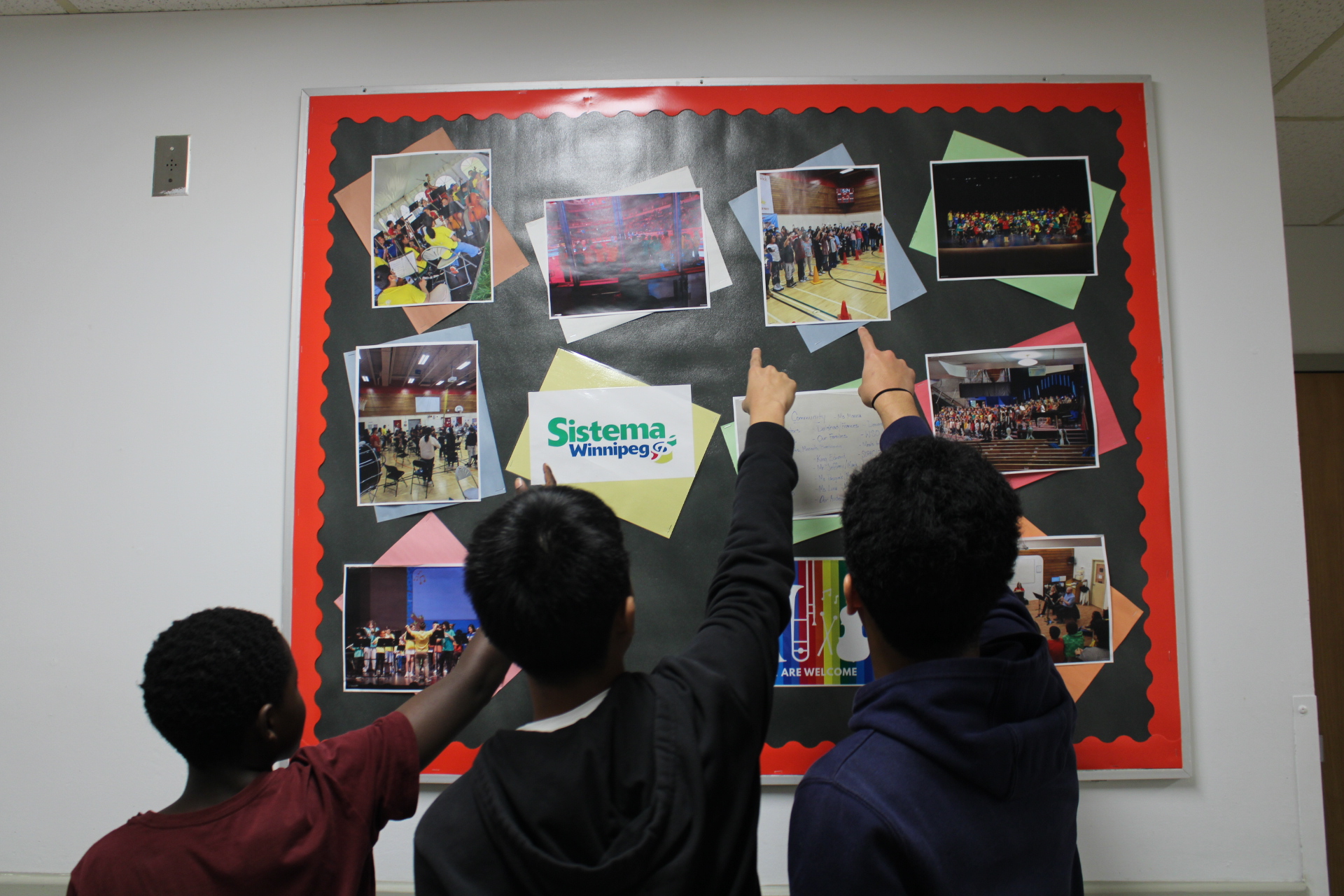
Sistema currently has up to 150 children involved in the program between Grades 1 to 12 at two main schools: Elwick Community School and King Edward Community School, with online classes taught weekly at Isaac Newton School and St. John’s High School.
Sistema programs create social change in school systems that are often overlooked, under-funded, and underrepresented. They create spaces for communities to gather and for families to build stronger relationships. Students are encouraged to be good role models and are taught to strive for greater opportunities.
Sistema is a system made up of change makers. Their success isn’t solely measured on mastering musical scales, but on combatting social ones too.
Kari Chastko is a lead music educator for Sistema. Now in her sixth year with the program, Chastko notes the discipline students must have to participate in the program. For newer students, adjusting to longer school days is often a challenge.
“It’s essentially a nine-hour school day for them. They’re coming to us already nearing their limit,” said Chastko.
Chastko explains Sistema isn’t solely dedicated to music rehearsals. To ensure students remain energized and engaged for the three-hour lessons, the program includes snack time, intramural activities in the gym, and time spent outdoors.
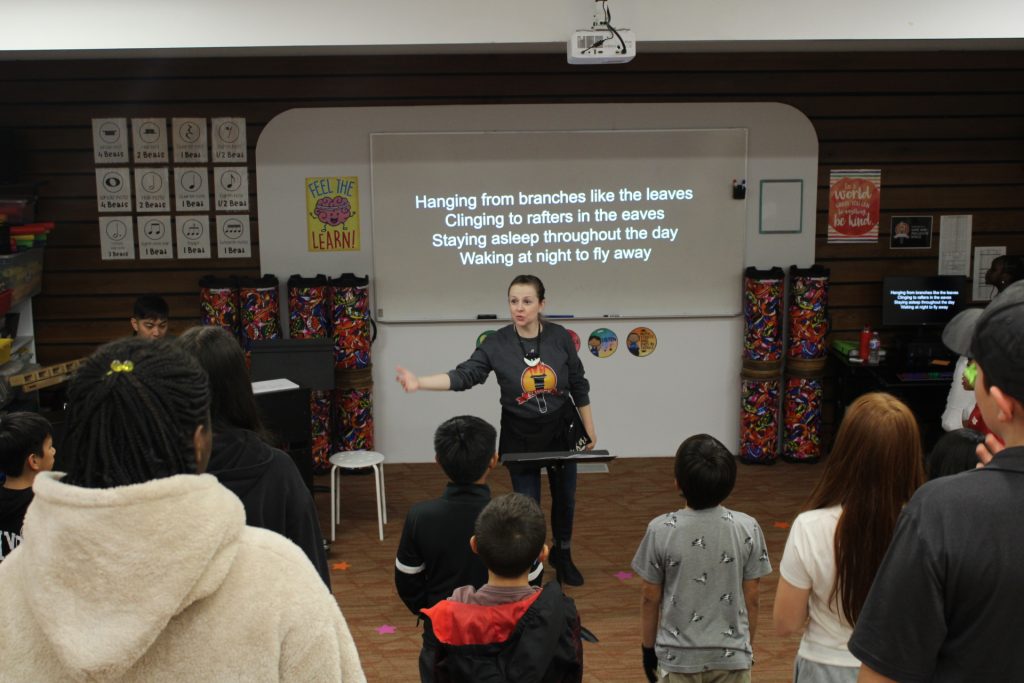
“We plan and choreograph intentionally to make sure the kids aren’t stressed out and have a good experience,” Chastko said. “We keep try to keep it upbeat, light, and accessible to them in the mental state they’re in when they come to us. But [we] also still push them to get their music education.”
Chastko said the program allows a safe and encouraging space for students to learn skills that help them adjust to long days and stay focused in their classes.
“You just see them find a sense of belonging. They’re excited to perform and share their music with the community,” said Chastko.
Jonathan Si, now a band and math teacher, did not participate in Sistema as a kid, but he did work as a high school mentor for Sistema. Mentors help teachers like Chastko regulate classroom behaviour. Sistema employs high school students to act as mentors for the students. These mentors — often musicians themselves — are role models who assist the music teachers by handing out snacks, ensuring students remain in their assigned classrooms, and teaching students music theory. Si says his mentoring experience reaffirmed that he wanted to be a teacher.
Si’s love for music started long before he entered a classroom. At five years old, while he waited for his older sister to finish her piano lessons, he heard the music flow into the lobby. It was that moment that inspired him to later learn how to play various instruments, such as the guitar, piano, violin, and eventually the French horn.
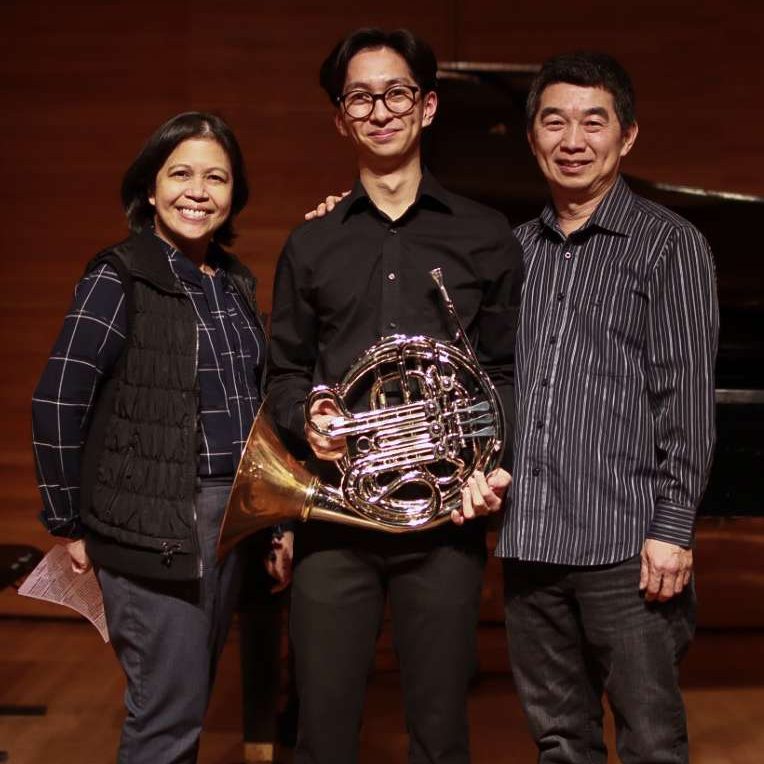
The school division Si attended in elementary and high school covered the cost for instrument rentals, band equipment, and performance fees. Si thought every band program in the province worked this way until his first year studying music at Brandon University. Si recalls asking his classmates if they owned their instruments. He was surprised to find out many didn’t.
This realization was reinforced further when he was student teaching across the province. He learned some school divisions require students to pay a rental fee for their instruments, and, even with subsidized options, some students are still required to pay for the entry fees to perform at music festivals.
“I think that was the turning point for me. I started to realize that even though music itself is free, to be able to do it in school isn’t always 100% free,” Si said.
Now working as a teacher in Dauphin, Manitoba, Si understands how the quality of instruments can hold students back. He sees many students attending under-funded band programs using older instruments passed down from their grandparents. And in low socio-economic areas where band programs are either dying or very small, parents become a key source of funding.
“It’s expensive to be in band. And there’s a culture here [in Dauphin] that once you hit Grade 11, you’re expected to work,” said Si. “It’s like a deterrent. It scares some students off, [even] some parents. They can’t afford to be in band.”
But Si also knows how beneficial music education can be.
“I think it all starts with the teacher. You’re not just teaching how to play music, but also how to be considerate and how to work with others. [When] you think of harmonizing with people, you have to be able to balance those two notes,” said Si.
The Run-Through
The Grades 7 and 8 Sistema students sit in their rehearsal room, staring only at their music sheets. Their instruments are raised high with pride. They sit tall and begin to perform “Jupiter, the Bringer of Jollity” by Gustav Holst.
They rehearse the same bar once, twice, twenty times if necessary. They play. They mess up. They keep going until their harmonies blend, and the notes no longer clash. They go back to the beginning. Back to the middle. Back to the bar before. Back to the beginning again. It’s a relentless process, but they persevere. They share an unspoken understanding: we will play this piece right. We can do it.
When they finally complete a run-through without stopping, there’s an overwhelming feeling of relief, pride, and confidence. The music absorbs them, silencing the noise of their worries.
In this rehearsal room, they feel strong. This room doesn’t confine them. Instead, it gives them the freedom to fully express themselves with all their might.
Keisha Giesbrecht joined the program as a participant when she was in Grade 1 and continued until Grade 8. After she graduated from the program, she worked as a high school mentor. She felt it was natural to come back to the program that raised her. Today, she still works for the program as a site administrator. The things she experienced while in this role, along with being a high school mentor, led her to study criminology at the University of Winnipeg, with hopes of advancing into Family Law.
“I used to hate performing. I would cry before every concert. I would beg the teachers [saying things] like I don’t want to go on, I don’t [want to perform]. But now, I love it more than anything. Going on stage and performing for people — I have such a deep connection to it,” said Giesbrecht.
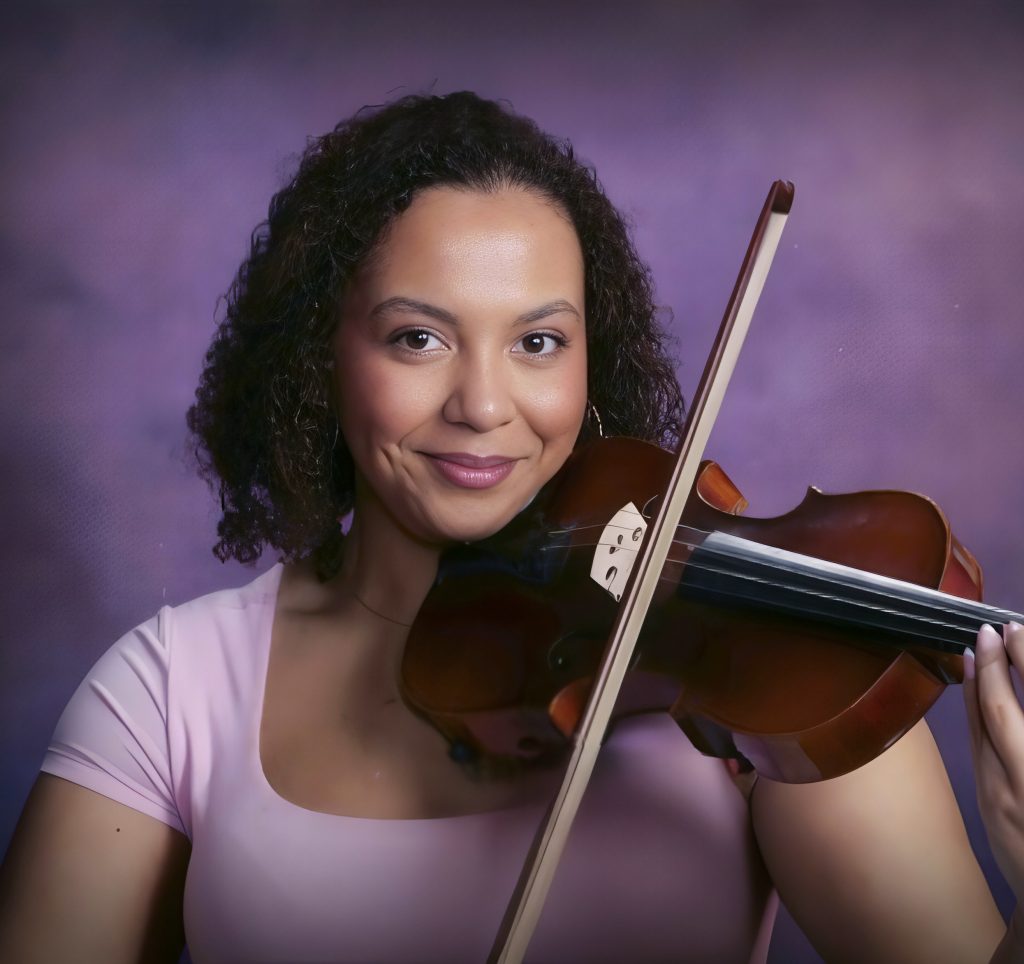
Even in her final year during the COVID-19 pandemic, the program continued online and helped her stay connected with her peers. Despite the uncertainties, Sistema remained a constant in her life and became a second home to her.
Giesbrecht said many of the most meaningful parts of her mentorship happened outside of rehearsals and concerts. Giesbrecht recalls a moment when she was supervising the students during recess. A student approached her, teary-eyed and distraught, and told her about the difficulties she faced at home. While many kids her age were excited to finally go home after Sistema, she was not. For her, home was not a safe place.
The job description for a high school mentor doesn’t include having to emotionally connect with the students, but Giesbrecht couldn’t leave the hardships the students shared with her behind.
This wasn’t the only instance when Giesbrecht noticed the challenging environments many students were surrounded by. She remembers supervising students outside one day when a violent situation happened on the sidewalk nearby.
“I remember bringing the students inside so they wouldn’t see what was happening,” Giesbrecht said. “I knew from there I would do anything for these kids.”
A study published by Early Childhood Research Quarterly called “The Sound of Self-Regulation” examined emotional regulation in children (ages three to five) experiencing economic hardship. The study highlights the benefits of early childhood participation in music programs. Compared to peers in typical preschool settings, children who were exposed to music in their programs demonstrated greater growth in inhibitory control — the ability to “think before acting” — a key skill for managing attention, emotions, and behaviour.
The findings suggest that music experiences can promote developmental gains beyond standard preschool instruction, indicating that access to music programming may be especially beneficial for children from low-income backgrounds, whose self-regulatory development can be affected by chronic stress. Overall, the study highlights the potential of early music interventions to support healthy development among children facing socio-economic risk.
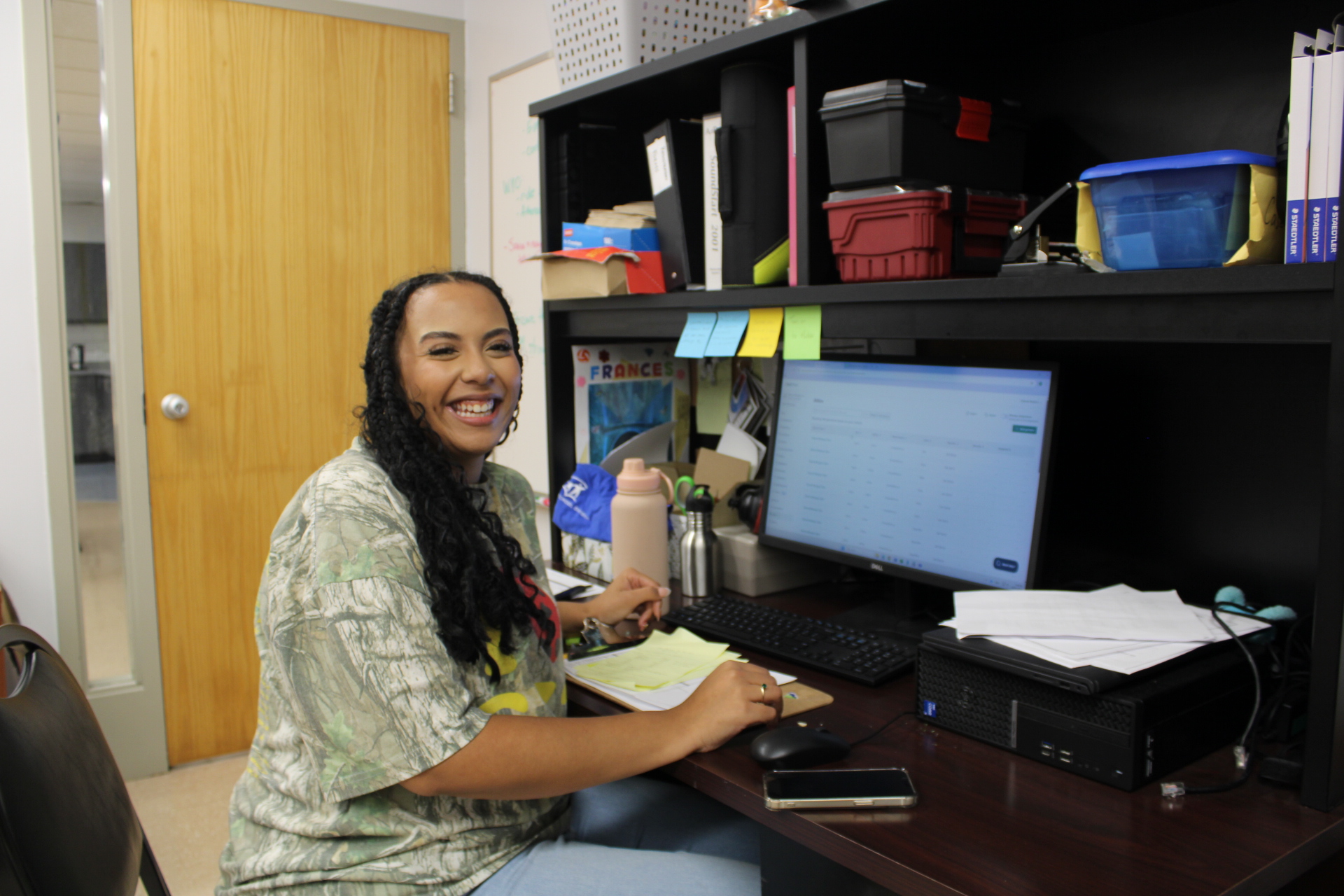
Giesbrecht is responsible for the daily, on-site operations of the program. She manages the non-musical logistics, allowing the teachers to focus on music education. She is the primary contact for families and ensures a safe, inclusive environment for students. Her experience as a mentor with the previous site administrator is what led her to accept the role.
“I thought ‘why not?’ It’s something that not only fills me with joy, but I can also fill other people with joy and make everyone’s life a lot easier. I know the ins and outs of everything already,” Giesbrecht said. “I’ve always thought it was such an interesting job. Betty [the previous site administrator] did a lot for me when I was a Sistema student.”
Giesbrecht credits her Sistema involvement as a motivator to also be a strong role model for the students.
“Whether I’ve had the hardest day or the easiest day, I’ll always leave work smiling,” said Giesbrecht.
Sound Check
It’s the dress rehearsal before the big concert. Rows of chairs and music stands are set up in a U-formation in the gymnasium. The students are filled with excitement as they sporadically step onto the stage with their instruments.
Chastko stands at the podium and waits for the students to reach their designated spots. The students, sitting tall, position their instruments in a ready position. The band begins to play “Jupiter, the Bringer of Jollity.” After not too long, the loud screech of an out-of-tune instrument brings the piece to a halt. Chastko motions for the students to settle their instrument into a rest position. The students look around and some look down, nervous that it was them who didn’t tune their instrument properly.
They begin to play again, but a stand topples over mid-way through the piece. They restart and they’re only a few bars away from finishing their run-through, when someone misses their cue and throws the band off. They’re not used to the foreign room and crowded stage. Suddenly, their confidence evaporates.
Chastko tells the students to stand up and put their instruments on their seats. They’re then instructed to take a deep breath, step off the stage, and re-enter, this time with the mindset that they’re symphony musicians performing at the Centennial Concert Hall. They do what they’re told. Then, they run the piece again. This time, without stopping.
Agamapar Singh Kahlon (Agam for short) immigrated to Canada ten years ago.
Moving to a new school is nerve-wracking enough, but add on an unfamiliar country and culture, and being the new kid can feel terrifying. Kahlon remembers arriving at Elwick Community School and realizing he wasn’t the only one facing these challenges.
“Elwick had people from all sorts of countries, cultures, and religions. I didn’t feel alone because there were other kids who also came from different backgrounds,” said Kahlon.
Half of Kahlon’s class was in Sistema, so he joined his peers. He didn’t have any prior music knowledge, but he was determined to learn. After only two months of learning music theory and how to hold a trombone, he caught up to the same musical literacy level as his peers. This newfound talent wasn’t a matter of luck, but hours of dedication and guidance from teachers who saw his potential.
Music became a routine and provided a sense of familiarity for Kahlon. He recalls how the intensity of the program placed him outside of his comfort zone.
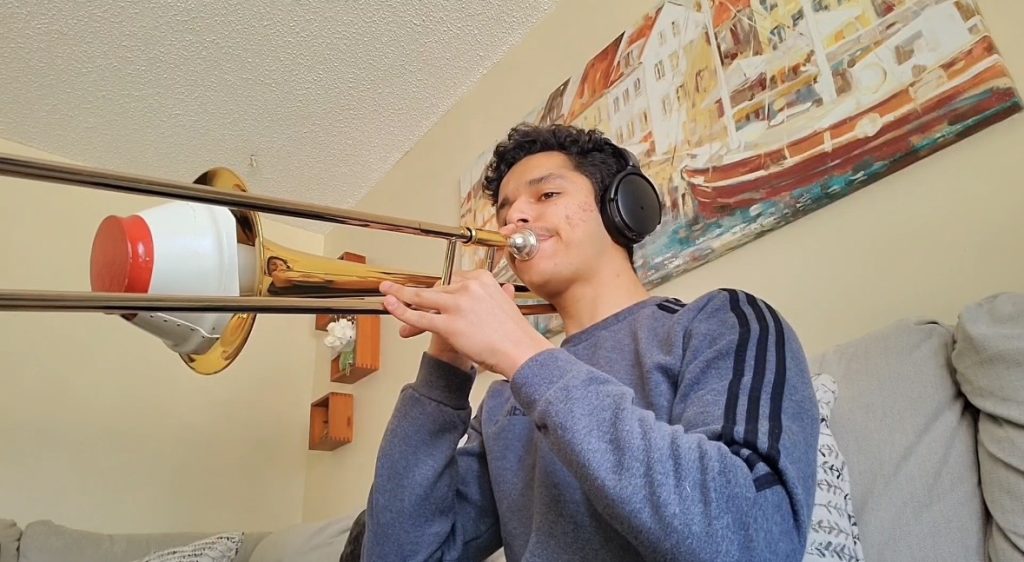
“You can hide your homework, but you can’t hide your music skills. Because you have to perform and showcase [your skills]. That’s what you’re there for,” Kahlon said.
While Kahlon adjusted to his new environment with the support from his peers at school, his parents were also adjusting to Canadian culture in their own ways, including participating in family nights at Sistema. Family nights are formal pre-concert rehearsals where students perform their pieces on stage for the first time in front of their families. Parents are invited to watch in the school gymnasium and are encouraged to bring homemade dishes to share.
In her longitudinal study of the program, Dr. Francine Morin explains the social benefits of program gatherings. Concerts and special events create ongoing opportunities for families to build friendships and connect with each other in the program. These shared experiences encourage interaction and help create a supportive network. Family attendance at performances also fosters a greater sense of inclusion within the school community, and some become more involved by volunteering.
Morin’s research explains how Sistema positively impacts not only students but also their families and the wider community. Relationships at home are strengthened, with music serving as a shared activity that helps reduce stress and bring family members closer together.
Even though it’s been years since Kahlon has picked up his instrument, he still carries the lessons he learned from Sistema with him today.
“If I can teach music after only two years, I can teach about something that I’ve learned in university for four years,” said Kahlon. “I feel that the confidence that I got from the [Sistema] program is showing up now.”
Kahlon is now studying at the University of Manitoba and hopes to become a teacher.
Most graduates from Sistema pursue careers unrelated to music. But many still stay connected to the program through close bonds with their classmates and teachers.
“We don’t approach Sistema with the idea that we are gonna make professional musicians out of all 70 kids in our program. That’s not our goal,” said Chastko.
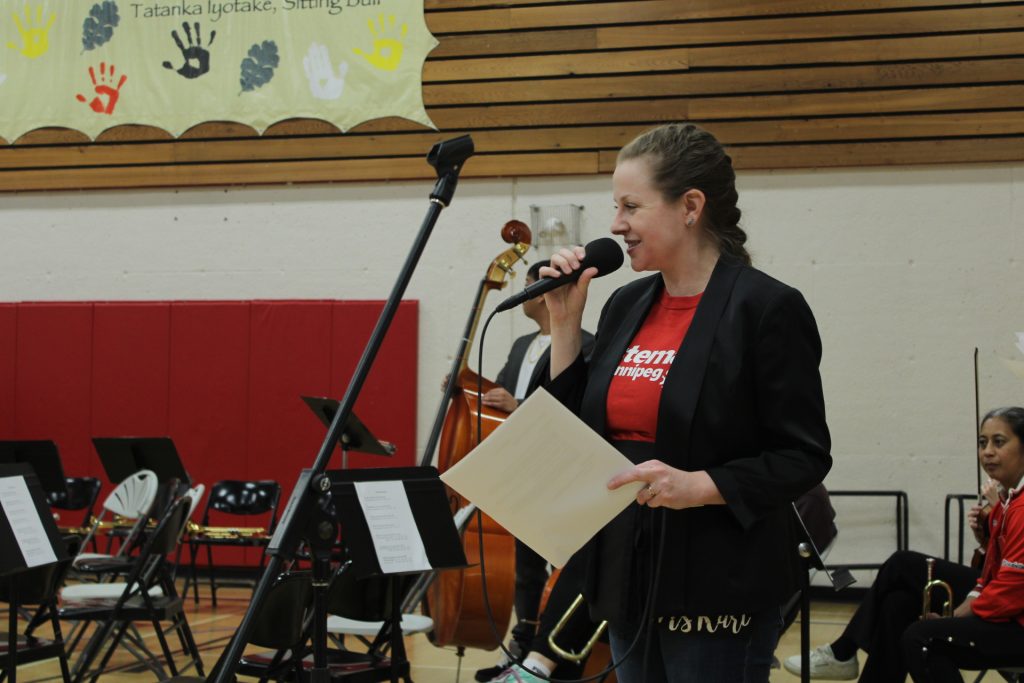
Beyond music literacy, programs such as Sistema leave an emotional impact that stay with previous mentors and alumni long after they leave the program.
“[When helping students] you see them in that chair, but you also see yourself in that chair,” said Kahlon. “You see their musical future, and you see your past. It’s a profound feeling. If you asked me [now] to play in my free time, I would go back to [my time in Sistema] again.”
“Once you enter the band room, the atmosphere changes. It’s lively and there’s a lot of commotion going on, yet you still feel safe, and you still feel at place. You’re okay to express yourself and you won’t be judged for making mistakes,” said Si.
Chastko said the program aims to create meaningful music and strengthen community connections.
“You make more beautiful music with people that you enjoy spending time with rather than people that you only ever rehearse with,” Chastko said. “I think we live in such a fractured society that sometimes we lose faith in people’s ability to work together and accomplish collective goals.”
Because the program is not auditioned and accepts students at all levels of music understanding, older students like Kahlon can join their peers later and still thrive. But not all Sistema students participate in the program for all of elementary or throughout high school. For some, it’s only a matter of months.
“You know, they might be in and out of the city or experiencing housing instability. I’ve had students who have only attended Elwick for three months and come to Sistema for those three months,” said Chastko.
Many Sistema alumni stay connected after graduating the program. Giesbrecht says that although she graduated five years ago, she and 20 of her previous classmates still meet for Wing Night.
“It just warms my heart that, even when they had such a short experience in Sistema, they still feel connected to the people that they worked with,” said Chastko. “To me, that always said that we’re doing something right because those people have such fond memories and feel such a sense of connection.”
The Spotlight
It’s concert day. The students are on the big stage, ready to perform. They’re a bundle of nerves. Their hands are clammy and their hearts race.
Chastko reaches the podium and as she raises her arms, the students raise their instruments in unison. This is it. The performance they’ve spent months perfecting. Chastko cues the band to play. First the woodwinds join, then the brass section shortly after. The percussive beat builds and the music swells.
It doesn’t matter that you can hardly see the students on stage, as their music stands cover their faces. The sounds of their instruments convey all their emotions, the notes speaking the words they’ve kept to themselves. Their bodies sway to the rhythm, their breaths are synchronised to every beat. They move as one.
As the piece comes to an end, the audience applauds and cheers. The stage lights are so hot but somehow, the students feel the hairs on their arms raise, a buzzing sensation down their spines. In this sliver of time, there is nothing but pure bliss. This moment is theirs. This is the moment they’ll remember for a lifetime.
El Sistema programs empower the next generation to make a positive impact within their communities. Access to free music programs allows youth to focus on their studies, safely express themselves, and discover their identity. Sistema Winnipeg shows establishing social change is possible in any room. All it takes is an instrument to start.


