Building Bridges, Breaking Barriers
Morley Daniels is no stranger to career changes.
He’s worked manual labour jobs outside, installed satellites in Alberta, and until a few years ago, led a gang in Winnipeg’s North End. Now, he builds bridges for Pier Solutions as Step Up construction’s lead hand.
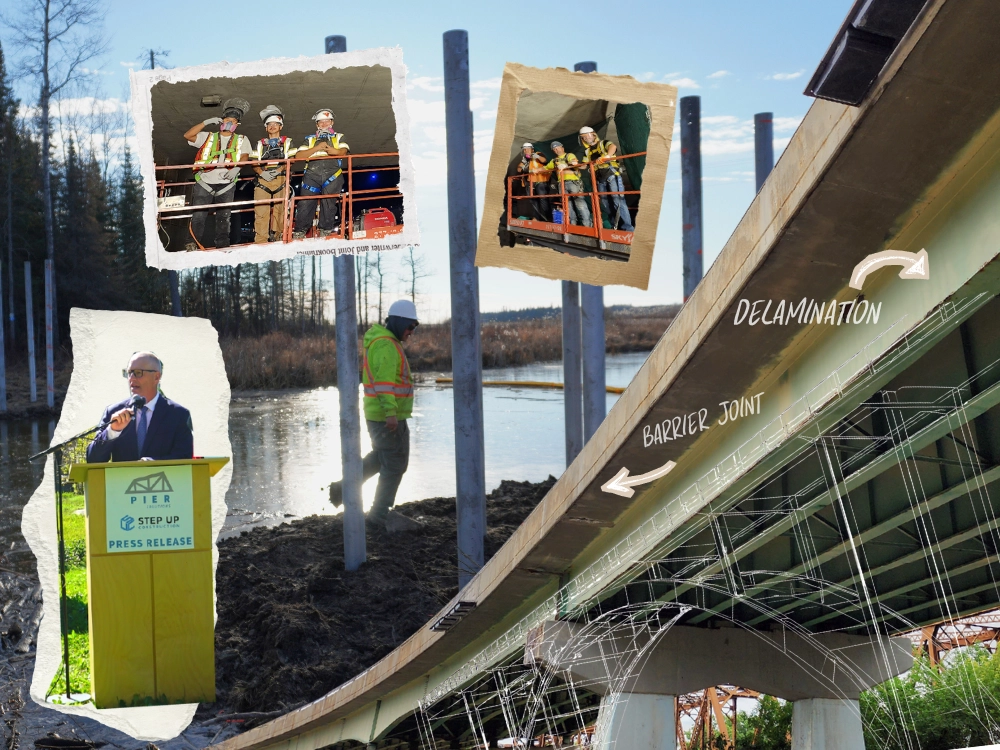
Listen to this story:
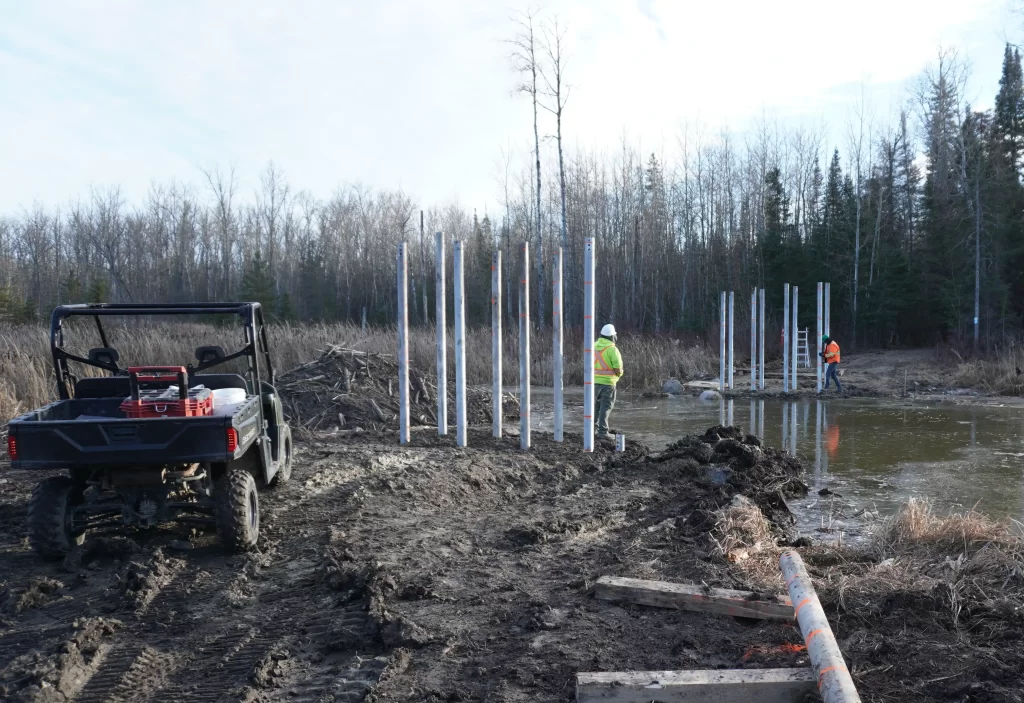
The Whiteshell job is almost too pretty to be a construction site.
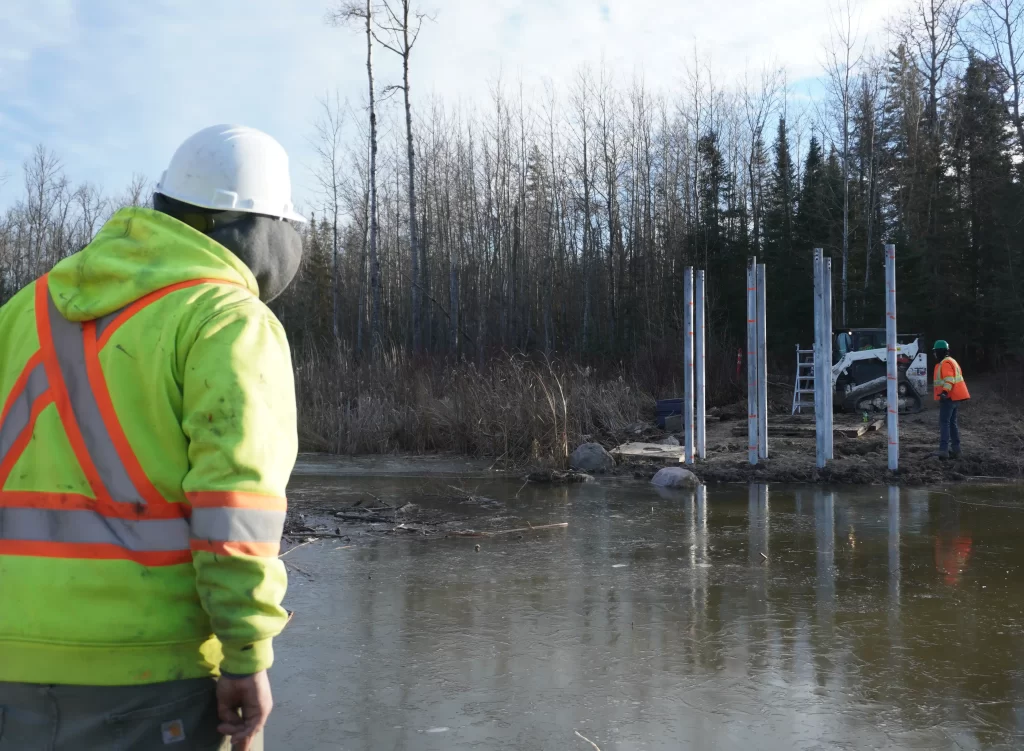
It’s warm for mid-November, and the sun shimmers off Dorothy Lake just a few hundred metres away from the pond where the new bridge will go. A crew of three young men haul large metal beams and clear boulders away to make room for the bridge’s foundation. They call to each other across the water, and a skid steer engine hums underneath the jokes they trade back and forth.
Under the surface of this scene is a second story. It peeks out in small moments. You can hear it in the crew’s morning huddle, where they share their mental health struggles and find support from mentors. It’s in court-mandated curfews and travel radius limitations, and deep bonds forged through shared trauma going back generations.
These details are brotherhood — built on a foundation of systemic injustice, city infrastructure, and second chances. Building these bonds parallels the bridge work the crew is there for. Get rid of what no longer serves, set the right foundation, and re-build for the future.
Morley Daniels’s laughter fills the Step Up Construction trailer parked on the edge of their jobsite in Otter Falls, Manitoba. The lead hand’s laid-back demeanour is disarming.
“I think I’m a pretty chill guy, so, my crew — we run pretty well,” Daniels says.
Daniels’s life has many limitations, but you can’t tell by looking at him. It seems the pressures of a construction site are nothing compared to how Daniels used to spend his days just two years ago — in a cell at Stony Mountain Institution.
At any given time, Step Up Construction employs around 32 men from the North End of Winnipeg. The social enterprise was founded by Anthony Ho and Tom Cameron in 2020, and their business model creates industry standard employment for guys like Morley Daniels. Roughly two-thirds of Step Up’s core leadership team identify as Indigenous, and this gives the crew — who themselves are 90 per cent Indigenous — a plethora of role models to learn from.
While growing up in the North End, Daniels lacked these mentors. He was recruited to a gang at 12 years old and quickly joined the drug trade. He remembers getting his first drug charge when he was 15. Two years later, he left Winnipeg and moved out west.
In Alberta, Daniels “went legit” for a while. He spent six months installing satellites, living with his cousin so he could save money. His job paid a decent salary, but the new lifestyle didn’t stick. He’d seen how much money was waiting back home.
Soon after returning to Winnipeg, Daniels started selling drugs again, and within a few years he was leading a gang of his own. When he was arrested in 2019, Daniels was sentenced to eight years at Stony Mountain Institution.
“I brought so many people into that lifestyle with me,” said Daniels. “A lot of them are in prison right now, and for a long time.”
After serving half of his sentence, Daniels was released on parole. He began working as a laborer, but he struggled to find purpose in it. Before too long, his parole officer threatened to breach him if he didn’t find a job that was going somewhere.
It was Daniels’s brother-in-law, Aidan Harry, who told him about working at Step Up. The organization hired Daniels, seemingly undaunted by the red tape that would have deterred many other employers.
Step Up’s crew members are all from the North End, where racism and poverty disproportionately affect the job hunt. In day-to-day life, these disadvantages can take many forms.
For one, getting hired normally requires a permanent address. It’s needed for official documents like tax forms, contracts, and payroll — making homelessness a huge barrier to employment. For some, past incarceration adds another layer of challenge.
The City of Winnipeg reports that 2,459 people experienced homelessness in 2024, and according to End Homelessness Winnipeg, roughly 30 per cent of those people had been incarcerated in the year prior. According to this same City of Winnipeg report, 80 per cent of those experiencing homelessness are Indigenous — though Indigenous people make up only 13 per cent of Winnipeg’s total population.
In 2025, four Step Up crew members moved out of government housing and into privately owned residences. Permanent housing is a key indicator of financial stability, and Step Up’s model aims to keep their guys moving in that direction.
Step Up provides different types of work experience with different tiers of responsibility, but one type of job shines above the others: working a bridge job in partnership with Pier Solutions.
Pier Solutions is a contracting and construction company specializing in rural bridge repair and rehabilitation. Since their founding in 2014, they’ve been working with rural municipalities in Manitoba and Saskatchewan to provide cost-effective construction that smaller communities can afford.
Pier uses a lean labour model, meaning their core staff is smaller than most. They outsource their specialists and other labourers, which allows them to follow seasonal fluctuation without layoffs. As Pier has grown, they’ve gained the capacity to bid on jobs for the City of Winnipeg, which require a larger crew.
With this need in mind, Evan Manning, Pier’s president, reached out to Step Up’s director, Anthony Ho. Manning believed the organizations’ shared values could make for a symbiotic relationship. The two organizations formed a type of business relationship called a social enterprise partnership. Since Pier sources labour from Step Up’s crew, their partnership is also an example of social procurement, when businesses or governments obtain goods and services in ways that support economic and social momentum.
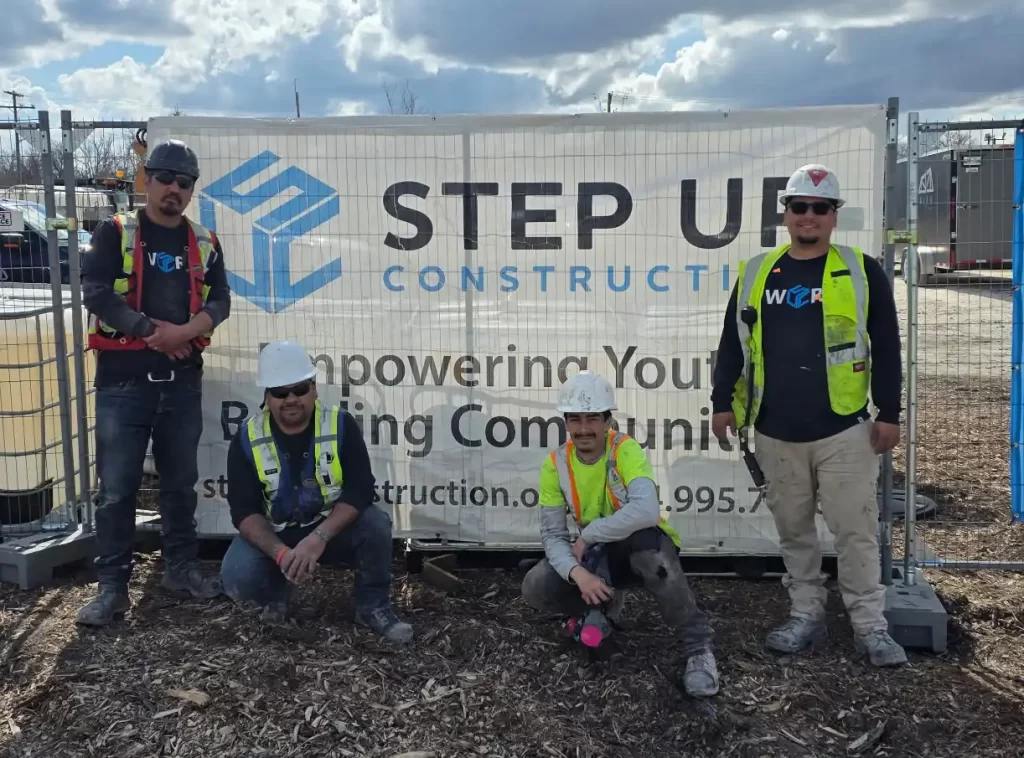
Since the partnership began in 2023, it has created over 58,000 hours of work for Step Up’s 32 crew members, across 15 bridge jobs. That comes out to approximately 226 full days of work for each member.
Step Up’s revenue increased by 158 per cent from 2023-24, and the organization broke even in their operations for 2025 — meaning they no longer relied on any donor support to fund crew member’s salaries. This cashflow allows extra resources to fund counseling services for the crew, along with food and housing supports, and other community programming through their parent organization Inner City Youth Alive.
In September of 2025, Pier Solutions and Step Up Construction received the 2025 Workforce Development Achievement Award for their partnership and work on the Pembina Highway Bridge Rehabilitation project spanning the La Salle River. This award is presented by the Transportation Association of Canada to initiatives that strengthen the Canadian workforce.
The partnership between Pier and Step Up addresses complex barriers to employment.
In their award application, Pier Solutions writes that approximately 38 per cent of people in Winnipeg’s North End live in poverty, compared to 13.2 per cent city wide. The application also acknowledges systemic poverty and educational inequality go hand in hand. “Over 40 per cent of [North End] residents aged 15 and above lack a certificate, degree, or diploma, compared to 17 per cent citywide,” the application says.
According to Andrew Braun, director of Inner City Youth Alive, financial poverty is not the only kind that affects the job search.
“Here there really is a poverty of relationship,” Braun said. “A lot of these guys don’t have connections to get into the industry or people to back them.” He recalls a crew member who described the feeling of “walking on a razor’s edge,” as employers and colleagues alike waited for them to fall.
If getting hired without a diploma wasn’t hard enough, try adding a criminal record into the mix.
Working on parole is a complicated process, where workers are vulnerable to being scammed out of fair pay. Competitive wages are essential for anyone trying to “go legit” and get out of Winnipeg’s lucrative drug industry.
For Daniels, working on parole meant a curfew prevented him from taking late shifts, and a limited travel radius kept him from bunking with the other crew members during jobs out of town. These rules have changed as he’s served his sentence, but there are still strict limitations around who Daniels can interact with.
An article by the Government of Canada called “Parole Decision-Making: Myths and Realities” says it’s common for people on parole to have personalized conditions of release to reduce their risk of reoffending.
In Daniels’s case, these conditions include cutting contact with all previous offenders or people currently engaged in illegal activity. Daniels must avoid many people from his past, even as some of his friends have left prison and tried to reach out.
He remembers one friend in particular who went on parole and tried to contact him about finding a job. Daniels wasn’t able to connect him to Step Up, and the friend ended up reoffending and being sentenced to another six years.
“I kind of had to leave him, right?” said Daniels. “I’m hoping when he gets out, I’ll be able to help him this time.”
Step Up doesn’t currently have a prison recruitment program, but Daniels has dreams of implementing one. This program would, like Step Up, be based around a model patented by Father Gregory Boyle, founder of Homeboy Industries in Los Angeles California.
Homeboy Industries started in 1988, and is commonly considered the largest gang-intervention and workforce re-entry program in the world. Homeboy works with over 10,000 former gang members each year, teaching them job-ready skills like baking, catering, embroidery, and electronics recycling. In addition to job readiness training, Homeboy provides free tattoo removal, therapy, and family support services.
Prison visits allow Homeboy to get ahead of the re-incarceration cycle and connect with people before their release. Daniels hopes Step Up will be able to implement prison visits in the future, and he appreciates how receptive Ho and Cameron have been to this idea. He says the Step Up leadership regularly ask for feedback from the crew when workshopping new initiatives or changes to existing programs.
“This is different than anything I’ve ever dealt with,” Daniels said.
When he started at Step Up Construction in 2023, Daniels had exactly one day to get adjusted to his new job before facing yet another change. His second day would force him to start over, on a different site, with a different contractor — only this time it wasn’t just his first day, it was everyone’s.
Jonathan Vandenberg never expected to be a mentor, but he knew how to be a coach. He loved playing volleyball growing up and later spent a season leading a club team. Sports teach you a lot of great skills, Vandenberg believes. They make you resilient, and they teach you how to handle life’s challenges. “Work does that too,” Vandenberg said.
After graduating university in 2020, the young engineer started his career project managing for Pier, and for three years most things went pretty much as expected. Then Vandenberg was assigned to the St. James resurfacing project in June of 2023. Vandenberg showed up on the first day with no idea how his role was about to change — or that he’d need to put his coaching hat back on, for longer than just one season.
Daniels and Vandenberg met for the first time on the job site. Daniels recalls thinking he was the only new guy, until he realized the entire partnership was just starting out. Pier’s local crew had only four core members before joining forces with Step Up, and the St. James project now had 15 labourers scattered around the site. This job started with long days drilling concrete with jackhammers.
It was immediately clear Vandenberg would be learning the rules to a whole new game — one with complex structures stemming from two organizations working together and a crew with limited experience on a jobsite.
“He was new to that, we were all new to that,” Daniels said.
Today, Vandenberg is no stranger to training “greener” guys. He recalls a job where a crew member couldn’t identify a hammer from a lineup of tools.
“You almost have to pull yourself back and look at it through the lens of someone who is first day on the job,” said Vandenberg.
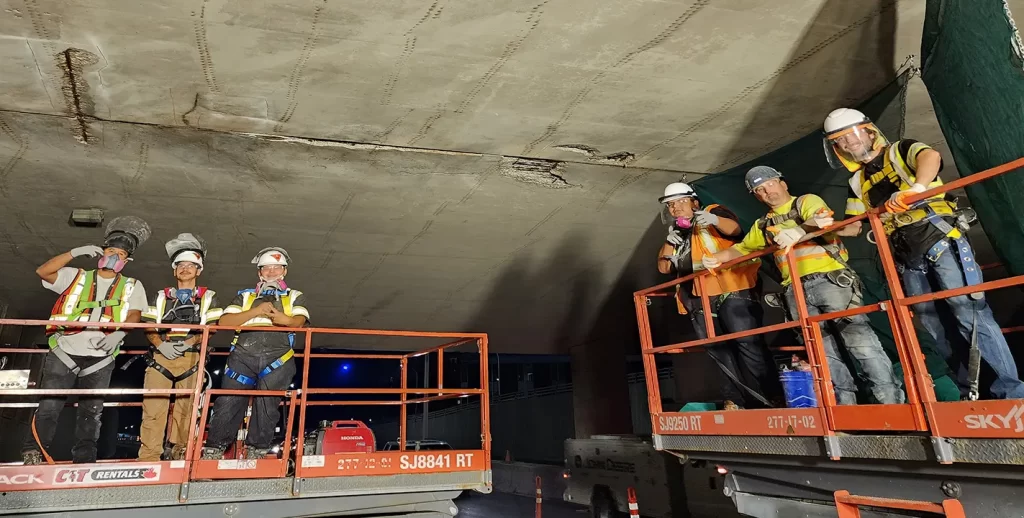
“It’s pretty intimidating,” Daniels remembers. “I was fresh into construction; I had a bunch of people I didn’t know…I was on parole.”
The first steps of the St. James job were mainly demolition. Vandenberg remembers taking the crew around the site and teaching the basics of bridge construction.
“This is a barrier joint, this is the kind of detail it has,” he said as they examined the site.
After explaining the essentials, Vandenberg realized he would need a more hands-on approach to make the information stick.
Vandenberg started colour coding different areas on the bridge using spray paint. A barrier repair was green, and a dam was orange. These visual cues aided pattern recognition and shortened the crew’s learning curve.
Vandenberg immediately realized working with Step Up meant being held to a different standard. “It was very important for me to show up with my best,” he said. “It challenged me to be better.” The feeling was familiar. “It’s kind of like coaching a sports team, and everyone’s really listening to what you’re saying. I felt a very similar sense on that job.”
The first communication breakdown happened shortly into the St. James job. The project was two weeks behind schedule when they started, and the more time passed, the further behind they seemed to get. Vandenberg remembers working day shifts as Pier’s project manager, managing from the trailer and sharing duties with Step Up’s foreman, Stan.
Not long after they got started, Vandenberg was scheduled to work an overnight. It wasn’t his usual shift, and he wanted to make a good impression. The repetition required on a resurfacing job could make for long, tiring shifts, and nights were rarely easy — especially for such a green crew.
That night, Vandenberg drilled on a jackhammer for 12 hours beside the rest of the guys. He remembers driving home bleary-eyed at 7:30 a.m. the following morning when his phone began to ring.
It was Anthony Ho.
“Is everything okay?” Vandenberg remembers Ho asking. He ran through his memory of the shift, and said he thought everything was on track.
“Stan said it didn’t go well,” Ho said. “He said you were following him around all night, like you didn’t trust them.”
Vandenberg remembers feeling thrown off. “I wanted to show humility, jump in and show the guys I wasn’t asking them to do something I wouldn’t do myself,” he later explained.
That evening, Vandenberg spoke with Stan for nearly an hour, sorting out where the breakdown had happened and how to move forward. This moment marked the beginning of a close bond between the two leaders, and a radical culture shift for the crew.
After this, mornings on the jobsite sounded different. Vandenberg was quick to learn the guys’ names and stories, and as the crew grew more comfortable, moral improved almost overnight.
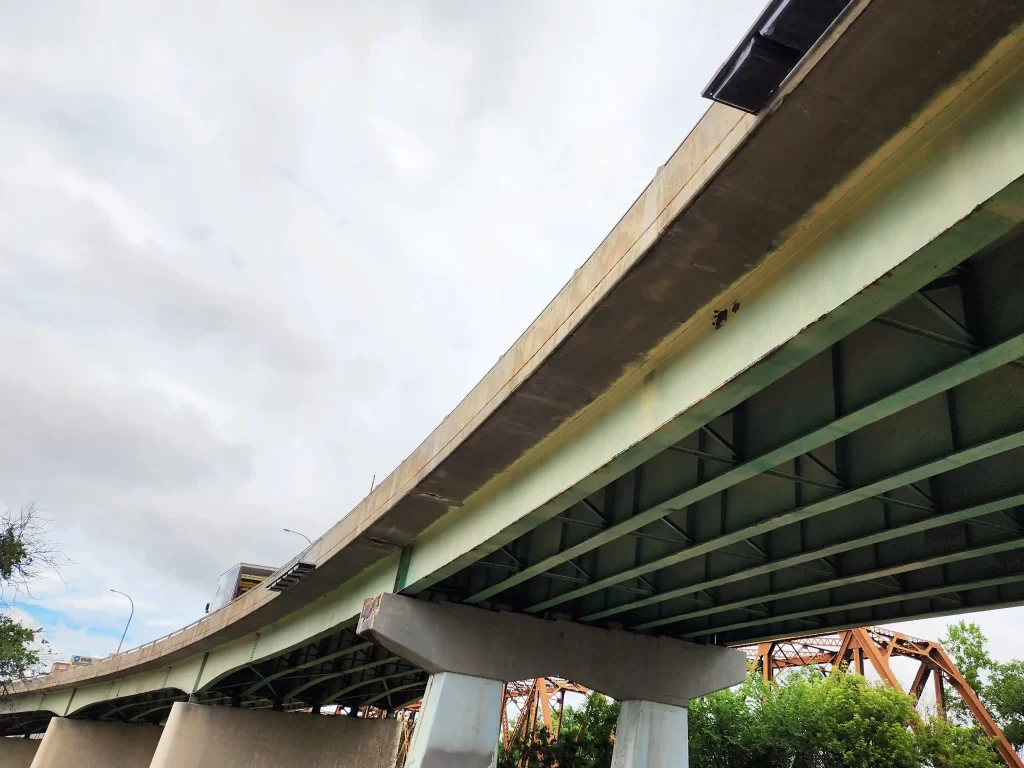
“It kind of broke down one of those barriers, where we understood each other better. Moving forward, Stan and I were really close. I trusted him a lot. He trusted me.” Vandenberg said.
“A lot of times what these guys are looking for is really another gang,” Andrew Braun said.
“They’re all my friends now,” Daniels said. “They’re not just co-workers, they’re buddies.”
As a social enterprise, Step Up pays their employees a competitive wage. They recently started making enough money to be self-sustaining. If they turn a profit, that money would be re-invested into their programming, which currently relies on donations. This model gives them more freedom than a traditional non-profit, but smaller margins than a regular company.
Dozens of young men in the organization have stories similar to Daniels’s. They’re promoted from labourer to lead hand, or from a Step Up jobsite to a larger project with Pier Solutions. Some crew members continue on to a Red Seal certification, the highest accreditation available for trades in Canada. The pathway may sound straightforward, but there is often movement up and down these tiers based on performance and individual capacity. Crew members can step away during difficult times, and the door is open to come back when they’re able.
Although Pier Solutions follows a for-profit model, they also do things differently.
Regular project procurement operates with a fixed cost, and the risk falls on the contractor. Contractors like Pier will bid on jobs based on what they estimate the cost to be, and accuracy is key. If they win the job and their estimate is off, they’re responsible for the difference. This is called the “design, bid, build,” model, and it’s standard on larger jobs — including the City of Winnipeg projects Pier’s taken on with the help of Step Up’s crew.
Occasionally, on small rural jobs, Pier Solutions can instead follow a shared risk format. While this might sound convenient, it leaves less margin for error — and only works when Pier is designing the project, not just executing it. Pier’s engineering services include cost-effective options for increasing bridge lifespan through rehabilitation and repair, rather than full demolition and replacement. These options are often better for small communities with limited budgets, and Pier’s shared-risk format is more transparent than standard procurement. Transparency can be risky, both from a relational and practical perspective. But so can social procurement and outsourcing labour. As a rule, Pier people are not scared of this risk.
Vandenberg’s tolerance for risk has grown hugely since working with Pier.
“Risk can bring a lot of stress; there’s a lot of pressure on you,” Vandenberg said. “But if you can manage that pressure, it’s actually kind of fun.”
“I’ve heard this saying, ‘people first, profit always,’” Jeana Manning explains. She’s partner at Pier Solutions, and she and her husband Evan are the ones behind Pier’s unconventional value system. “I would almost agree with that — our business model is based on trust with our clients.”
Vandenberg agrees. “We’re in the relational business. It’s relations first, profits kind of second or third. That really meshed with Step Up.”
Healthy relationships with clients rely on healthy crews. Harassment, poor safety conditions, and abuses of authority are too often part of a career in construction. Nick Cardone, a therapist who conducts workshops for construction workers in Nova Scotia, explained in a recent article for CBC that rates of suicide, addiction, depression, and anxiety are all higher in the construction industry.
Poor workplace culture has been linked to alcoholism, divorce, and instability in families, and workplace dynamics can be especially challenging for those who’ve been abused by authority figures in the past. Many of Step Up’s crew members have experienced this type of treatment before joining the crew, and both Braun and Daniels recall how Step Up’s trauma-informed approach has helped to maintain a positive work environment.
Vandenberg remembers stopping work one day to drive a crew member to the hospital when their kid got sick, and this type of leadership is standard. Counselling services are included in Step Up’s wraparound programming, but appointments often take place during the day. To allow crew members to attend counselling, it’s common for a leadership team member to drive to the site and take the member’s place until they get back. If the crew member can’t drive, a manager will bring them to their appointment while another guy fills their spot.
“The ingredient in the secret sauce is kinship,” Braun said. “When there’s kinship at the base of it, then guys will step up for each other.”
Even just one day into working with Pier, Daniels felt it too.
“I wasn’t coasting along, just okay with being,” Daniels remembers. “[Now] I’m actually becoming something else.”

Working a Pier job means rehabilitation.
Today, Daniels oversees crews of five to 15 guys. “It’s just a big change. A lot of excitement,” Daniels said. Only a few years ago he was running a gang in Winnipeg’s North End, and now he spends his days giving machinery tutorials and dispensing life advice.
At the Otter Falls jobsite, Daniels grins and leans back, his eyes widening. “I wonder how my life’s going to go, right?”
Vandenberg shares this curiosity as he reflects on the partnership so far. “I think it’s important to always keep open eyes, open ears and listen,” he says. “It was breaking down the barriers, those individual moments.”
“The best leaders are servant hearted, and that’s Morley to a tee,” Braun said.
It’s a sunny day in September 2025 when Daniels steps down from the podium at the St. Norbert news conference. He’s just given a speech to a crowd that includes mayor Scott Gillingham, journalists, and representatives from both organizations in front of the Pembina Highway Bridges job, where Pier Solutions and Step Up collaborated on a project that earned the 2025 Workforce Development Achievement Award.
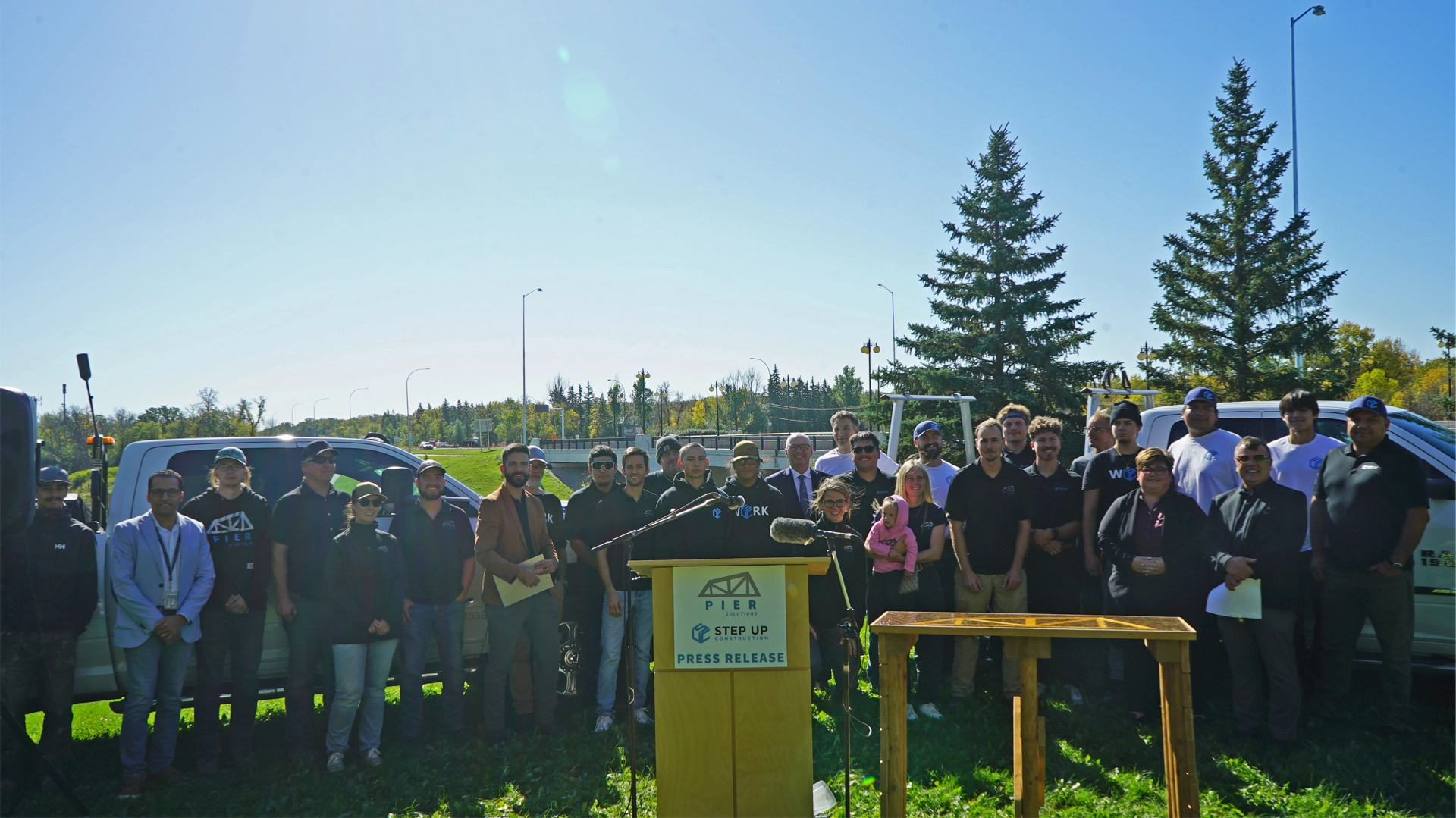
This moment of recognition reveals a striking role reversal for Daniels — and the City of Winnipeg. The underlying story of the partnership is now revealed in broad daylight: armed with jackhammers and backed by a network of support, residents of Winnipeg’s North End have been working for the betterment of the city that so frequently pushes their needs aside.